Executive Overview
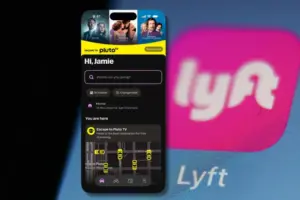
In a significant expansion of its advertising ecosystem, Lyft has officially entered the alpha testing phase for a high-impact, premium ad placement known as the "home masthead." This strategic move allows brands to secure complete visual ownership of the Lyft home screen—the primary interface users interact with moments before booking a ride. By transforming the utilitarian booking portal into a canvas for brand storytelling, Lyft is signaling a major pivot in how ride-sharing platforms monetize their captive user base.
The initiative, spearheaded by the company’s internal media division, represents a sophisticated evolution beyond standard interstitial ads. By partnering with marquee brands like Pluto TV, Lyft is attempting to balance the need for non-intrusive user experiences with the high-value demand for digital real estate that reaches consumers in a "high-intent" state. This article examines the mechanics of the new ad unit, the implications for the broader retail media landscape, and how Lyft plans to navigate the delicate balance between platform utility and commercial saturation.
Detailed Chronology: From Utility to Advertising Ecosystem
For years, the ride-share interface was defined by a minimalist aesthetic: a map, a destination input field, and a request button. However, as the "everything app" model gains momentum, platforms like Lyft and Uber have increasingly sought to diversify their revenue streams beyond the commission-based ride model.
The Shift in Strategy
The introduction of the home masthead did not occur in a vacuum. Over the past 24 months, Lyft has methodically integrated various advertising layers into its user journey.
- The Foundational Phase: Initially, Lyft focused on "in-ride" experiences, such as tablets in the back of vehicles.
- The Digital Integration: The company then moved toward map-based advertising, allowing brands to sponsor vehicle icons or create custom map markers.
- The Splash Screen Era: More recently, Lyft introduced splash screens—animated overlays that appear during the app’s loading phase.
The "home masthead" is the culmination of these experiments. By targeting the screen before the ride is requested, Lyft is capturing the user at the exact moment they are most focused on the app interface. According to reports, this alpha test is currently being rolled out to select user segments to gauge engagement metrics and user sentiment before a broader launch.
The Pluto TV Partnership
Pluto TV, the ad-supported streaming service, serves as the inaugural partner for this new placement. Their campaign, "Escape to Pluto TV," is perfectly timed to align with a comprehensive redesign of the streaming platform’s user experience. By utilizing the masthead, Pluto TV is not just running a banner; it is utilizing the entire screen to immerse the user in its new branding, effectively turning a functional booking tool into a momentary entertainment experience.
Supporting Context: The Rise of Retail Media and "High-Intent" Audiences
The move toward the home masthead must be viewed through the lens of the "Retail Media 2.0" revolution. Advertisers are increasingly skeptical of open-web display ads, which suffer from ad-blocking, bot traffic, and diminished trust. In contrast, "walled gardens"—apps like Lyft, Amazon, or Instacart—offer first-party data and a highly engaged audience.
The Value of the "Ride-Share Moment"
What makes the Lyft home screen particularly attractive to advertisers is the "high-intent" nature of the user. A person opening the Lyft app is usually preparing for a transition—going to a dinner, heading to the airport, or commuting to work. This is a moment of anticipation, where the user is looking at their phone screen for an extended period, creating a unique window for brand recall.
Competitive Landscape
Lyft’s decision to monetize its interface puts it in direct competition with other digital platforms fighting for the "attention economy."
- Uber: Already a leader in advertising, Uber has long utilized its platform for sponsored listings, video ads, and homepage takeovers.
- Delivery Apps (DoorDash/UberEats): These platforms have set the standard for "point-of-purchase" advertising, where a brand can influence a consumer’s choice at the moment of transaction.
- Social Media Giants: As TikTok and Meta face increased regulatory scrutiny and ad-load saturation, brands are looking for "cleaner" environments where they can control the user’s visual field without the distraction of algorithmic noise.
The Mechanics of the "Home Masthead"
While specific technical details remain proprietary, the alpha test indicates that the masthead operates as a high-fidelity, full-screen asset. Unlike static banners that users can easily ignore, the masthead is designed to be the "hero" of the home screen experience.

User Experience (UX) Considerations
A primary concern for any tech company introducing ads into a functional app is "UX fatigue." If the ad makes booking a ride more difficult, the user will simply switch to a competitor. Lyft is reportedly managing this by:
- Latency Management: Ensuring that the ad unit does not slow down the app’s load time.
- Strategic Placement: Designing the masthead to be dismissible or to coexist with the primary booking inputs without obscuring them.
- Contextual Relevance: Aligning the ads with the user’s location or time of day to ensure the content feels additive rather than intrusive.
Official Statements and Industry Impact
While Lyft has kept specific performance metrics under wraps, the company’s decision to move into alpha testing reflects a broader confidence in its advertising strategy. "We are committed to building a platform that delivers value to our riders while providing brands with unprecedented access to an engaged, mobile audience," a company spokesperson suggested in initial communications regarding the update.
Industry analysts are watching the move closely. "The home masthead is the ‘billboard’ of the digital age," says one industry observer. "If Lyft can prove that these ads don’t drive up churn rates, we are going to see a flood of premium advertisers—from entertainment studios to automotive brands—looking to secure this real estate."
Future Outlook: The Path Forward
As Lyft transitions from alpha testing to a full-scale rollout, several key questions remain:
Scaling and Programmatic Integration
Will this ad unit eventually be available via programmatic bidding, or will it remain a "premium-only" direct-sales product? Most platforms eventually move toward programmatic to maximize yield, but for a brand-takeover product like the masthead, scarcity is a selling point. Expect Lyft to maintain a hybrid model for the foreseeable future.
Data Privacy and Personalization
With the decline of third-party cookies, Lyft’s first-party data is its greatest asset. The ability to show an ad for a movie premiere to someone waiting for a ride to a cinema is a powerful proposition. As the company refines its targeting capabilities, users can expect to see ads that are increasingly relevant to their real-world activities.
The "Everything App" Convergence
Lyft’s evolution mirrors a broader trend in Silicon Valley: the desire to become an ecosystem. By integrating media into the ride-share experience, Lyft is transforming from a transportation utility into a digital hub. If the home masthead succeeds, the next logical steps could involve deeper integrations, such as "in-app" ticket purchasing, restaurant reservations, or exclusive content access, all triggered by the initial ad interaction.
Conclusion
The launch of the home masthead is a defining moment for Lyft. It marks the transition of the platform from a simple booking tool to a sophisticated media property. While the challenge of maintaining a seamless user experience remains, the potential for revenue growth is immense. For advertisers, the home masthead offers a rare commodity: undivided attention in a world of digital fragmentation. As the alpha test continues, the industry will be watching to see if Lyft can successfully redefine the ride-share experience as both a service and a premium advertising destination.
For the everyday user, the takeaway is clear: the journey to the destination is becoming as much about the content we consume as it is about the route we take. As ride-sharing becomes increasingly digitized, the "home screen" will serve as the gateway to our daily digital interactions, and Lyft is positioning itself to be at the center of that experience.