Executive Overview
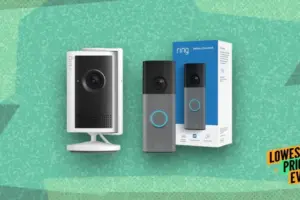
As the retail landscape shifts toward an increasingly aggressive early-holiday strategy, smart home security giant Ring has launched a preemptive strike. In what industry analysts are calling one of the most significant price adjustments in the company’s history, Ring has slashed the costs of its flagship entry-level devices to all-time lows. The Ring Indoor Cam 2K is currently available at a 58% discount, priced at just $24.99, while the Ring Battery Doorbell 2K has seen a massive 60% reduction, bringing it down to $39.99.
These figures represent a pivotal moment for consumers looking to fortify their home security infrastructure without the prohibitively high entry costs typically associated with premium ecosystem hardware. However, while the upfront investment is minimal, potential buyers must weigh these hardware savings against the long-term commitment of subscription-based cloud storage. This report breaks down the technical capabilities of these devices, evaluates the cost-to-value ratio, and assesses the implications for your home privacy and security strategy.
Detailed Chronology: The Evolution of Ring’s Pricing Strategy
The current promotional event is not an isolated occurrence but rather the culmination of a decade-long evolution in how Amazon-owned Ring handles consumer acquisition. Since its inception, Ring has moved from a niche hardware manufacturer to a dominant force in the smart home sector.
The Shift Toward Penetration Pricing
Historically, Ring’s pricing tiers were designed to maintain high margins on hardware. However, in the lead-up to the 2026 holiday season, the company has pivoted toward a "penetration pricing" strategy. By pricing these units at or near the cost of production, Ring is prioritizing the expansion of its active user base.
The strategy is clear:
- Low-Barrier Entry: By dropping the price of the Indoor Cam 2K to under $25, Ring effectively eliminates the "financial hesitation" barrier for consumers who have been on the fence about smart security.
- Ecosystem Lock-in: Once a consumer installs a Ring device, they are funneled into the Ring app. From there, the temptation to add additional cameras or a doorbell is significantly higher, as the hardware is already integrated into their existing network.
- Subscription Monetization: The hardware is essentially a "loss leader." The true revenue model for Ring relies on the recurring monthly subscription fees ($4.99/month per device or $9.99/month for full-home coverage) required to unlock essential features like video history and advanced notifications.
Supporting Context & Metrics: Breaking Down the Hardware
To understand whether these deals provide genuine value, one must look at the technical specifications of the discounted units.
The Ring Indoor Cam 2K
The Indoor Cam 2K is designed for targeted monitoring. Its primary strength lies in its simplicity and physical flexibility.
- Visual Fidelity: The 2K resolution is a marked improvement over previous generations, allowing for clearer identification of faces or objects—a critical metric for home security.
- Privacy Features: The device includes a physical privacy cover. This is a crucial design choice that addresses one of the most common consumer anxieties regarding smart cameras: the fear of being watched. By physically blocking the lens, users gain an intuitive sense of control.
- The Limitation: As a fixed-view device, it lacks the pan-and-tilt functionality found in more expensive alternatives. It requires precise placement to be effective, which may limit its utility in larger rooms.
The Ring Battery Doorbell 2K
For those focusing on perimeter security, the Battery Doorbell 2K serves as a frontline defense.
- Field of View: With a 140-degree horizontal and vertical field of view, this device is optimized for "head-to-toe" coverage, which is essential for capturing packages left on a doorstep.
- Optical Zoom: The inclusion of 6x digital zoom allows for better inspection of small details, such as visitor IDs or vehicle license plates.
- Connectivity Requirements: It is imperative to note the reliance on a 2.4GHz Wi-Fi network. In modern homes with crowded 5GHz spectrums, users must ensure their router placement is optimized to prevent latency in video streaming.
Investigative Perspective: The "Subscription Catch"
While the initial purchase price is undeniably attractive, a thorough investigative look at the "hidden" costs is necessary. Ring’s business model is fundamentally tied to its cloud services.

The Cost of Ownership
Without a Ring Protect subscription, your interaction with these devices is limited to:
- Real-time notifications.
- Live viewing.
- Two-way talk.
Crucially, without a subscription, you cannot review saved footage. This transforms the device from a "security system" into a "live-monitoring tool." If an incident occurs while you are not actively looking at your phone, the evidence is effectively lost.
For the average household, the annual cost of $49.99 to $99.99 for a subscription will quickly eclipse the initial hardware savings within the first two years. Consumers must treat the purchase not as a one-time transaction, but as the initiation of a service contract.
Official Statements & Industry Positioning
Though specific internal sales quotas remain proprietary, industry experts point to the "Early Black Friday" phenomenon as a strategic response to market saturation. According to recent market intelligence reports, the smart home market is entering a "consolidation phase," where users are increasingly loyal to a single ecosystem (e.g., Amazon’s Alexa-integrated environment).
By offering these deep discounts, Ring is effectively "crowding out" smaller competitors who cannot afford to sell hardware at such low margins. This aggressive pricing suggests that Ring views the current holiday season as a critical window to capture new residential nodes, potentially displacing rival platforms like Arlo, Eufy, or Google Nest.
Future Outlook: Is Now the Time to Invest?
Looking toward the future, the integration of AI-driven threat detection is the next frontier for these devices. Users who enter the Ring ecosystem today at these low prices are positioning themselves to receive future software updates that may include advanced person, package, and vehicle detection—features that are becoming standard in the smart security industry.
Recommendation
- For the Casual User: If your primary goal is to check on a pet or confirm that a package has been delivered, these deals are an absolute bargain. The ease of setup and the reliability of the Ring app make these units best-in-class for entry-level users.
- For the Privacy-Conscious: Ensure you are comfortable with the cloud-based nature of the service. Remember that while the hardware is secure, the management of your footage remains at the discretion of the provider.
- For the Security-Focused: If you plan on building a comprehensive, multi-camera home security system, ensure that your long-term budget accounts for the $9.99/month professional plan.
Final Verdict
The early Black Friday sales on the Ring Indoor Cam 2K and the Ring Battery Doorbell 2K are genuine, high-value opportunities to enter the smart home market. By acknowledging the long-term subscription costs upfront, consumers can make an informed decision that balances immediate savings with their long-term security needs. As the market continues to evolve, these devices remain a foundational, albeit platform-dependent, choice for the modern, connected home.
Whether you are looking to secure a single room or a primary entrance, the current pricing offers a rare opportunity to leverage premium technology at a budget-tier entry point—provided you are ready to commit to the ecosystem for the long haul.