Executive Overview
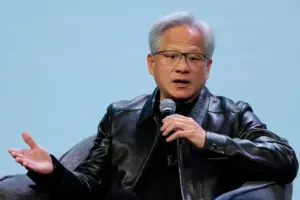
In the high-stakes world of artificial intelligence and semiconductor dominance, Nvidia stands as the undisputed titan. However, recent events surrounding CEO Jensen Huang’s return to the helm have triggered an unexpected, and potentially destabilizing, conversation regarding corporate governance. During his first all-hands address since his brief departure, Huang issued a candid, albeit polarizing, admission: he had personally violated the company’s code of conduct.
The crux of the controversy lies not just in the violation itself, but in the nuanced, precarious explanation that followed. Huang asserted that while the code of conduct is universal and applies to every employee, a breach does not necessitate immediate termination. He introduced a framework of "facts, circumstances, and assessments" as the arbiter of consequences, effectively creating a subjective layer between policy and enforcement. This stance, while pragmatic in the eyes of corporate realists, poses a significant long-term risk to organizational culture. When the "godhead" of a company—the visionary architect of its success—exempts himself from the absolute authority of the rules he oversees, he risks eroding the cultural bedrock of the entire institution. This article investigates the tension between visionary leadership and institutional integrity, exploring whether Nvidia’s success can survive the normalization of executive exceptionalism.
Detailed Chronology: The Return and the Admission
The narrative of Jensen Huang’s return to the CEO chair was largely framed as a triumphant homecoming, characterized by an employee-led campaign demanding his reinstatement. However, the veneer of unity was punctured during his initial all-hands meeting. Rather than a standard address focusing on fiscal targets or H100 chip production, the tone shifted toward the philosophical and the ethical.
Huang’s acknowledgement of his own code of conduct violation was unprompted and direct. By addressing the elephant in the room, he sought to control the narrative of his own accountability. Yet, the follow-up commentary—that the code of conduct is not an automatic "exit door"—has set off alarm bells among ethicists and corporate governance experts.
This moment marks a pivotal point in the timeline of modern Nvidia. For years, the company has operated under a culture of high performance and intensity. By framing the code of conduct as a "living" document subject to executive interpretation, Huang has arguably transitioned the company from a rule-based culture to a personality-based one. The danger here is the precedent: if the CEO is permitted to navigate the gray areas of policy, mid-level managers and employees may eventually perceive the rules as optional, leading to a potential breakdown in the internal discipline that allowed Nvidia to scale to a trillion-dollar valuation.
Supporting Context: The Psychology of Corporate Ethics
To understand the gravity of Huang’s comments, one must look at how employees interpret corporate rulebooks. According to Matt Plass, Chief Market Strategy Officer at LRN, a premier ethics and compliance consultancy, a code of conduct is rarely just a legal document; it is a signal of the company’s moral compass.
The "Olympics" Effect
Plass provides a cautionary tale that serves as a case study for the current Nvidia predicament. He recalls an organization that implemented strict travel bans to navigate a fiscal crisis, only to have its CEO seen in a VIP box at the Olympic Games. The fallout was not immediate legal action, but rather a long-term rot in morale. For over a decade, the incident became a shorthand for hypocrisy. When employees saw the leader disregard the rules that restricted them, the "Olympics" became a benchmark for cynicism.
When employees feel their leadership is operating under a different set of physical or ethical laws, the resulting "shame" is palpable. Younger cohorts in the workforce, who are increasingly values-driven, are particularly sensitive to these discrepancies. If Nvidia, a company that demands peak efficiency and rigor, allows for a double standard, the workforce may eventually disengage. The pride that drives the engineering talent to work grueling hours at Nvidia is inextricably linked to their belief in the company’s vision and its integrity. When that integrity is questioned, the "godhead" status of the CEO may not be enough to hold the company together.
The Metrics of Compliance
Recent research by LRN—which surveyed over 2,000 employees across diverse industries—highlights that the ethical standard of a workplace is a primary driver of retention and engagement. In high-pressure tech environments, the "tone at the top" dictates the entire organizational climate.
- Cultural Alignment: When leadership demonstrates adherence to the code, it creates a "psychological safety" that encourages employees to report issues.
- The Cynicism Gap: When a discrepancy arises between words and actions, employees develop a "cynicism gap," which correlates with lower productivity and higher turnover of high-potential talent.
- The Cost of "Godhead" Leadership: Companies where the CEO is inseparable from the brand identity face a unique dilemma. The board often fears that disciplining such a leader will tank the stock price, yet failing to do so creates a long-term erosion of the company’s internal structure.
Official Stance and The "Facts and Circumstances" Defense
In his address, Huang leaned heavily on the idea of nuance. His assertion—that "facts, circumstances, and a lot of assessments" must dictate outcomes—is a standard legalistic defense in corporate human resources. The argument suggests that a one-size-fits-all policy ignores the complexities of real-world decision-making.
From an executive perspective, this is a reasonable approach. CEOs operate in a vacuum of high-level ambiguity where the "right" choice is often a matter of interpretation. However, from the perspective of an employee handbook, this is a dangerous admission. It implies that the rules are not binary. By explicitly stating that he is not exempt, but then explaining why he is not terminated, Huang has effectively communicated to his workforce that they, too, may negotiate their way out of violations should they occur.
This creates a "case-by-case" culture. While this may feel flexible, it creates a massive burden on HR departments to maintain consistency. If an entry-level engineer violates the same code of conduct, will they be granted the same "assessment of facts and circumstances," or will the "exit door" be held open for them? The perception of fairness is the single most important factor in maintaining corporate culture. Once that perception is lost, it is rarely regained.
Future Outlook: Can Nvidia Maintain Its Trajectory?
Nvidia is currently at the center of the global technological revolution. Its GPUs are the engine room of the AI explosion, and its influence is arguably unmatched. Because of this, the stakes of this ethical debate are amplified.
If Huang’s return marks a shift toward a more centralized, personality-driven management style where the code of conduct is subordinate to the leader’s judgment, Nvidia may face an identity crisis in the coming years. While the market may currently reward the company for its technical output, the internal "soft" metrics—employee satisfaction, ethical alignment, and long-term loyalty—are harder to measure but vital to sustain.
The Succession Dilemma
Plass notes that in organizations where the CEO is a "godhead," there is rarely a clear succession plan or an effective mechanism for accountability. Nvidia’s reliance on Huang is so absolute that any attempt to enforce strict ethical standards against him would be viewed as an existential threat to the company’s market performance. This creates a "trap" for the board and the employees: they must either accept a CEO who acts outside the established norms, or risk the instability that would follow his departure.
Conclusion
The coming months will be a stress test for Nvidia. As pressure mounts in the competitive AI landscape, the organization will be forced to balance its relentless pursuit of innovation with the necessity of maintaining a coherent ethical framework. If Huang can reconcile his personal conduct with the standards he sets for his thousands of employees, the company may move past this incident. If he continues to frame himself as an exception to the rules, he risks alienating the very people who have fought for his return.
Ultimately, the most successful companies are those that are larger than their leaders. As Nvidia moves into its next chapter, it must decide whether it wants to be a company defined by the brilliance of one man, or a company defined by a robust, immutable set of principles that hold even the most powerful to account. The former is a recipe for short-term growth and potential long-term fragility; the latter is the only path to enduring institutional greatness. For now, the "godhead" remains at the helm, but the shadows cast by his own admissions are beginning to grow.