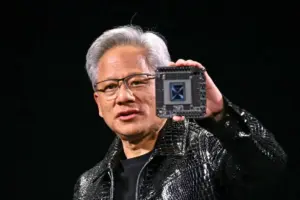
Executive Overview: A Tense Homecoming
In a corporate landscape defined by rigorous succession planning and board-mandated risk mitigation, Nvidia has chosen to walk a path entirely its own. Jensen Huang, the co-founder who briefly stepped down from his post as CEO following a high-profile scandal involving personal conduct and national security concerns, has returned to the helm of the semiconductor giant. His reinstatement marks a stunning reversal for a company that serves as the backbone of the global artificial intelligence revolution.
In his first all-hands meeting following his return, Huang addressed a workforce clearly unsettled by the chaos of the past two weeks. The session was a departure from typical corporate town halls, veering into topics of personal remorse, the necessity of therapeutic intervention, and a re-commitment to the company’s foundational code of conduct. However, perhaps the most contentious point raised during the meeting was Huang’s outright rejection of formal succession planning. By framing such protocols as an unnecessary "hierarchy" that compromises the efficiency of his unique management model, Huang has reignited a debate about whether Nvidia’s unconventional culture is its greatest asset or its most dangerous liability.
Detailed Chronology: The Two-Week Crisis
To understand the current volatility at Nvidia, one must examine the rapid-fire events of November 2026. Earlier this month, the company was plunged into an unprecedented crisis when Huang admitted to engaging in extramarital affairs. The revelation was exacerbated by reports—and subsequent government scrutiny—that one of the individuals involved was suspected by U.S. authorities of being an operative for a foreign intelligence agency, specifically from China.
The geopolitical implications of a CEO with potential security vulnerabilities running a company that produces the world’s most advanced AI-training chips were immediate and severe. Huang resigned, and CFO Colette Kress stepped into the role of interim CEO. For 12 days, the industry held its breath, wondering if Nvidia—a company so synonymous with Huang’s personal vision—could survive without him.
On November 23, the narrative shifted again. Nvidia announced that Huang would return to the CEO chair. The news sent shockwaves through the investment community, eliciting both relief from those who view Huang as irreplaceable and concern from governance experts who believe the board of directors has effectively surrendered its oversight duties. The subsequent all-hands meeting served as Huang’s effort to consolidate control, pivot the narrative toward internal healing, and dismiss the structural questions that now loom over the company’s future.
The "Flat" Philosophy: A Management Model Under Fire
Central to the ongoing friction between Huang and his detractors is the organizational structure of Nvidia. While most S&P 500 companies operate with complex tiers of C-suite executives, senior vice presidents, and division heads, Nvidia functions as an unusually "flat" entity.
Huang has long defended this, arguing that traditional corporate hierarchies are designed for legacy industries—what he calls "hamburger companies"—rather than the high-velocity world of semiconductor innovation. As he famously stated during a March interview with podcaster Lex Fridman:
"When you’re designing a company, you should first think about what is it that you want the company to produce… The goal of a company is to be the machinery, the mechanism, the system that produces the output. And that output is the product that we like to create."
In practice, this means Huang maintains an extraordinary span of control. By his own account, he has roughly 60 direct reports. The company operates with only five official executive officers: Huang himself, CFO Colette Kress, head of worldwide field operations Ajay Puri, EVP of operations Debora Shoquist, and EVP and general counsel Timothy Teter.
This lean structure allows for rapid decision-making and a unified product vision. However, it also creates a "single point of failure." When that point—the CEO—is compromised by personal scandal or security concerns, the entire organizational "machinery" is effectively paralyzed.
Supporting Context: Metrics and Governance
The debate over succession planning at Nvidia is not merely academic; it is a fundamental question of corporate governance. Investors typically demand a "bench" of talent capable of steering a company through a leadership transition. By dismissing this need, Huang is challenging the orthodoxy of institutional shareholders.
The Risks of a Non-Existent Bench
The current management team at Nvidia is undeniably talented, but it is deeply tethered to Huang’s specific leadership style. Should the board be forced to replace him again, the lack of a clearly defined successor creates a vacuum. Institutional investors, who prioritize stability and predictability, view this as a primary risk factor.
Financial Implications
Nvidia’s market valuation is currently tied to its dominance in the AI hardware space. Any perceived instability in leadership—or, more critically, any suggestion that the company’s internal controls are secondary to the CEO’s personal vision—could lead to a re-rating of the stock. As of the latest regulatory filings, the company’s reliance on its five executive officers is absolute. The question for analysts is whether these individuals have the mandate to act independently, or if they are purely extensions of Huang’s will.
Official Statements and Internal Sentiment
Accounts from the recent all-hands meeting suggest a mix of employee loyalty and lingering unease. While many staff members are reportedly supportive of Huang’s return, the open discussion of "therapy" and "remorse" indicates that the company is undergoing a period of significant cultural strain.
The decision to explicitly address the Code of Conduct was likely a move to appease regulators and institutional investors who are concerned about the security implications of Huang’s past actions. By bringing these issues to the forefront, Huang is attempting to normalize the crisis and reassert his role as the moral arbiter of the company.
However, his insistence that succession planning is a hurdle to efficiency suggests he remains unbowed by the criticism he has received. During the meeting, he reportedly doubled down on his belief that the current structure is what allows Nvidia to innovate at its current pace, suggesting that any attempt to "corporate-ize" the leadership structure would be an act of sabotage against the company’s culture.
Future Outlook: A High-Stakes Balancing Act
Looking ahead, the sustainability of Nvidia’s current path is far from guaranteed. The board of directors is under immense pressure to demonstrate that it has oversight of the CEO, particularly given the national security optics of his recent scandal.
The Path to Normalization
For Huang to maintain his position, he will likely need to engage in a delicate balancing act. He must continue to deliver on Nvidia’s ambitious product roadmap—maintaining the company’s stranglehold on the AI chip market—while simultaneously convincing the investment community that he has addressed the risks associated with his personal life.
The Regulatory Shadow
Furthermore, the specter of government oversight remains. Given the nature of the allegations involving a suspected foreign spy, it is unlikely that the U.S. government will simply move on. Any future failure in corporate security or compliance will be viewed through the lens of the current scandal, potentially leading to increased scrutiny of Nvidia’s supply chains and international partnerships.
A Test of Resilience
Ultimately, the next 12 to 18 months will be a defining period for Nvidia. The company is betting that its technological edge is so significant that it can afford to ignore traditional corporate governance standards. If innovation continues to outpace the risks, the board may be able to justify its decision to retain Huang. However, if the "flat" structure continues to create vulnerability, or if the lack of a succession plan leads to further volatility, shareholders may find that the cost of Jensen Huang’s leadership is simply too high.
For now, the machinery remains running, and Jensen Huang remains at the controls. But for a company that prides itself on being the system of the future, Nvidia is currently grappling with a very human, very traditional problem: the challenge of leadership, accountability, and the limits of one man’s vision.