Executive Overview
LinkedIn, the world’s primary B2B social platform, is undergoing a structural overhaul in how professional content is distributed, evaluated, and monetized. Facing an unprecedented influx of automated posts generated by large language models, the platform has calibrated its distribution algorithms to penalize low-quality, derivative output—frequently characterized as "AI slop"—while elevating content rooted in personal authority, real-time insights, and verified expertise.
This policy evolution presents a unique operational paradox: while LinkedIn continues to integrate native AI generation tools into its posting interfaces and ad managers, its core feed algorithm actively suppresses content that relies entirely on unrefined AI text. To help creators and business brands navigate this landscape, LinkedIn has introduced several features designed to decentralize distribution and restore trust-based metrics. These innovations include Collaborative Posts, an expanded AI-Powered People Search, a centralized Creator Marketplace paired with Thought Leader Ads, and granular post analytics tracking Out-of-Network Reach.
Together, these adjustments mark a transition away from traditional keyword-heavy profile optimization and high-volume posting strategies toward a model built on co-authoring, target-account hyper-amplification, and verified human experience.
Detailed Breakdown of Platform Innovations and Algorithmic Policy
+-----------------------------------------------------------------------------------+
|                        THE NEW LINKEDIN REACH ECOSYSTEM                           |
+-----------------------------------------------------------------------------------+
|  1. AI SLOP FILTER         --> Suppresses unedited, derivative AI text out-of-net |
|  2. COLLABORATIVE POSTS    --> Cross-distributes co-authored posts via mutual opt-in|
|  3. AI PEOPLE SEARCH       --> Synthesizes natural language queries & highlights  |
|  4. CREATOR MARKETPLACE    --> Connects brands to advocate posts for Thought Leader Ads|
|  5. OUT-OF-NETWORK REACH   --> Isolates algorithm-driven growth vs. existing network|
+-----------------------------------------------------------------------------------+
1. The AI Content Dilemma and Algorithmic De-amplification
The proliferation of accessible generative AI tools led to a sharp increase in repetitive, template-driven content across the LinkedIn ecosystem. In response, LinkedIn updated its recommendation system to identify and limit the out-of-network reach of posts flagged as automated filler or lacking a distinct point of view.
While low-quality content has historically suffered from weak user engagement, the platform’s current algorithmic enforcement systematically restricts such posts from appearing in the feeds of users outside the author’s immediate connections. This directly impacts B2B marketers whose key objective is audience expansion.
       [ Unedited AI Post Draft ]
                   │
                   ▼
┌──────────────────────────────────────┐
│  LinkedIn Recommendation System      │
│  - Detects formulaic phrasing        │
│  - Identifies missing unique perspective │
└──────────────────┬───────────────────┘
                   │
         ┌─────────┴─────────┐
         ▼                   ▼
  [ High Human Input ]   [ AI Slop Flagged ]
         │                   │
         ▼                   ▼
┌─────────────────┐ ┌──────────────────────────┐
│ Broad Distribution│ │ Restricted In-Network    │
│ & Out-of-Network│ │ Reach Only               │
│ Reach           │ │                          │
└─────────────────┘ └──────────────────────────┘
The key distinction in LinkedIn’s policy lies between fully automated generation and human-directed assistance. Content that conveys original research, proprietary data, or recent practical experience escapes algorithmic suppression. To help paid advertisers manage brand consistency amid these updates, LinkedIn released Brand Kit within Campaign Manager. This tool allows companies to upload guidelines, visual assets, fonts, and brand voice parameters to guide AI-assisted ad variations without sacrificing creative standard.
2. Collaborative Posts: Decentralizing Authority and Bypassing Page Decay
Organic reach for corporate pages on LinkedIn has experienced a multi-year decline, often requiring brands to rely on employee resharing or paid sponsorship to achieve significant impression volume. The release of Collaborative Posts provides a native workaround by allowing up to two personal profiles or company pages to jointly publish a single update.
Unlike traditional user tagging—which can occur without consent—Collaborative Posts require explicit, real-time approval from all tagged co-authors prior to publication. Once approved, the post appears simultaneously across the networks of all participating parties with joint header attribution.
+--------------------------------------------------------------------------+
|                        COLLABORATIVE POST WORKFLOW                       |
+--------------------------------------------------------------------------+
| Step 1: Initiator drafts post & sends co-author invite via platform      |
| Step 2: Co-author receives explicit opt-in request                       |
| Step 3: Co-author reviews, approves, or suggests edits                   |
| Step 4: Post goes live simultaneously across both professional networks  |
+--------------------------------------------------------------------------+
This functionality allows organizations to:
- Mitigate Corporate Page Suppression: Partner corporate accounts directly with subject matter experts, executives, or internal employees to leverage personal profile algorithmic preferences.
- Form Strategic B2B Partnerships: Co-create content with non-competing vendors, service providers, or industry analysts to cross-pollinate reach.
- Drive Network Effects: Initial engagement signals from both networks combine, triggering broader algorithmic distribution into secondary and tertiary networks.
3. Natural Language Indexing in AI-Powered People Search
LinkedIn has extended its AI-Powered People Search to all US-based accounts, removing the previous subscription requirement for premium features. The search infrastructure has shifted from rigid boolean keyword matching to natural language processing (NLP), enabling users to query the platform based on intent, professional capability, or business outcomes.
Traditional Search Query:
"Marketing Director" AND "SaaS" AND "Austin"

AI Natural Language Search Query:
"Find SaaS marketing leaders in Austin who specialize in enterprise lead gen and developer relations"
The search algorithm evaluates user profiles holistically, indexing natural phrasing in headlines, execution summaries, and post histories. Search results present AI-generated contextual summaries explaining why a specific user matches the search query, highlighting shared connections, mutual experience, and verified skills. Consequently, profile optimization is shifting from isolated keyword stuffing toward structured narrative clarity.
4. Creator Marketplace and Paid Thought Leader Amplification
To facilitate strategic B2B creator partnerships, LinkedIn integrated a dedicated Creator Marketplace directly within Campaign Manager. This hub aggregates creator profiles, audience demographics, topic affinity, and organic post performance data, allowing brand marketers to source external advocates.

A key operational feature of the marketplace is its ability to surface posts where third-party creators have already mentioned a brand organically. Marketers can request permission directly within the platform to amplify these authentic mentions through Thought Leader Ads.
+--------------------------------------------------------------------------+
|                   CREATOR MARKETPLACE TO THOUGHT LEADER ADS              |
+--------------------------------------------------------------------------+
|  Organic Mention   -->  Platform Discovery  -->  Sponsorship Approval    |
|  (Creator posts    -->  (Brand locates post -->  (Creator approves       |
|   about brand)          in Marketplace)          paid amplification)     |
|                                                          │               |
|                                                          ▼               |
|                                                 Targeted Paid Campaign   |
|                                                 (Brand funds ad spend;  |
|                                                  retains control over   |
|                                                  b2b audience targeting)|
+--------------------------------------------------------------------------+
Thought Leader Ads convert organic personal posts into sponsored campaign assets. While the creator retains authorship and visibility on the post, the brand funds the ad spend and manages targeted parameters through Campaign Manager. This format routinely achieves lower cost-per-impression (CPM) rates and higher click-through engagement compared to standardized company banner or single-image ads.
Supporting Context, Metrics, and Analytical Insights
To help content teams evaluate performance under these algorithmic updates, LinkedIn introduced explicit breakdown metrics within native post analytics, highlighted by the Out-of-Network Reach indicator.
In-Network vs. Out-of-Network Distribution Dynamics
Post performance is broken down into two core segments:
- In-Network Impressions: Views originating directly from first-degree connections and direct followers.
- Out-of-Network Impressions: Views driven by algorithmic recommendation engines, search index visibility, platform notifications, and secondary reshares.
+-------------------------------------------------------------------+
|                  POST METRICS DISTRIBUTION ANALYSIS                |
+-------------------------------------------------------------------+
|  IN-NETWORK IMPRESSIONS           OUT-OF-NETWORK IMPRESSIONS     |
|  (Connections & Direct Followers) (Algorithmic & Search Discovery)|
|  [██████████░░░░░░░░░░] 40%       [███████████████░░░░░] 60%      |
+-------------------------------------------------------------------+
Tracked historically, high out-of-network distribution correlates with content that provides novel analytical value, generates meaningful conversation threads, or utilizes collaborative co-authoring tools. Conversely, posts heavily reliant on generic AI copy demonstrate sharp drop-offs in out-of-network delivery, confining views strictly to immediate connections.
Key Operational Benchmarks for B2B Amplification
Data compiled from campaign implementation across enterprise marketing accounts highlights specific performance and cost parameters:
| Metric / Parameter | Traditional Company Page Ad | Thought Leader Ad (Creator Amplification) | Account-Based Micro-Campaign |
|---|---|---|---|
| Average Engagement Rate | 0.35% – 0.80% | 1.80% – 4.50% | 3.20% – 6.10% |
| Relative CPM Efficiency | Baseline standard | 30% – 50% lower average CPM | Premium targeted CPM (~$80) |
| Min. Target Audience Size | ~1,000 profiles | 300 – 1,000 profiles | 300 verified profiles |
| Trust Factor & Conversion | Low initial trust signal | High inherent social proof | Extremely focused reach |
By pairing creator sponsorship with precise campaign parameters, brands can execute hyper-targeted Account-Based Marketing (ABM) campaigns. For example, a sponsored Thought Leader Ad can be targeted exclusively to a minimum threshold of 300 employees at a specific prospective enterprise client. This delivers guaranteed decision-maker exposure at a lower total spend than broad corporate display advertising.
Official Statements and Industry Perspectives
Marketing specialists and network strategists emphasize that LinkedIn’s current trajectory prioritizes long-term platform health and user retention over short-term volume metrics.
AJ Wilcox on the Algorithmic Anti-Slop Directive
AJ Wilcox, LinkedIn advertising authority and founder of B2Direct, notes the inherent contradiction in platform policies, while affirming its necessity:
"The irony isn’t lost on anyone. LinkedIn was among the first platforms to build AI features directly into the compose box, encouraging users to enhance posts with AI. Now the platform is penalizing content that leans too heavily on those same tools.
But if every post on the platform reads like AI-generated filler, nobody stays. The feed becomes unusable, and LinkedIn loses its value as a professional network. The distinction LinkedIn is drawing isn’t between AI-assisted and human-written content. It’s between content that communicates something of value and content that doesn’t."
Wilcox further points out that while organic distribution aggressively filters out unoriginal text, paid distribution processes ads based on operational policy and budget compliance:
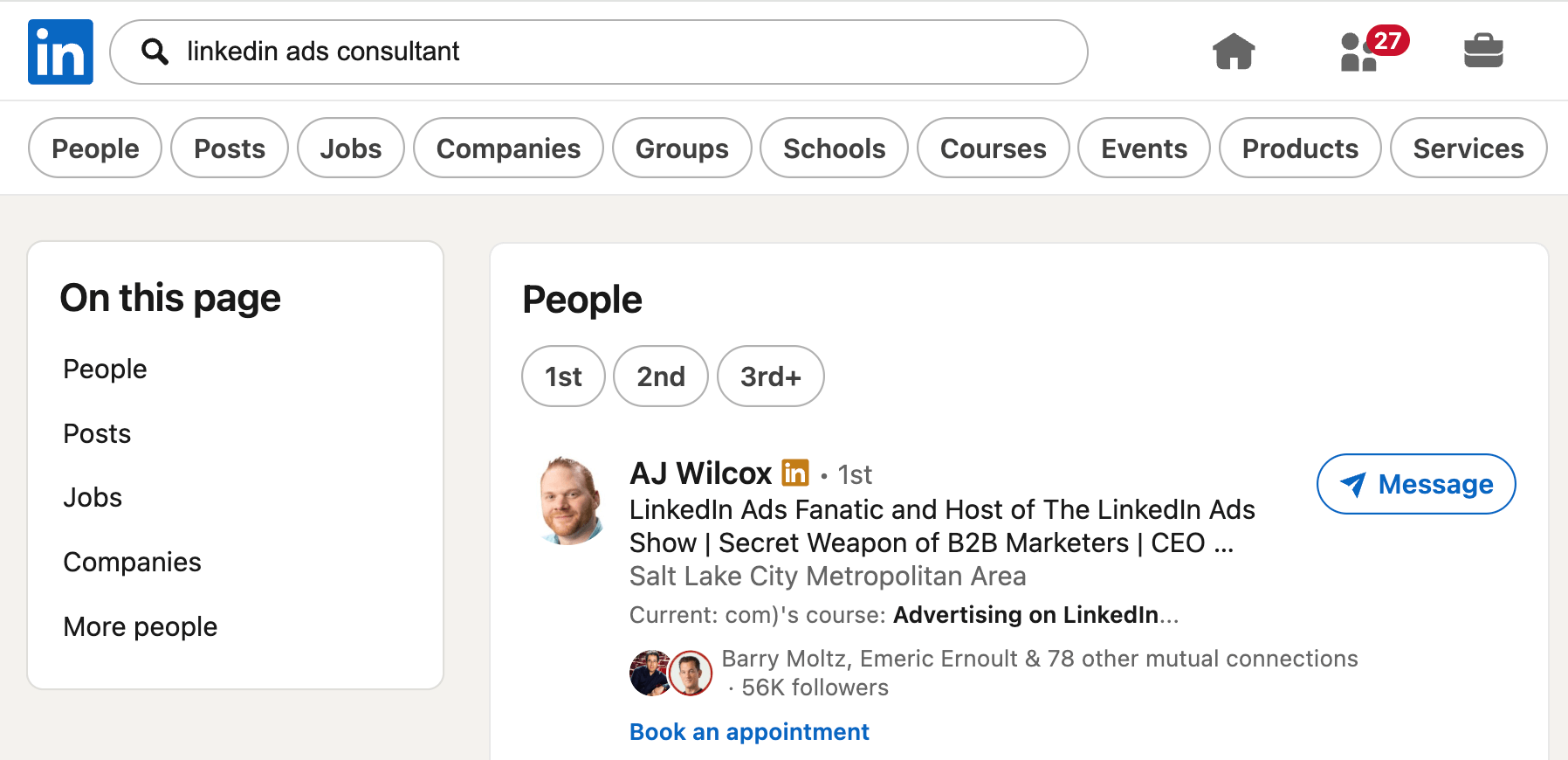
"On the paid side, LinkedIn doesn’t restrict the reach of ads simply because AI created them. But our client data shows a clear pattern regardless: ads that feel AI-generated or low-quality get less user engagement, which ultimately drives up costs and defeats the purpose of running them."
Michael Stelzner on Workflow Adaptation
Michael Stelzner, founder of Social Media Examiner, outlines his shift in content workflow after observing early signs of algorithmic and audience fatigue when relying heavily on automated tools:
"After training a custom AI model on my writing voice, I initially used it to draft posts from scratch. Over time, I noticed the clear tells that both human readers and platform algorithms detect: formulaic phrasing, predictable structures, and a lack of genuine perspective.
I shifted my workflow to writing entirely in my own voice first, then using AI strictly as an editorial consultant to spot weak logic and refine my hooks. The result is content that maintains personal authority rather than sounding like generic filler."
Future Outlook and Strategic Takeaways
The strategic requirements for achieving sustainable distribution on LinkedIn point to an increasingly integrated, trust-based publishing environment. Marketers, creators, and corporate strategy teams must adjust their operating tactics across four primary areas:
+--------------------------------------------------------------------------+
|                     STRATEGIC ROADMAP FOR LINKEDIN                       |
+--------------------------------------------------------------------------+
|  1. HUMAN-IN-THE-LOOP GENERATION                                         |
|     Prioritize original research, current data, and authentic voice.    |
|  2. CO-AUTHORING AS A CORE DISTRIBUTIVE MECHANISM                        |
|     Leverage Collaborative Posts to pool audience reach authenticly.     |
|  3. INTENT-BASED PROFILE SEARCH OPTIMIZATION                             |
|     Shift headlines and summaries from rigid keywords to clear natural   |
|     language value statements.                                           |
|  4. PAID THOUGHT LEADERSHIP INTEGRATION                                  |
|     Combine organic creator advocacy with targeted Campaign Manager spend.|
+--------------------------------------------------------------------------+- Adopt Human-in-the-Loop AI Workflows: Content teams must use generative AI tools for research, editing, and structure rather than primary end-to-end drafting. Original anecdotes, contemporary case studies, and distinct operational perspectives remain mandatory to prevent algorithmic suppression.
- Standardize Collaborative Co-Authoring: Enterprise organizations should institutionalize co-authoring workflows across executive leadership, internal subject matter experts, and complementary industry partners. This strategy bypasses organic page distribution limits and secures multi-network reach.
- Align Profiles with Intent-Based AI Discovery: Profiles must be optimized for natural language interpretation. Clear descriptions of problems solved, current responsibilities, and verified achievements take precedence over disconnected skill keyword lists.
- Unify Creator Partnerships with Account-Based Paid Media: Instead of relying solely on organic creator reach, B2B organizations should deploy the Creator Marketplace to discover user-generated brand mentions and amplify them via Thought Leader Ads. Hyper-targeting these ads to specific target accounts maximizes ROI by combining authentic social proof with focused distribution.