Executive Overview
The professional landscape of LinkedIn is undergoing a seismic shift. As generative AI tools become ubiquitous, the platform has launched a quiet, systemic offensive against "AI slop"—the deluge of low-effort, automated content that threatens to degrade the user experience. For marketers and thought leaders, this presents a critical juncture: the difference between content that establishes authority and content that is algorithmically buried or socially rejected.
In a recent expert analysis, LinkedIn strategist AJ Wilcox highlights that the era of "set-it-and-forget-it" automation is over. LinkedIn is no longer just a networking site; it is an increasingly sophisticated ecosystem that monitors for authenticity. To thrive, creators must move away from total AI reliance and adopt a hybrid workflow that prioritizes human expertise, nuanced storytelling, and community-driven engagement. This article explores the strategic frameworks necessary to leverage AI without sacrificing the human connection that defines true professional influence.
The LinkedIn Crackdown: Why "AI Slop" is a Liability
LinkedIn’s recent actions against automated content are not merely technical updates; they are a direct response to a decline in signal-to-noise ratios. The platform has reportedly blocked hundreds of thousands of automated comment attempts and billions of spam-like posting attempts in recent months.
Beyond the Algorithm: The Power of Social Policing
While LinkedIn’s internal filters are evolving, the most potent detection mechanism is the audience itself. LinkedIn has empowered users to report "AI slop," and these reports are currently functioning as a massive, crowdsourced training ground for the platform’s detection models. While these reports may not result in immediate shadow-banning today, they are shaping the future of reach.
Furthermore, LinkedIn is pivoting its internal AI strategy. Its "enhance your post" tool, which previously rewrote content in a generic, corporate-bot tone, is being replaced by proofreading-only features. The mandate is clear: AI is meant to be a polished assistant, not a ghostwriter. Creators who ignore this shift risk their content being relegated to the bottom of the feed, where low engagement rates serve as a final, permanent indictment of inauthentic copy.
The Ideation-Expertise-Polish (IEP) Framework
To navigate this new environment, AJ Wilcox proposes the "IEP Model," a three-stage workflow that places human insight at the heart of content creation.
1. Ideation: AI as the Brainstorming Engine
AI is at its best when it is acting as a sounding board. In the ideation phase, use tools like ChatGPT or Claude to generate frameworks, identify potential counter-arguments, or brainstorm lists of angles for a specific topic. The goal here is volume—extracting a dozen possibilities to identify the one that resonates with your professional expertise.
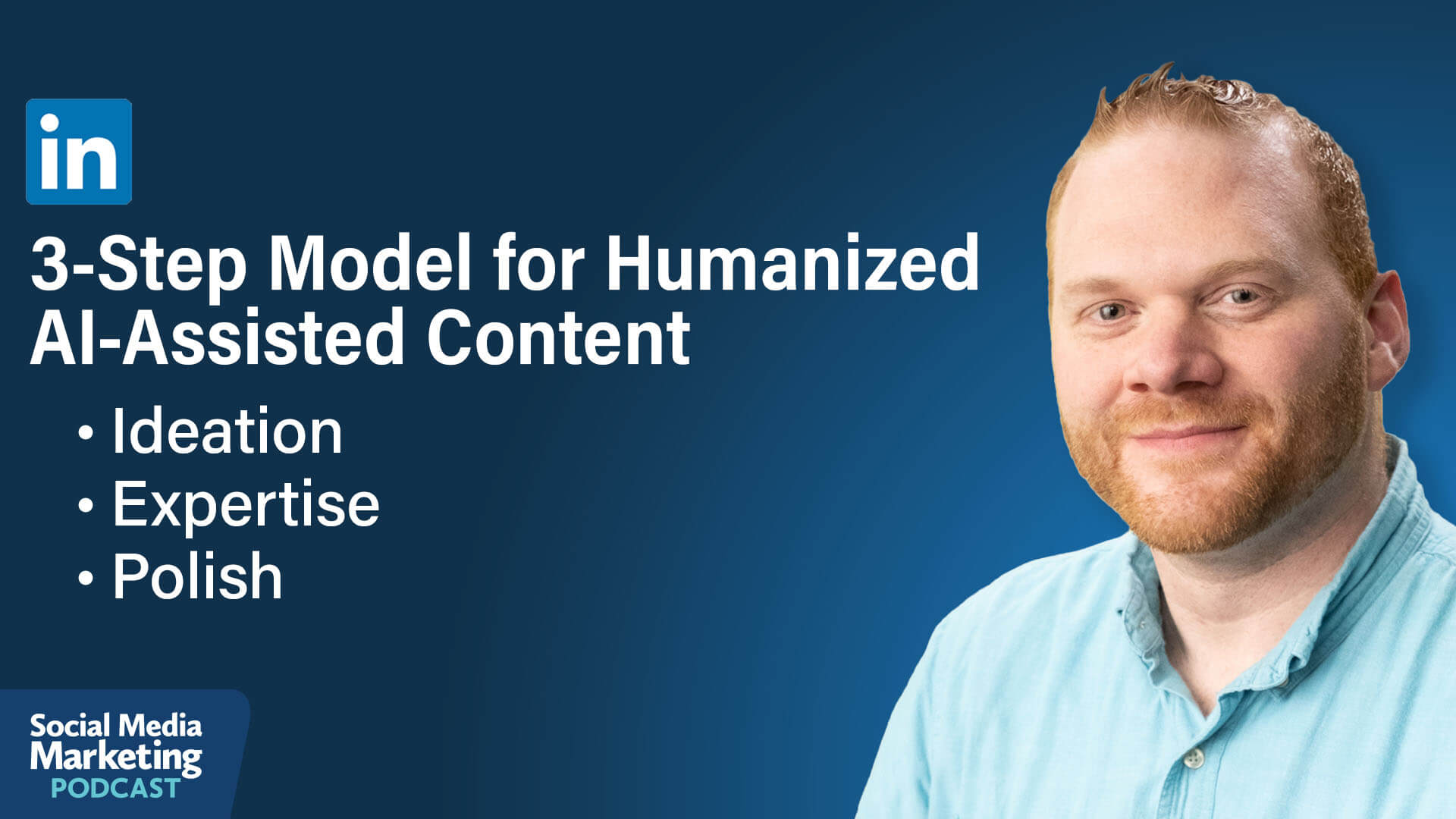
2. Human Expertise: The Non-Negotiable Core
This is the "sandwich" middle that AI cannot replicate. Whether it’s a specific anecdote from a client meeting, a unique observation about industry trends, or a counter-intuitive opinion, this layer must be authored by the human. If this section is delegated to AI, the content loses its "soul," becoming indistinguishable from the thousands of other posts flooding the feed.
3. Polish: Editing, Not Generating
Once your core message is drafted, AI can be used to refine the delivery. This involves tightening syntax, improving flow, and adjusting formatting for mobile readability. AI should be treated as a professional editor, not a surrogate author.
Identifying the "AI Tells" That Kill Credibility
Despite advancements, AI still leaves a "fingerprint" that seasoned readers—and the algorithm—can identify. Avoiding these markers is essential for maintaining trust:
- The Em-Dash Obsession: AI models lean heavily on em-dashes for pacing. If your post is riddled with them, it often triggers a subconscious "bot" alert in the reader.
- Formulaic Phrasing: Phrases like "unlock the power of," "navigating the complexities," or "guard your mental faculties" are hallmark indicators of standard LLM training data. They signal a lack of original thought.
- The Emoji Mismatch: Automated comments often append emojis that feel "off" or overly generic. If the emotional tone of the emoji doesn’t match your brand voice, don’t use it.
- The Trap of Intentional Typos: Some creators try to "trick" AI detectors by intentionally adding typos. This is a futile strategy. AI can just as easily be prompted to add human-like errors. The best defense against detection isn’t poor grammar—it’s genuine, high-value insight.
Strategic Engagement: The New Growth Engine
For those with smaller audiences, original posting is no longer the only path to growth. LinkedIn’s current architecture has transformed the comments section into a primary driver of visibility.
The Rise of Comment Density
LinkedIn now tracks "comment density"—the depth and substance of a discussion. Shallow praise like "Great post, thanks for sharing" has zero algorithmic value. To maximize reach, engage in thoughtful discourse.
The "Disagreeing Respectfully" Framework:
- Validate: Open with a genuine compliment regarding the original post’s premise.
- Differentiate: State clearly, "I have a slightly different take on this."
- Inquire: Close with an open-ended question like "What am I missing?" or "Am I looking at this wrong?"
This approach invites others to contribute, creating a multi-threaded conversation that the algorithm rewards far more than a simple back-and-forth exchange.
Maximizing Reach: Timing and Frequency
The rhythm of your posting schedule is a key factor in how LinkedIn distributes your content.
- The Mid-Week Sweet Spot: Tuesday and Wednesday are the strongest days for engagement. Avoid Mondays, where the feed is crowded with "catch-up" content, and Fridays, when professional attention is waning.
- The "One-Post" Rule: Never publish twice in a single day. Posting a second time before the first has finished its cycle will cause the second post to cannibalize the first’s engagement.
- The "Breathing Room" Principle: Give each post at least 24 hours to gain momentum. Even though LinkedIn claims to keep content alive longer, the most recent post will always command the lion’s share of your daily impressions.
Leveraging AI in Video and Advertising
LinkedIn’s AI integration is not all restrictive; it offers significant advantages in production efficiency.
Live Stream Optimization
One of the historical weaknesses of LinkedIn Live was the lack of post-event discovery. New AI tools now automatically segment long-form streams into chapters and short-form highlights. This is a game-changer for executive branding. Leaders can host a live Q&A without the need for high-end editing; the AI handles the heavy lifting of clipping the most impactful 60-second moments, which can then be repurposed as native video content.
The Ad Frequency Myth
In the world of paid ads, LinkedIn’s platform suggests running five or more creative variations per campaign. AJ Wilcox warns against this. LinkedIn’s frequency cap (which limits how often a user sees an ad) is applied per creative. By running five versions, you are effectively entering five separate auctions, which drives up your costs and floods the same user with your brand. Stick to 2 to 4 high-quality variations per ad set to maintain budget efficiency and testing integrity.
Future Outlook: The Human Premium
As we look toward the future, the value of human-centric content will only increase. We are entering an era where "Human-Written" will become a badge of premium quality.
The successful marketer of 2027 will not be the one who uses AI to replace their effort, but the one who uses AI to augment their reach while doubling down on their unique professional perspective. LinkedIn’s systems are trending toward a "trust-based" algorithm. By focusing on substantive, community-oriented engagement and treating AI as a tool for polish rather than a source of truth, creators can build a sustainable, high-authority presence that survives any future algorithmic crackdown.
The path forward is clear: Use AI to handle the logistics, but ensure that every word, every insight, and every interaction carries the undeniable mark of human experience.