Executive Overview
Wireless charging has long been marketed as the ultimate symbol of cable-free convenience. Dropping a device onto a sleek pad and watching the battery percentage tick upward feels effortless, modern, and clean. Yet, millions of smartphone users routinely run into a frustrating paradox: their charging pads take hours to replenish a battery, occasionally leaving the phone burning hot while failing to reach a full charge.
While many blame faulty charging pads, outdated software, or degrading lithium-ion batteries, the true culprit is frequently sitting right in plain sight. It is your phone case.
As smartphones command prices well north of $1,000, protective cases have transformed from optional accessories into essential insurance policies. However, the vast majority of case manufacturers prioritize drop protection, aesthetic flair, and structural thickness over the complex physics of electromagnetic induction. When a case is poorly engineered for wireless power transfer, it introduces a physical barrier that weakens magnetic fields, traps damaging heat, and drastically reduces charging speeds.
Understanding how induction works—and which materials, thicknesses, and accessories disrupt it—is no longer just for tech enthusiasts. It is vital knowledge for protecting your battery health, ensuring optimal charging performance, and safeguarding the structural integrity of your expensive hardware.
Detailed Chronology: The Evolution of Wireless Power and Accessory Friction
To understand why modern phone cases struggle so intensely with wireless charging, it helps to examine how the technology evolved from a niche novelty into an industry standard over the past fifteen years.
2009–2012: The Genesis and the Qi Standard
The commercial journey of wireless charging began in earnest with the 2009 Palm Pre. While the device itself became a cult classic among smartphone enthusiasts, its inclusion of a magnetic charging stand was remarkably prescient. It attempted to solve the single greatest challenge of inductive charging: precise coil alignment. However, Palm’s proprietary approach remained an isolated experiment.
The landscape shifted permanently in 2012 when Nokia released the Lumia 920. This device was the first mainstream smartphone to adopt the Wireless Power Consortium’s (WPC) Qi standard. Designed to establish a universal framework for inductive power transfer across various manufacturers, Qi quickly became the global default. Shortly after, Samsung introduced a retrofittable wireless charging back for the Galaxy S3, and Google’s LG-manufactured Nexus 4 integrated Qi charging directly into the chassis.
2017: Apple Joins the Ecosystem
Despite early adoption by Android pioneers, wireless charging remained a secondary feature for years. That changed dramatically in 2017 when Apple introduced glass backs and wireless charging support to the iPhone 8 and iPhone X. By anointing inductive charging with its market influence, Apple forced the entire mobile accessory industry to adapt overnight. Suddenly, millions of consumers were dropping their iPhones onto flat puck chargers, and the demand for third-party protective cases compatible with wireless pads exploded.
2020–Present: The MagSafe Revolution and Qi2
For a decade, flat wireless charging pads dominated the market, plagued by a persistent issue: if a phone was bumped even a millimeter out of alignment, power transfer dropped to a crawl or stopped entirely.
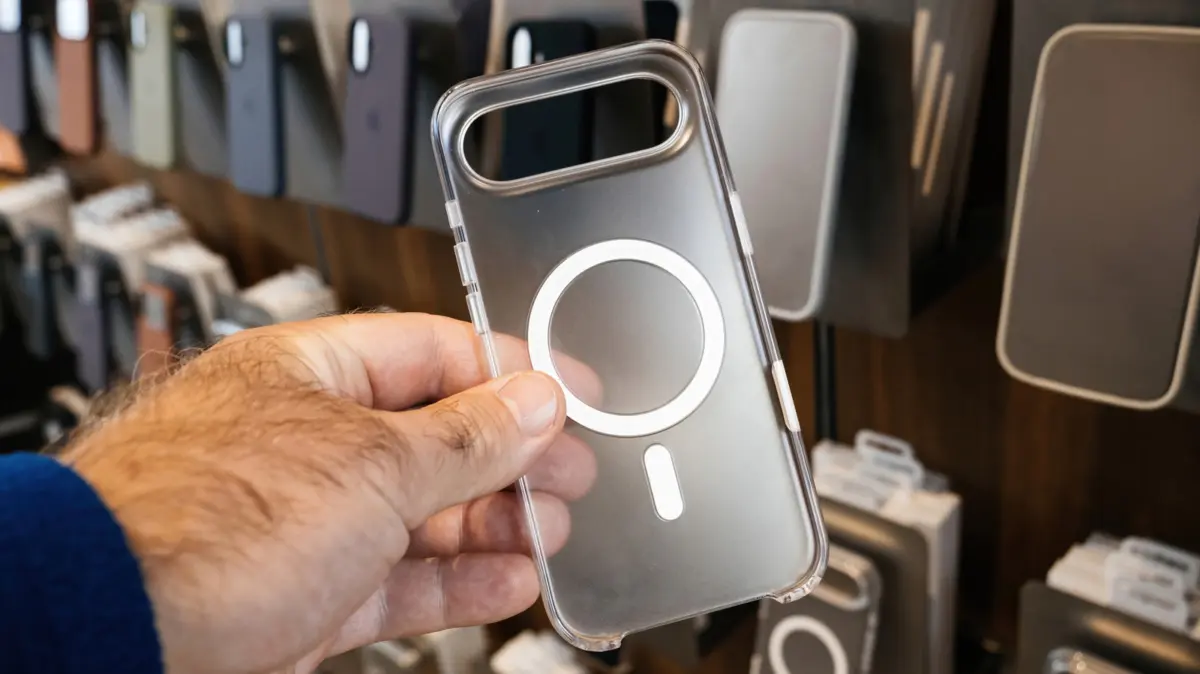
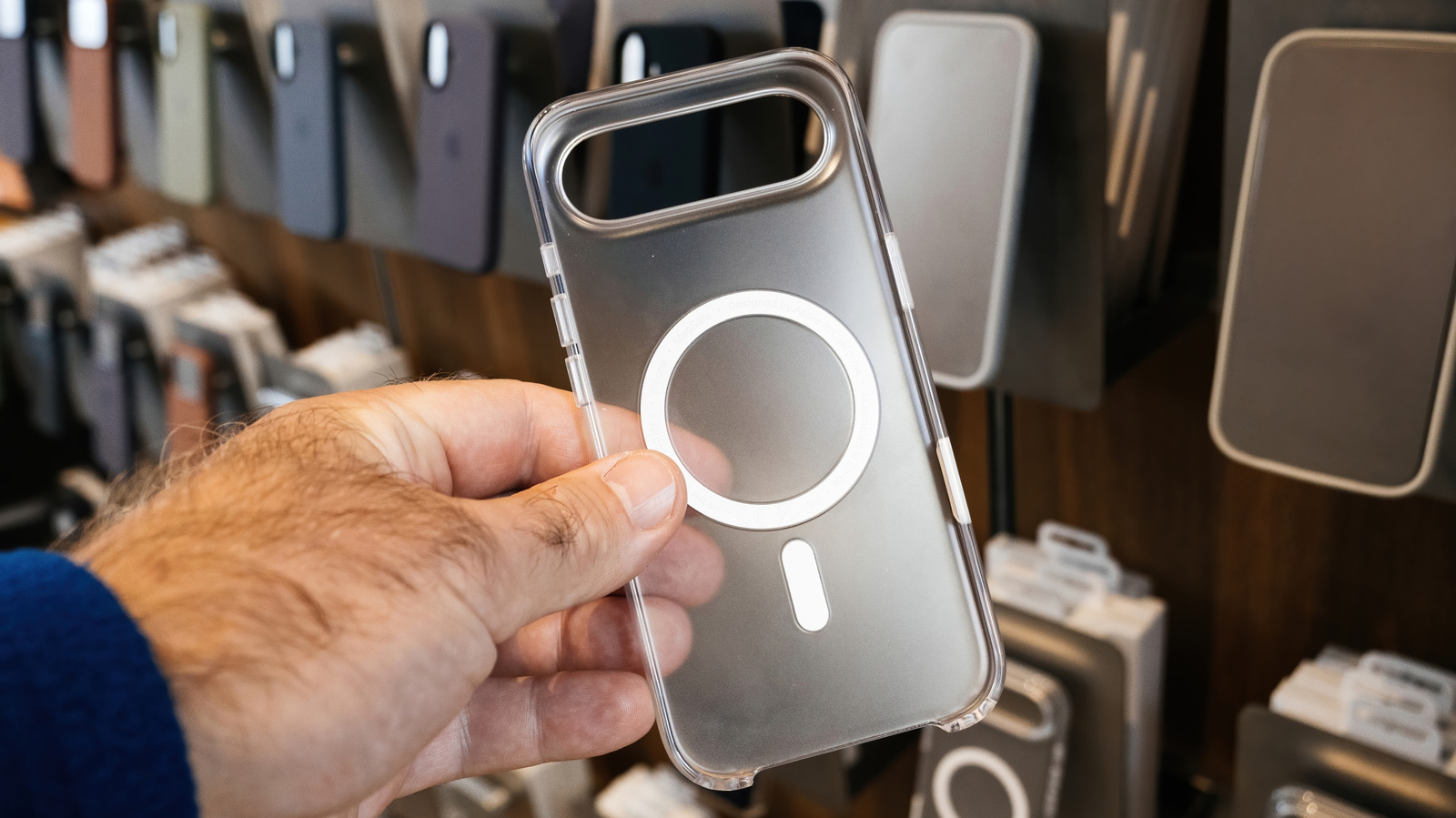
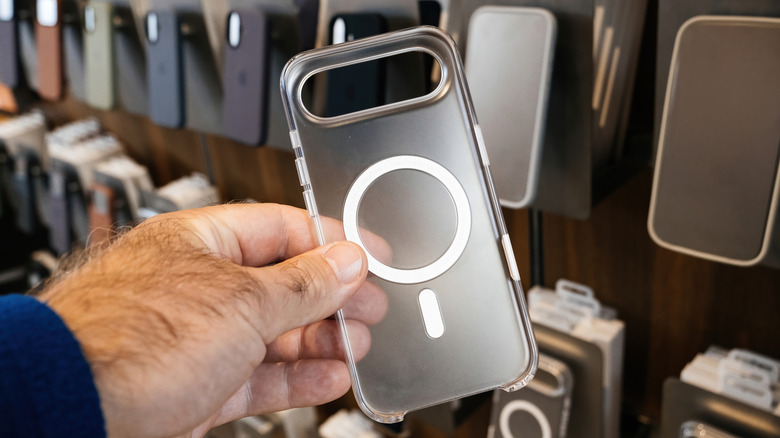
In 2020, Apple solved this with the introduction of MagSafe on the iPhone 12. By embedding a ring of precise magnets around the phone’s internal charging coil, Apple ensured a "snap-to-fit" mechanical alignment that maximized energy transfer efficiency. The WPC recognized the brilliance of this approach and adopted it into the Qi2 standard, ensuring that magnetic alignment would become the universal baseline for future Android and iOS devices alike.
Yet, this shift created a new engineering challenge. Phone cases now had to contend not just with thickness and non-conductive plastics, but with complex internal magnet arrays, alignment rings, and the rigid structural tolerances required to keep modern flagship devices safe from gravity.
Supporting Context & Metrics: The Hidden Physics of Inductive Charging
To appreciate why a piece of plastic or silicone can completely derail your charging setup, it is necessary to look under the hood at how wireless charging actually works.
The Mechanics of Induction
Unlike wired charging, which forces electrons directly through a metal-to-metal connection with minimal resistance, wireless charging relies on resonant electromagnetic induction.
- Alternating current passes through a transmitter coil inside the charging pad, generating a fluctuating magnetic field.
- When a receiver coil inside your smartphone is placed within this magnetic field, an electric current is induced within the phone’s internal circuitry to charge the battery.
This process is inherently inefficient. Energy is inevitably lost as electromagnetic radiation disperses into the air. When you interpose a phone case between the transmitter and receiver coils, you increase the physical distance (known as the air gap). Because magnetic field strength drops off sharply with distance, even an extra millimeter or two of case material can exponentially degrade power transfer efficiency.
Speed and Thermal Realities
The performance gap between wired and wireless charging remains vast:
- Wired Charging: Proprietary wired protocols from brands like OnePlus, Xiaomi, and Samsung can push 80W to 120W+ directly into a device, filling a battery in under half an hour.
- Wireless Charging: Standard Qi charging typically caps out at 5W to 15W. Even advanced MagSafe and Qi2 implementations generally peak at 15W to 25W under ideal conditions.
When an inefficient case is added to the mix, energy that fails to transfer into the battery does not simply vanish—it converts into ambient heat. This excess thermal energy gets trapped by thick, insulating case materials.
Prolonged exposure to elevated heat is the sworn enemy of lithium-ion batteries. It accelerates chemical degradation, reduces maximum battery capacity over time, and can trigger thermal throttling, forcing the phone to slow down or halt charging entirely to protect its internal components.
The Dangers of Material Mismatches
Not all case materials are created equal.
- Plastics and Silicones: Generally induction-friendly, provided they are kept thin. However, overly robust, multi-layered rugged cases often exceed safe thickness thresholds (typically recommended to stay under 3mm).
- Metals: Absolute anathema to wireless charging. Metal acts as a Faraday cage, blocking electromagnetic fields entirely. Cases featuring metallic kickstands, metal plates for magnetic car mounts, or metallic branding accents will either prevent charging outright or cause dangerous, localized overheating.
- Badly Placed Magnets: Third-party magnetic grips, wallet attachments, or rings adhered to the outside of a case can misalign internal magnetic arrays, creating dead zones that prevent efficient power transmission.
Expert Insights and Real-World Case Studies
Hardware reviewers and engineering experts frequently encounter the real-world consequences of mismatched charging ecosystems.
Consider the modern ultra-flagship landscape, such as the Samsung Galaxy S Ultra series. These devices feature massive internal batteries, premium glass backs, and advanced camera modules, but they often lack native magnetic alignment rings built into the chassis. To enjoy the convenience of magnetic Qi2 charging stands or car mounts, users routinely resort to third-party accessories.
In field tests conducted by mobile technology reviewers, installing bulky grip accessories—such as popular collapsible phone grips—directly onto a case creates a compounding failure loop:
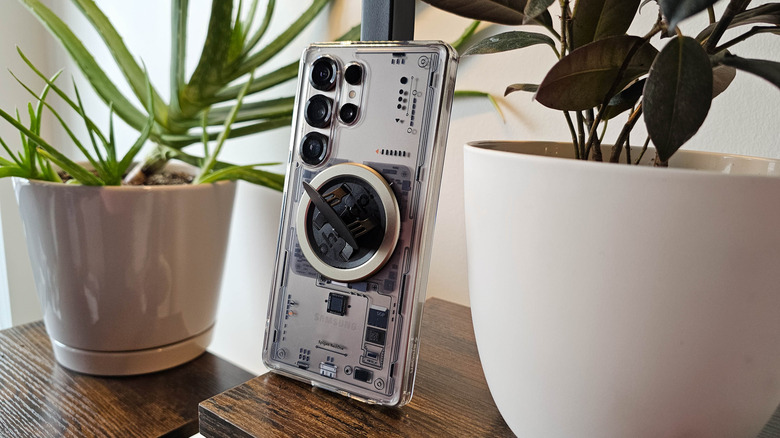
- The accessory adds massive physical bulk, pushing the phone away from the charging coil.
- The increased distance forces the charging pad to work at maximum output, generating elevated heat.
- Over time, this concentrated heat softens the industrial adhesives used to secure the phone’s rear glass panel.
In extreme cases, users have reported that prolonged high-wattage wireless charging combined with thick, obstructed grips literally "cooked" the internal adhesives of their devices, compromising factory water resistance ratings and causing backplates to loosen. This starkly illustrates that the consequences of poor case compatibility extend far beyond a slow charge indicator—it can result in structural hardware failure.
Future Outlook: The Path to Seamless Wireless Power
As the mobile industry marches toward a truly cable-free future, solving the accessory bottleneck is paramount. Several key trends are shaping the next generation of wireless power:
1. Mainstream Adoption of Qi2 and Integrated Magnets
With the proliferation of the Qi2 standard, built-in magnetic alignment is quickly transitioning from an Apple-exclusive luxury to an industry-wide expectation. Future Android flagships are increasingly expected to ship with native magnetic rings embedded directly beneath their back glass, standardizing alignment and reducing the reliance on bulky magnetic cases.
2. Smart, Adaptive Case Materials
Material science is advancing rapidly. Case manufacturers are beginning to engineer composite materials that offer military-grade drop protection while remaining acoustically and electromagnetically transparent. By utilizing specialized micro-lattices and thermally conductive polymers, upcoming cases will dissipate heat away from the charging coil rather than trapping it against the device.
3. Higher Efficiency at Greater Distances
Research and development within the WPC and independent tech firms are pushing toward resonant inductive charging and radio frequency (RF) beaming technologies capable of transferring power across greater distances. While true room-scale wireless charging remains in its infancy, improvements in medium-range inductive coils will eventually render minor variations in case thickness negligible.
Summary Recommendations for Consumers
Until universal high-efficiency wireless power arrives, consumers must remain proactive. When shopping for a new phone case:
- Check the Thickness: Aim for slim-profile cases (under 3mm) that explicitly advertise wireless charging compatibility.
- Inspect for Metal: Avoid any case featuring exposed metal plates, heavy kickstands, or unapproved metallic embellishments.
- Read Real-World Reviews: Do not rely solely on marketing claims. Check community forums and video reviews to see how specific cases perform on high-speed wireless and magnetic car chargers.
By making informed choices about your protective accessories, you can enjoy the effortless convenience of wireless charging without sacrificing your phone’s battery health, charging speed, or structural integrity.