Executive Overview
In an era where organic search traffic is becoming increasingly volatile, digital marketers are pivoting toward a more diversified traffic acquisition strategy. Social media platforms, long viewed as "walled gardens" separate from the traditional search ecosystem, are finally being integrated into the foundational toolkit of SEO professionals. Google has officially expanded its Search Console capabilities to include "platform properties," allowing businesses to track the organic search performance of their YouTube, TikTok, X (formerly Twitter), and Instagram professional accounts with the same level of granularity previously reserved for websites.
This development marks a significant shift in how search engines view social content. By treating these profiles as distinct web properties, Google is acknowledging the reality of modern search behavior: users frequently discover brands, products, and information through social media channels that then surface in Search, Discover, and AI-driven interfaces. For ecommerce businesses and content creators, this integration is not merely a convenience—it is a critical evolution in cross-channel attribution and optimization.
Detailed Chronology: From Siloed Data to Unified Insights
For years, digital marketers have relied on a bifurcated analytics model. Native social media tools offered deep insights into follower demographics and internal platform engagement, but they remained blind to how that content performed once it escaped the platform’s ecosystem and entered the wider web. Conversely, Search Console tracked website health but left the performance of off-site social assets largely opaque.
The Slow Rollout
The integration of social profiles into Search Console did not happen overnight. After a period of quiet testing and a gradual, phased rollout, Google has finally cleared the path for universal access. This transition reflects a broader trend within the Mountain View giant to consolidate data streams as AI-powered search experiences—such as AI Overviews and Gemini—become more prominent.
Activation Mechanics
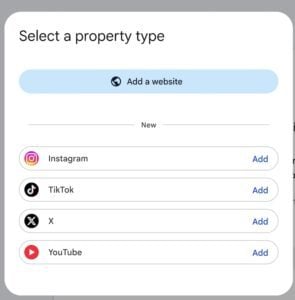
The process for adding a social property is streamlined to mimic the traditional website verification workflow:
- Access: Navigate to the top-left property drop-down menu in the Google Search Console dashboard.
- Selection: Select the "Add property" option.
- Authentication: Follow the guided prompts to verify ownership of your professional accounts (YouTube, TikTok, X, or Instagram).
- Data Ingestion: Once verified, the system begins processing. Users can expect to see actionable data populate the dashboard within approximately 36 hours.
Supporting Context & Metrics: Decoding the Performance Dashboard
The Search Console interface for these new social properties is minimalist but highly focused. It strips away the complex technical SEO diagnostics required for websites and centers the experience on two primary pillars: the Insights tab and the Performance section.
The Power of the Performance Filter
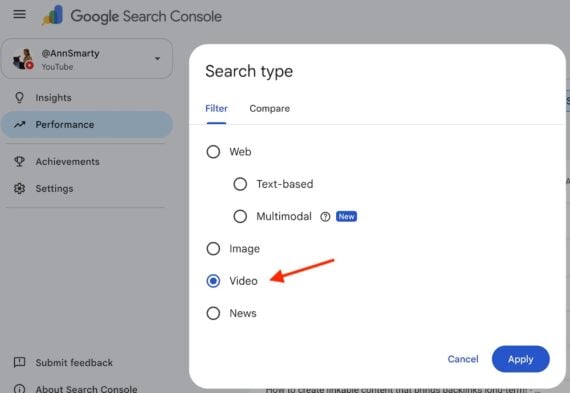
The Performance section is where the real analytical heavy lifting occurs. Users can toggle between various search types, including:
- Web: Traditional text-based and multimodal search queries.
- Image: Vital for brands leveraging visual commerce.
- Video: Essential for YouTube integration.
- News: For media-heavy social profiles.
- Discover Visibility: A critical metric for understanding how social content is being surfaced in personalized Google feeds.
The Video SEO Breakthrough
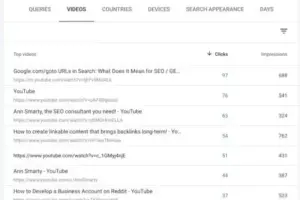
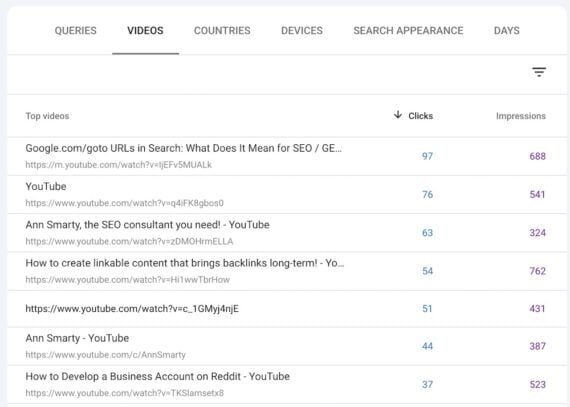
Perhaps the most impactful update is the ability to track video performance. Historically, correlating specific YouTube video traffic with its performance in Google Search results was a manual, often imprecise, task. With this update, Search Console provides a granular list of videos, their impressions, and their click-through rates.
This is particularly relevant in the age of generative AI. YouTube content is frequently cited and indexed by AI Overviews and Gemini. By using the "Videos" search type, marketers can identify exactly which videos are generating traffic and which queries are driving those views. If a video is ranking for a high-volume query but yielding a low click-through rate, marketers can now surgically optimize their titles, descriptions, and metadata to align better with search intent.
The Strategic Pivot: Optimizing for Multimodal and Video Search
With the integration of social profiles, the definition of "SEO" has effectively expanded. It is no longer just about optimizing a landing page; it is about optimizing the entire brand footprint across the web.
Tactical Video Optimization
To maximize search visibility, marketers should adopt a data-driven approach to their video library:
- Identify Underperformers: Use the Search Console performance report to find queries with high impression counts but low clicks, particularly where the average position is lower than 4.
- Title Re-engineering: Incorporate the target query directly into the video title.
- Iterative Testing: Monitor how variations in descriptions and thumbnail tags affect ranking positions over time.
The Multimodal Advantage for Ecommerce
Ecommerce businesses, which rely heavily on Instagram for product discovery, stand to benefit significantly from the "Multimodal search" performance filter. This feature allows merchants to track whether their product photography is successfully appearing in Google Image Search. Given that visual search is a growing component of consumer behavior, knowing which social posts are "indexing" correctly allows for a more targeted approach to social content production.
Cross-Channel Synergy
The true value of this update lies in the ability to synchronize marketing efforts. A merchant can now execute a coordinated campaign: launching a product page, publishing a supporting YouTube video, and sharing imagery on Instagram. By annotating the performance data in Search Console with the launch dates of these assets, marketers can build a clear picture of how each channel contributes to the overall organic search visibility of the brand.
Future Outlook: The Evolution of Search
As we look toward the future, the integration of social profiles into Search Console is likely just the beginning.
The AI-Search Intersection
The reliance on Google’s AI Overviews means that the "source" of information is more important than ever. As AI systems continue to crawl and index social media content as valid sources of information, the ability to track how these platforms rank in Google will become a baseline requirement for any digital strategy. We anticipate that Google will continue to expand the metrics available for these properties, potentially introducing more advanced engagement metrics or deeper integration with Google Analytics 4.
Closing the "Branded Search" Gap
While the current version of the tool lacks a native "Branded search" filter, the data is still available for those willing to do a bit of manual analysis. By filtering queries by specific brand name variations, marketers can gain deep insights into how their social profiles rank relative to their own websites. This allows for a "holistic search" view—understanding that when a user searches for your brand, they might be looking for your website, your YouTube channel, or your Instagram profile simultaneously.
Final Thoughts for the Digital Professional
The decrease in organic search traffic to traditional websites is not necessarily a sign of decline, but rather a sign of platform migration. Users are finding answers in more diverse places. By adopting this new Search Console functionality, businesses are not just tracking traffic—they are securing their relevance in a fragmented digital landscape.
The successful digital marketer of tomorrow will be the one who understands that search, social, and AI are no longer separate silos, but a single, interconnected ecosystem. Integrating your social profiles into Google Search Console is the first, essential step toward mastering that ecosystem.