Executive Overview
The ecommerce landscape is undergoing its most significant structural transformation since the dawn of the marketplace era. As we move through the fourth quarter of 2026, the industry is witnessing a pivot from static digital storefronts to "agentic commerce"—a paradigm where AI agents don’t just provide information, but actively execute complex tasks, optimize supply chains, and navigate consumer intent with unprecedented autonomy.
This week’s industry developments underscore a convergence of three powerful trends: the rise of autonomous AI agents in store design and marketing, the expansion of hyper-local logistics partnerships, and the maturation of cross-channel marketplace management. From Shopify’s new design surfaces to Amazon and USPS’s aggressive same-day delivery pilot, merchants are being equipped with tools that blur the line between backend operations and front-end consumer interaction. This report examines the pivotal shifts that are redefining how businesses operate in an increasingly automated and, paradoxically, more human-centric digital economy.
Detailed Chronology of Key Releases
1. The Design Revolution: Shopify Canvas
Shopify has officially entered the next generation of web design with Canvas, a sophisticated interface that integrates the platform’s AI agent, Sidekick. Unlike traditional drag-and-drop builders, Canvas allows merchants to interact with their storefront as a fluid concept. By utilizing chat-based prompts, users can adjust layouts, modify aesthetic themes, and zoom into granular details. Crucially, Sidekick acts as a real-time validator, reviewing screenshots and structural integrity during the build process to ensure that aesthetic changes do not compromise functionality or conversion paths.

2. Autonomous Marketing and Discovery
The industry is seeing a massive influx of AI-agentic platforms designed to offload the cognitive burden of digital marketing:
- TikTok’s Agentic Commerce: TikTok is rolling out "Buy Direct" and "Shopping Assistant." The latter serves as an always-on conversational concierge, providing real-time guidance on sizing, shipping, and product availability.
- Amazon Ads Agent: Amazon has launched a unified platform for its advertising suite. By consolidating sponsored ads, display, video, and audio campaigns, the tool allows advertisers to either manually curate their presence or grant the AI full autonomy to optimize campaigns based on real-time performance data.
- Contentstack Canoe: This new visibility tool addresses the "black box" of AI search. Canoe scans a brand’s URL, profiles its competitors, and generates the likely questions AI search engines will ask about that brand, allowing marketers to proactively optimize their content for an AI-first search environment.
3. Logistical Reinvention and Marketplace Management
Efficiency in the "last mile" and marketplace synchronization has hit a new high point:
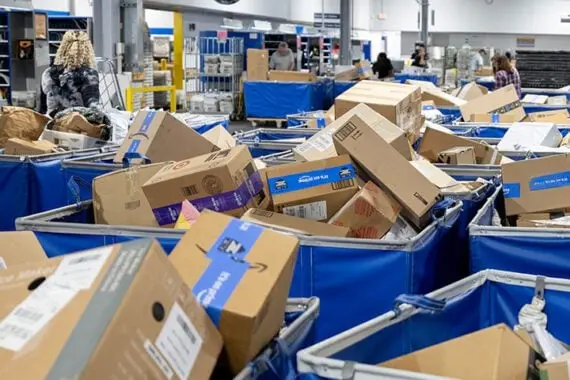
- The Amazon-USPS Pilot: A transformative same-day delivery pilot has been initiated, where Amazon packages arriving at local USPS hubs between 12 p.m. and 1 p.m. are sorted and delivered by postal carriers by 8 p.m. This leverages existing government infrastructure to solve the notoriously difficult same-day logistics puzzle.
- ShipStation & Walmart: The launch of "Ship with Walmart" provides sellers with direct access to negotiated shipping rates and enhanced seller protections, directly embedding these logistics advantages into the standard ShipStation dashboard.
- uParcel’s "Complete Marketplace Outsource": Targeting the Southeast Asian market, this service offers an end-to-end management solution that covers everything from store design and listing optimization to warehouse storage and final-mile delivery.
Supporting Context & Metrics: The Shift to "Agentic" Operations
The term "agentic" appears throughout the latest product releases, signaling a shift from simple automation (which follows rules) to agency (which makes decisions).

Data Enrichment as the Backbone:
The acquisition of Vizby by Swap, and the new data enrichment tools from Commerce (for BigCommerce and Feedonomics), illustrate that AI is only as good as the product data it consumes. By automating the creation of search-engine metadata, structured data, and FAQs, these tools ensure that brands remain "AI-readable." Without these layers of metadata, a brand is essentially invisible to the conversational shopping assistants currently being deployed by TikTok, Amazon, and other major players.
Risk Mitigation and Governance:
With the proliferation of AI agents comes the danger of "runaway" automation. The introduction of miniOrange’s Secure MCP Server for WordPress is a critical development in this space. By providing a governance layer, it allows businesses to define exactly what an AI agent can touch, which permissions it holds, and which actions require human override. This marks the beginning of a "corporate governance" phase for AI, where enterprises prioritize control and security over pure, unbridled speed.
Official Statements and Strategic Rationale
Industry leaders are positioning these releases not merely as incremental updates, but as defensive and offensive maneuvers in a tightening market.
- On Customer Engagement: MoEngage’s launch for Shopify reflects a growing demand for unified data. A spokesperson noted that the goal is to "unify merchant data across multiple channels—SMS, email, and WhatsApp—to ensure that the customer experience is consistent, regardless of the entry point."
- On Supply Chain Resilience: UPS’s rollout of Secure Commerce is a direct response to rising global uncertainty. By integrating InsureShield and CommerceShield into a single visibility suite, UPS is attempting to transition from a "shipping utility" to a "risk-mitigation partner." The strategy is clear: provide enough transparency to allow merchants to make inventory decisions before, during, and after the shipment reaches the customer.
- On Creator Economics: The launch of Nexa’s creator marketplace and partnrUP’s expansion into affiliate automation highlights the professionalization of influencer marketing. By removing the "middleman fee" and focusing on scalable affiliate payouts, these platforms are effectively turning the creator economy into a predictable, performance-based marketing channel rather than a speculative one.
Future Outlook: The Next 18 Months
As we look toward 2027, the ecommerce ecosystem will likely bifurcate into two distinct categories: The AI-Orchestrated and The Manually Managed.
The Rise of "Invisible" Commerce
The next wave of innovation will likely focus on "headless" commerce, where the shopping experience exists entirely within AI chat windows or social media interfaces. Consumers will increasingly rely on shopping assistants to filter, negotiate, and purchase on their behalf. Brands that fail to integrate their product data into these agent-friendly formats will find themselves effectively de-indexed from the modern shopping funnel.
Consolidation of Logistics
The partnership between USPS and Amazon is a harbinger of things to come. Expect to see more public-private infrastructure partnerships as retailers seek to lower the cost of same-day delivery without the massive capital expenditure of building their own proprietary fleets.

The Governance Mandate
We anticipate a massive surge in demand for tools that manage AI agents. As businesses deploy more automated agents for customer service (like HelppliX) and storefront management, the "Human-in-the-Loop" (HITL) architecture will become the industry standard. Companies that cannot provide clear audit trails for their AI decisions will likely face regulatory scrutiny and trust deficits from their consumer base.
Final Assessment
The current surge in product releases confirms that the "experimental" phase of AI in ecommerce is over. We have entered the "integration" phase. Merchants are no longer asking if they should use AI; they are asking which platforms will allow them to maintain control while offloading the heavy lifting of inventory, marketing, and logistics to intelligent agents. For the modern merchant, the path to growth lies in mastering the intersection of high-quality, structured product data and high-autonomy operational agents. The winners of the next cycle will be those who treat their digital infrastructure as a living, learning, and self-optimizing ecosystem.