Executive Overview: A New Era of Autonomous Commerce
The ecommerce landscape is currently undergoing a structural transformation, shifting from static digital storefronts to dynamic, "agentic" ecosystems. As of October 2026, the industry is witnessing a massive migration toward autonomous, AI-driven workflows that permeate every layer of the merchant experience—from website design and product discovery to logistics and customer service.
This week’s updates underscore a clear trend: the "agent" is no longer a luxury; it is the new standard. Shopify’s launch of Canvas, Amazon’s new Ads Agent, and the surge in AI-powered discovery tools from companies like Swap and Contentstack signal that businesses are moving away from manual configuration toward a model where AI agents actively execute, validate, and optimize operations. Simultaneously, logistics giants like UPS and the U.S. Postal Service are leveraging technology to bridge the gap between digital convenience and physical fulfillment, introducing same-day delivery pilots and secure commerce solutions. For merchants, this shift promises unprecedented efficiency, but it also demands a new strategic approach to brand control and digital governance.
Detailed Chronology of Industry Developments
The Rise of Agentic Design and Advertising
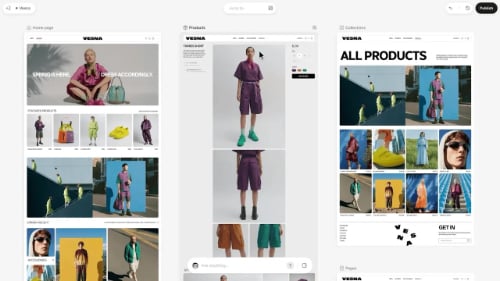
Shopify has officially entered the next phase of its AI evolution with the launch of Canvas. This design surface serves as a workspace where merchants collaborate with Sidekick, Shopify’s AI agent. Unlike previous iterations of AI design tools, Canvas allows for a high-fidelity, visual-first interaction: merchants can view layouts, adjust the "feel" of their storefront, and zoom into micro-elements. Crucially, Sidekick does not just suggest changes; it validates them against site performance and design standards in real-time, effectively serving as an autonomous design partner.

Simultaneously, the advertising sector is seeing a similar consolidation of power. Amazon Ads has debuted its Ads Agent platform, which unifies sponsored, video, display, and audio campaigns under one AI-managed umbrella. This transition allows advertisers to either exert granular control or surrender the heavy lifting to Amazon’s predictive algorithms, which are designed to navigate the full customer funnel.
AI-Powered Discovery and Visibility
The battle for visibility in the age of AI search engines is heating up. Contentstack has launched Canoe, an AI visibility tool that provides brands with a "look in the mirror." By scanning URLs and predicting how AI search engines describe a brand—and its top ten competitors—Canoe allows marketing teams to audit and edit their AI-facing narratives. This is a critical development for SEO; as search shifts toward generative answers, brands must actively manage the "knowledge" that AI agents hold about them.
In a similar vein, Swap has acquired Vizby to integrate AI-driven discovery into its existing platform, while Commerce (the parent company of BigCommerce and Feedonomics) has introduced advanced data enrichment tools. These services automatically generate metadata, structured Q&A, and feature bullets, ensuring that a brand’s catalog is "AI-ready" for the next generation of conversational search.
Logistics and the "No-Box" Future
Physical logistics are becoming as fluid as digital code. A noteworthy collaboration between UPS (Happy Returns) and TikTok Shop now enables "no-box, no-label" returns for participating U.S. sellers. This service removes the most significant friction point in the return process—packaging—directly integrating the physical return experience into the social commerce flow.
Furthermore, a pilot program between the U.S. Postal Service and Amazon marks a significant milestone in last-mile delivery. By utilizing specific delivery windows (2 p.m. to 8 p.m.) and strict route management, the USPS is testing the viability of same-day fulfillment for Amazon packages, potentially setting a new benchmark for domestic delivery speed.
Supporting Context & Metrics: The Mechanics of the Shift
The proliferation of these tools is driven by a need to mitigate "operational drag." For multichannel sellers, the complexity of managing listings across Amazon, Shopee, Lazada, and TikTok Shop has historically been a barrier to entry.
- Multichannel Efficiency: Platforms like Selro have integrated Claude AI to automate the generation of product listings. By using AI to handle the tedious aspects of content creation, sellers report a significant reduction in time-to-market.
- Operational Outsourcing: uParcel’s "Complete Marketplace Outsource Solutions" demonstrates the market’s appetite for "end-to-end" management. By handling everything from storefront optimization to warehouse packing and delivery, uParcel is positioning itself as an essential partner for brands struggling to manage the fragmented marketplace landscape.
- Governance and Control: The introduction of miniOrange’s Secure MCP (Model Context Protocol) Server for WordPress highlights a growing concern: security. As businesses grant AI agents access to their backend, they require a "governance layer." miniOrange provides this by allowing merchants to define exactly which capabilities an AI agent can touch, effectively adding a safety harness to the autonomous workflow.
Official Statements and Industry Impact
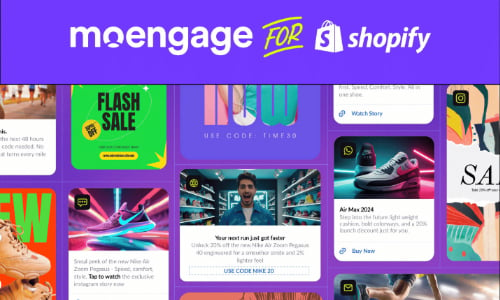
Industry leaders emphasize that this shift is about empowerment, not replacement. Regarding the new MoEngage for Shopify integration, the company notes that the goal is to unify data across channels—email, SMS, WhatsApp, and push notifications—to create a "single source of truth" for the customer. By automating the drafting of campaigns and the generation of performance reports, marketing teams are freed from manual data entry.
Similarly, the leadership at partnrUP has emphasized that their expansion into affiliate commission payouts and creator video syndication is a direct response to the "creator economy" needing better integration with "commerce infrastructure." By connecting creator performance (videos) directly to commerce metrics (Amazon/Shopify sales), they are closing the loop on social-led revenue.
Future Outlook: The Autonomous Retailer of 2030
As we look toward the remainder of the decade, the concept of the "merchant" will change significantly. The current wave of releases suggests that we are heading toward a future where:
- AI Agents Become Employees: Merchants will not just "use" software; they will "manage" a fleet of specialized AI agents. Some will handle design (Canvas), some will handle customer queries (Helppli), and others will manage logistics (ShipStation).
- The Death of Static Content: Product descriptions and marketing copy will become living entities, updated in real-time by AI based on competitor pricing, consumer sentiment, and platform-specific search trends.
- Hyper-Local Fulfillment: Partnerships like the USPS/Amazon pilot suggest that logistics will become increasingly decentralized. We are moving toward a model where every carrier and local distribution hub acts as an extension of the merchant’s storefront.
- Governance as a Competitive Advantage: As AI agents gain more agency, companies that invest in secure, transparent oversight (like miniOrange’s MCP) will avoid the risks of "hallucinating" agents or data breaches, creating a trust-based competitive advantage.
Concluding Thoughts
The ecommerce revolution of late 2026 is defined by the integration of intelligence into every transaction. For the modern merchant, the challenge is no longer about finding the right channel; it is about orchestrating the right agents. Those who successfully integrate these autonomous tools into their workflow—while maintaining the necessary security and human oversight—will find themselves well-positioned to scale in an increasingly complex and high-velocity digital market.
For industry participants interested in sharing their own product releases or technological breakthroughs, please contact [email protected] to be included in our ongoing coverage of the evolving ecommerce landscape.