Executive Overview: A Portal to the Infinite
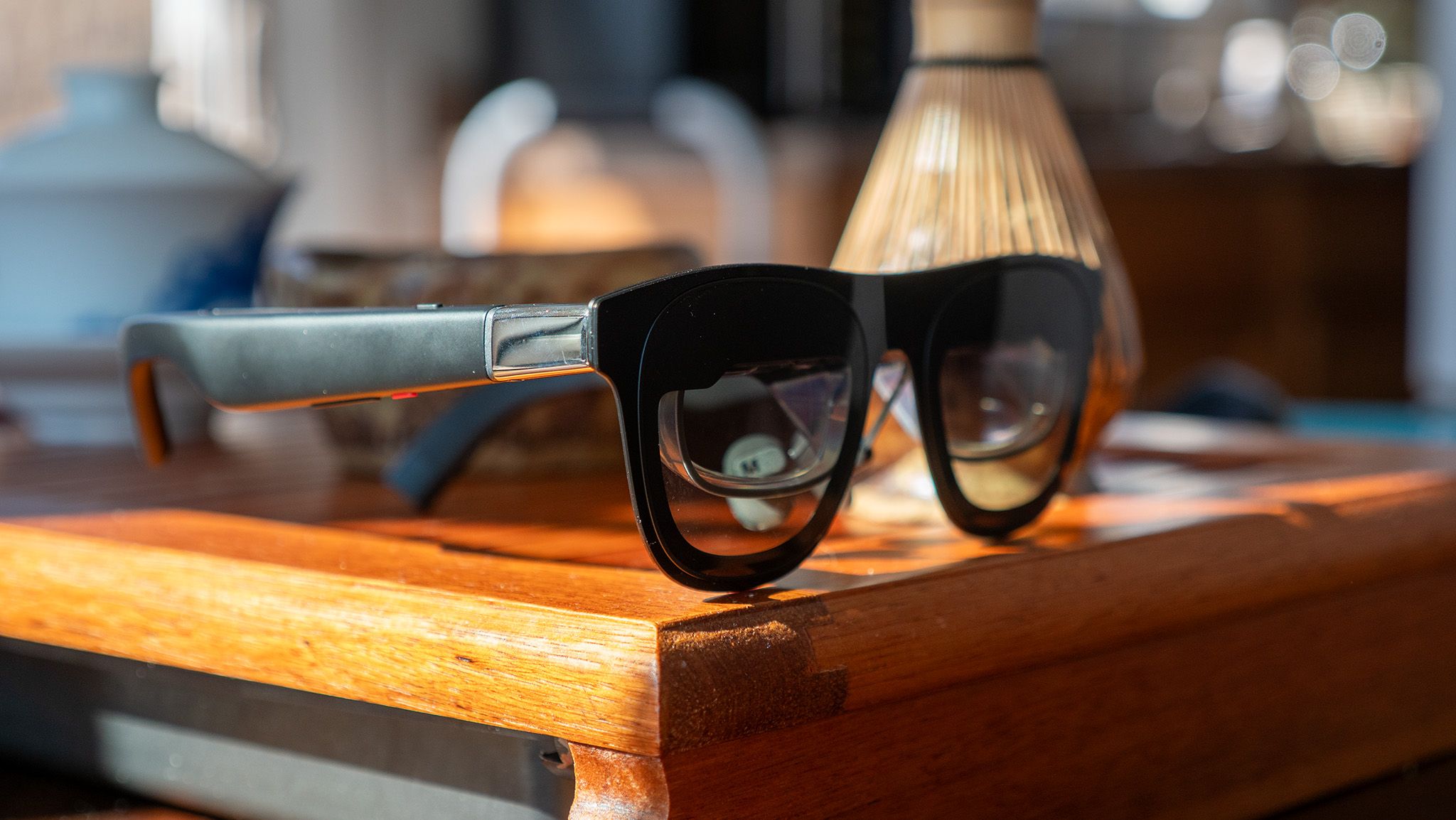
For years, the concept of a "private, massive display" has been the holy grail of portable technology. While tablet screens and foldable smartphones have attempted to bridge the gap, they remain physically bound by their chassis. Enter the Xreal One Pro—a sophisticated piece of wearable hardware that effectively dissolves the boundaries of your physical environment, replacing your immediate surroundings with a sprawling, 171-inch virtual workspace.
As part of Amazon’s Prime Big Deal Days, the price of the Xreal One Pro has plummeted to $549. This aggressive pricing strategy is not merely a seasonal promotion; it represents a calculated entry point for consumers hesitant to commit to the burgeoning—and often prohibitively expensive—Extended Reality (XR) market. With Xreal’s premium "Project Aura" slated to debut at a staggering $1,279, the current discount on the One Pro provides an authoritative, high-fidelity alternative for those who prioritize immediate utility over experimental, standalone complexity.
This article explores why the One Pro remains a cornerstone of the wearable computing industry, how its technical specifications stack up against the evolving landscape of AR, and why this specific price point might be the signal that mainstream, high-end AR is finally ready for the consumer.
Detailed Chronology: From Experimental Peripheral to Daily Driver
To understand the significance of the Xreal One Pro, one must look at the rapid evolution of Xreal (formerly Nreal) over the past several years. Initially, the brand faced skepticism as a niche manufacturer of "glorified external monitors." However, through iterative design cycles, the company refined its optical engines and miniaturized its spatial computing hardware with remarkable speed.
- Phase 1: The Concept of Connectivity. Xreal’s early iterations focused heavily on tethered performance. By leveraging the ubiquity of the USB-C standard, they successfully bypassed the need for clunky, proprietary interfaces, allowing their glasses to communicate directly with the burgeoning ecosystem of handheld consoles like the Steam Deck and the ASUS ROG Ally.
- Phase 2: The Integration of Spatial Computing. With the introduction of the custom X1 spatial computing chip, Xreal transitioned from being a passive display manufacturer to an active participant in spatial computing. This allowed for 3DoF (three degrees of freedom) tracking, enabling virtual screens to stay "anchored" in space even as the user moves their head.
- Phase 3: The Current Pivot. We are now in a period of market segmentation. The industry is currently split between high-end, standalone XR headsets—such as the upcoming Project Aura—and the pragmatic, tethered AR glasses like the One Pro. The current $549 price point reflects Xreal’s strategic push to capture the "prosumer" market, bridging the gap between casual movie watchers and serious mobile workstation users.
Supporting Context & Metrics: Technical Superiority in a Compact Frame
When analyzing the Xreal One Pro, the metrics tell a compelling story of engineering efficiency. The device is built upon Sony’s micro-OLED architecture, a technology that is widely regarded as the gold standard for high-contrast, low-latency imagery.
The Optical Engine
The standout feature remains the virtual screen size: an impressive 171-inch projection from a distance of four meters. By utilizing micro-OLEDs, Xreal achieves a level of black-level depth and color saturation that standard LCD-based mobile displays simply cannot replicate. Furthermore, the 120Hz refresh rate is critical for gaming; it minimizes the "motion blur" that historically plagued early-generation VR/AR headsets, effectively preventing the motion sickness that once deterred mainstream adoption.
Latency and Spatial Tracking
The integration of the X1 chip is not just for show. With a measured latency of just 3ms, the head-tracking response is near-instantaneous. In practical terms, this means that when a user moves their head, the virtual interface follows with enough precision to maintain the illusion of a fixed, physical object.
Brightness and Utility
A common criticism of AR glasses is their performance in bright, outdoor environments. Xreal has addressed this with a display brightness ceiling of 700 nits. While this may not match the peak brightness of a flagship smartphone, it is remarkably high for an optical engine that sits mere centimeters from the eye, ensuring that the image remains legible even in ambient daylight.
Official Statements and Industry Positioning
Xreal’s recent communications regarding their flagship Project Aura have inadvertently highlighted the value proposition of the One Pro. By setting a $1,279 price tag for the upcoming Aura, Xreal has created a "luxury tier" for standalone XR, which relies on built-in Android processing and AI capabilities.
Industry analysts suggest that this dual-track strategy is intentional. By maintaining the One Pro at a sub-$600 price point, Xreal is keeping the door open for users who prefer to use the processing power of their own devices (i.e., their high-end smartphones or powerful laptops) rather than paying for redundant, built-in processors that may become obsolete within a year or two.
In discussions regarding their design philosophy, Xreal representatives have consistently emphasized "wearability." The One Pro is explicitly designed to be unobtrusive. By incorporating "Sound by Bose," they have solved a major ergonomic issue: the need for separate audio peripherals. The result is a clean, singular device that feels more like high-end eyewear than a piece of bulky computing equipment.
Future Outlook: Is the "Virtual Monitor" the New Standard?
The trajectory of the AR industry is shifting. As we move away from the "metaverse" hype cycle, we are entering an era of "utility-focused AR."
The Decline of the Physical Screen
The primary use case for the Xreal One Pro is the displacement of physical monitors. For the remote worker, the digital nomad, or the frequent flyer, the ability to pack a 171-inch screen into a small backpack is not just a luxury—it is a massive productivity multiplier. We anticipate that as the software ecosystem around these glasses matures (specifically with better multi-window support for Mac and Windows), the dependency on physical screens will continue to erode.
The Compatibility Barrier
However, the path forward is not without challenges. The reliance on USB-C video output remains the single greatest bottleneck for mass adoption. While most modern high-end devices support this, a significant portion of the global smartphone and laptop market still utilizes older standards or restricted USB-C ports that lack DisplayPort Alt Mode. Until hardware manufacturers standardize video-out across all price brackets, AR glasses will remain a "prosumer" accessory rather than a household staple.
The Verdict for Today’s Buyer
If you are currently sitting on the fence, the decision should come down to your existing hardware stack.
- Invest if: You own a Steam Deck, a ROG Ally, a MacBook, or a flagship Android device. In these instances, the Xreal One Pro acts as a force multiplier, turning your existing investment into a cinematic experience that no television or monitor can match.
- Wait if: You are looking for a standalone computer that functions without a wired connection. The technology for truly lightweight, powerful, all-in-one AR glasses is still in its infancy, and if you require a self-contained device, you would be better served waiting for the next generation of standalone hardware.
Ultimately, the Xreal One Pro at $549 represents a moment of rare equilibrium in the tech market. It is an established, high-performance product at a price point that makes it accessible to early adopters and power users alike. As the industry looks toward the $1,000+ horizon of the next generation, the One Pro serves as a reminder that sometimes, the best way to experience the future is by perfecting the present.