Executive Overview
The ecommerce landscape is undergoing a profound structural metamorphosis. As we move through the fourth quarter, the industry is witnessing a transition from static digital storefronts to dynamic, "agentic" commerce ecosystems. This week’s product release cycle highlights a clear industry-wide pivot: the integration of autonomous AI agents designed to handle everything from store design and inventory management to customer service and logistics optimization.
Whether it is Shopify’s new Canvas design tool, Amazon’s Ads Agent, or the rise of "no-box, no-label" return logistics, the common thread is the reduction of human friction. Merchants are no longer just managing software; they are delegating operational tasks to intelligent systems that can validate, decide, and execute in real-time. This report synthesizes the most significant platform updates, strategic acquisitions, and logistics partnerships that are currently reshaping the digital merchant’s toolkit.
Detailed Chronology of Platform Innovations
The Rise of Agentic Design and Advertising
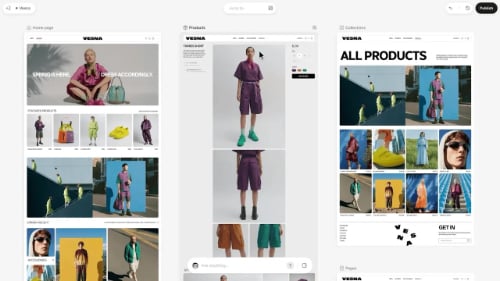
Shopify has set a new benchmark for front-end development with the launch of Canvas. By leveraging its proprietary AI agent, Sidekick, Shopify is transforming the design process from a manual, code-heavy task into a conversational experience. Merchants can now visualize page layouts and adjust store aesthetics by interacting with Sidekick via chat, while the AI performs real-time validation of design choices.

Simultaneously, the advertising sector is embracing automation. Amazon Ads has introduced its own Ads Agent, a platform that consolidates sponsored, display, video, and audio campaigns into a unified, agentic workspace. By allowing AI to optimize campaigns on behalf of the advertiser, Amazon is effectively lowering the barrier to entry for high-performance marketing.
Enhancing AI-Powered Product Discovery
The discovery-to-purchase funnel is becoming increasingly intelligent. TikTok is testing "agentic commerce" features, including its Buy Direct in-app checkout and a Shopping Assistant that provides real-time guidance on sizing, availability, and shipping. This move represents a strategic push to keep users within the TikTok ecosystem from initial discovery to final transaction.
Furthermore, Swap Commerce has acquired Vizby, a Shopify-native visibility tool. This acquisition suggests that Swap is moving beyond mere checkout optimization to capture the "discovery" phase of the buyer journey, ensuring that AI-powered search engines surface their clients’ products more effectively. Contentstack is also playing in this space with the launch of Canoe, which provides brands with actionable intelligence on how AI search engines—such as ChatGPT or Perplexity—describe their products to potential buyers.
Logistics and Operational Efficiency
The logistical backbone of ecommerce is also seeing significant disruption:
- ShipStation & Walmart: The new Ship with Walmart integration grants marketplace sellers access to negotiated shipping rates directly within the ShipStation dashboard, simplifying label procurement and compliance.
- USPS & Amazon: A high-stakes same-day delivery pilot is underway, with mail carriers integrating Amazon parcel delivery into their standard routes between 2 p.m. and 8 p.m., a move that could redefine the "last-mile" economics for local retailers.
- UPS & TikTok Shop: Addressing the notorious "returns friction," UPS has deployed its Happy Returns service to TikTok Shop, enabling consumers to drop off returns without the need for boxes or labels.
- uParcel: The company has launched a "Complete Marketplace Outsource Solution," effectively acting as an outsourced operator for brands selling across Shopee, Lazada, and TikTok Shop.
Supporting Context & Metrics: The "Agentic" Imperative
The industry’s shift toward "agentic" commerce—where AI systems perform tasks rather than just generating text—is not merely a buzzword; it is a response to the growing complexity of multichannel retail.
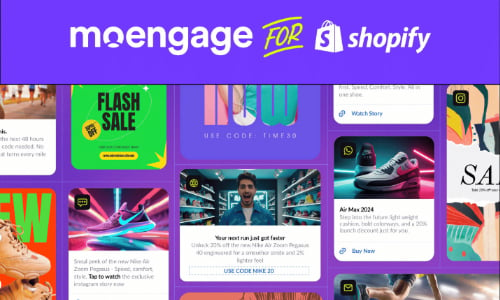
According to internal industry tracking, the average merchant now manages at least four different sales channels simultaneously. This fragmentation has created a "data silo" problem. Platforms like MoEngage are responding to this by launching native integrations for Shopify that unify data across SMS, WhatsApp, and email, allowing for automated, AI-driven personalization that was previously impossible for mid-sized merchants.
Furthermore, the miniOrange Secure MCP (Model Context Protocol) server for WordPress highlights the growing concern over AI governance. As businesses hand over more control to AI agents, the need for centralized dashboards to define permissions and monitor agent activity has become a critical operational requirement.
Official Statements and Industry Insights
Industry leaders view this surge of tool-building as a necessary evolution.
- On Shopify Canvas: "By merging the design surface with Sidekick, we are enabling merchants to focus on the ‘why’ of their brand while the agent handles the ‘how’ of the technical implementation," a Shopify spokesperson noted during the launch.
- On Supply Chain Risk: UPS, in promoting its new Secure Commerce suite, emphasized that modern retail requires "proactive risk mitigation." Their move to integrate high-value shipment protection and supply chain transparency tools reflects a broader trend of shipping carriers evolving into tech-first risk management firms.
- On Creator-Led Commerce: With the launch of the Nexa creator marketplace, the industry is seeing a move toward transparency. By charging a flat fee to brands rather than taking a cut of creator earnings, Nexa is attempting to professionalize the fragmented world of influencer marketing, making it more palatable for smaller D2C brands.
Future Outlook: What Lies Ahead for Merchants
The trajectory for the next 18 months is clear: The integration of AI agents will move from "nice-to-have" to "table stakes."
1. The Death of the "Manual" Storefront
We expect the traditional manual website builder to become obsolete for most small-to-medium enterprises. When an AI can build a high-converting, policy-compliant page in minutes, the value of manual layout adjustment diminishes. Merchants will transition into "curators" of AI output, overseeing the logic and brand voice rather than the code.
2. The Standardization of "No-Friction" Logistics
The success of the TikTok-UPS returns partnership will likely trigger a ripple effect. We anticipate that "no-box, no-label" returns will become the industry standard for all major marketplaces within the next two years. Logistics providers who do not offer this level of convenience will find themselves increasingly alienated from the platform-native seller community.
3. The Rise of Agent-to-Agent Commerce
As platforms like Contentstack’s Canoe gain traction, we are entering an era of "Agent-to-Agent" (A2A) commerce. AI agents will soon be tasked with searching for, evaluating, and negotiating with other AI agents on behalf of their users. A consumer’s personal AI assistant might eventually interface directly with a brand’s AI agent to confirm availability, negotiate a shipping window, and process a payment without a single human interface.
4. Regulatory and Security Hurdles
As evidenced by the miniOrange WordPress launch, the next major challenge will be governance. As businesses deploy increasingly autonomous agents, the risk of "AI hallucinations" or unauthorized actions grows. The development of robust MCP servers and oversight layers will be the most significant growth area in the backend development sector for 2027 and beyond.
Conclusion
The current wave of releases represents a maturation of ecommerce technology. We are exiting the "experimental" phase of generative AI and entering the "operational" phase. For the modern merchant, the challenge is no longer finding the right tool, but rather orchestrating a suite of intelligent agents that can work in concert to build, manage, and scale their business in an increasingly automated world.
Got an ecommerce product release? Email [email protected] to ensure your innovations are included in our next industry briefing.