Executive Overview
The rapid transition of agentic artificial intelligence (AI) from experimental laboratory prototypes to robust, enterprise-grade production environments has exposed a critical operational bottleneck. Modern autonomous agents—sophisticated systems engineered to plan, execute multi-step workflows, and reflect on intermediate outputs—rely heavily on iterative chains of Large Language Model (LLM) calls. While this iterative architecture enables unprecedented reasoning capabilities, it introduces severe economic and performance challenges: runaway API expenditures and high Time-to-First-Token (TTFT) latencies.
To ensure long-term system sustainability, engineering teams are increasingly forced to optimize their underlying inference infrastructure. Two primary strategies dominate the technical landscape for mitigating cost and latency: prompt caching and fine-tuning.
Prompt caching preserves previous model interactions—often storing internal key-value (KV) attention states or raw input-output pairs—to bypass redundant computations on repeated requests. Conversely, fine-tuning permanently internalizes specific domain knowledge, behavioral formatting, and systemic reasoning patterns directly into a model’s weights, reducing the necessity for massive, repetitive prompt injections.
This article provides a rigorous, deep-dive examination of prompt caching and fine-tuning. We analyze their underlying mechanisms, evaluate their trade-offs via practical code implementations, and introduce a comprehensive decision framework designed to help enterprise architects strategically combine these approaches for optimal cost-efficiency and high performance.
Detailed Chronology and Technological Evolution
The journey toward efficient agentic AI inference is rooted in the broader historical arc of deep learning scalability challenges. Understanding how we arrived at today’s dual-strategy paradigm requires tracking the evolution of transformer architectures, context windows, and cost-management techniques.
The Era of Massive Context Windows and Escalating Costs
For years, the predominant method for steering LLM behavior involved prompt engineering—specifically, in-context learning (ICL). Developers fed increasingly massive system prompts containing extensive instructions, few-shot examples, and extensive retrieval-augmented generation (RAG) contexts into the model with every API call.
While this decoupled model updates from deployment, it introduced severe scaling inefficiencies. Processing a context window containing tens or hundreds of thousands of tokens requires heavy $O(N^2)$ self-attention computations across every layer of the transformer. Consequently, API providers began charging linear fees for input tokens, rendering multi-step agentic loops economically unsustainable.
The Rise of Prompt Caching Infrastructure
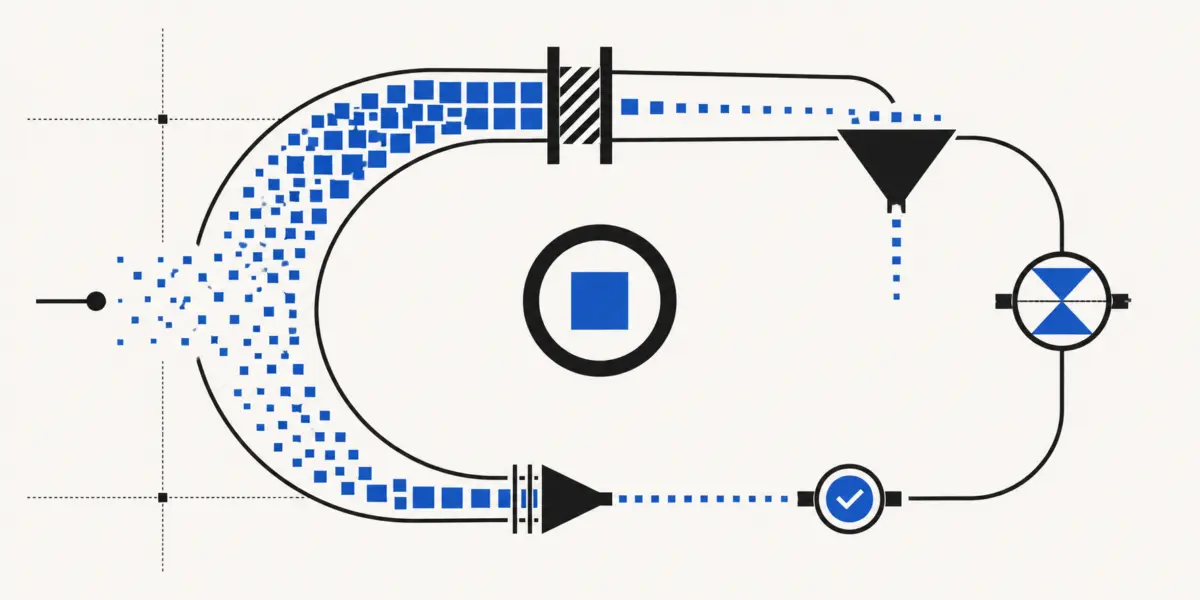
Recognizing that enterprise workloads often reuse static system instructions, documentation, and foundational schemas across millions of calls, AI infrastructure providers introduced prompt caching. By caching the KV (Key-Value) states of recurring prefix tokens in high-speed GPU memory, systems could skip the prefill phase entirely for matching prefixes. This technological breakthrough shifted the economics of static-context agentic applications, slashing latency and reducing input token costs by up to 90% for repetitive operations.
The Parallel Maturation of Parameter-Efficient Fine-Tuning (PEFT)
Concurrently, full-parameter model fine-tuning remained restricted by prohibitively high compute requirements and infrastructure costs. Training billions of parameters demanded expansive GPU clusters.
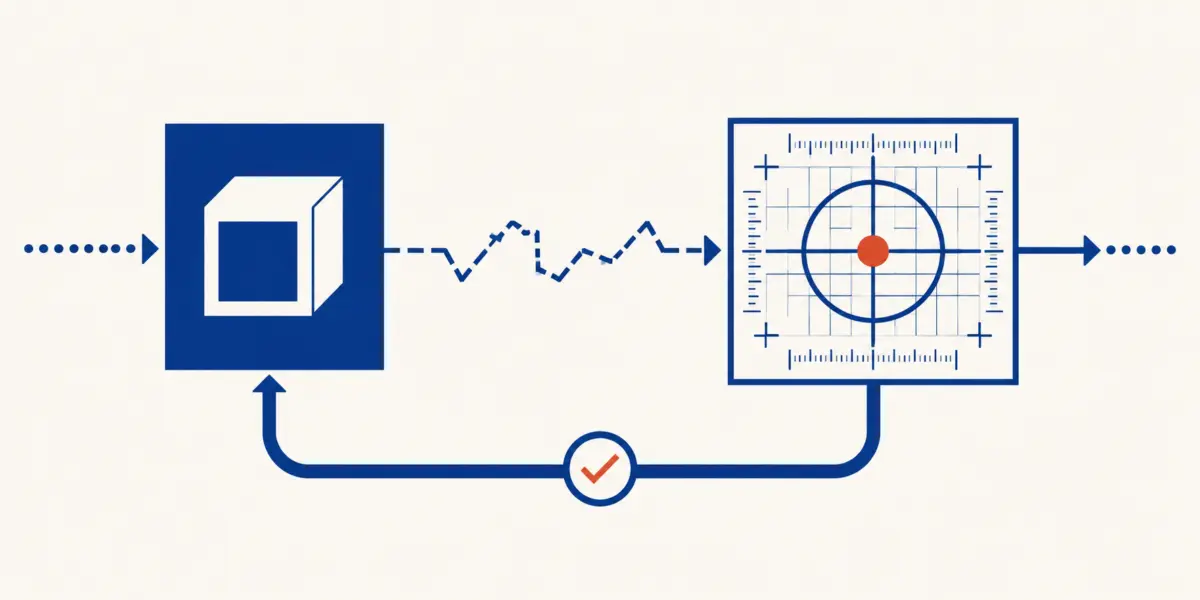
However, the introduction of Parameter-Efficient Fine-Tuning (PEFT) techniques—most notably Low-Rank Adaptation (LoRA)—democratized model customization. By freezing the original model weights and injecting small, trainable rank decomposition matrices into specific layers (such as self-attention projections), developers could adapt massive foundational models using modest consumer-grade or mid-tier enterprise hardware. This drastically reduced the financial barrier to instilling bespoke behaviors and domain-specific formats directly into model weights.
Technical Deep-Dive: Prompt Caching vs. Fine-Tuning
To construct an effective optimization framework, developers must clearly understand how prompt caching and fine-tuning operate under the hood, along with their respective operational overheads.
1. Prompt Caching: Mechanics and Implementation
Prompt caching relies on the transient storage of attention states or raw generations from prior interactions. When an autonomous agent executes a task, it frequently sends identical system definitions, tool schemas, and core instructions repeatedly. With prompt caching enabled, the inference engine hashes the incoming prefix token sequence. If a match is found within the cache window, the engine bypasses the costly prefill computation phase, retrieving the pre-computed attention keys and values directly from memory.
- Primary Benefits: Dramatic reduction in Time to First Token (TTFT) and near-zero compute costs for matching prompt prefixes.
- Primary Limitations: Ineffective for highly dynamic, non-repeating inputs where every user query or agentic step introduces entirely novel text.
Below is a practical Python implementation using the diskcache library, illustrating the fundamental caching logic used to optimize repetitive LLM interactions:
import diskcache
import hashlib

# Initializing a free, local persistent cache directory
cache = diskcache.Cache('./llm_cache')

def get_cached_llm_response(prompt, mock_api_call):
    """
    Checks if a prompt has been processed previously.
    If cached, returns the response with zero simulated latency and cost.
    Otherwise, invokes the model, caches the result, and returns standard metrics.
    """
    # Hashing the prompt to create a unique, collision-resistant identifier
    prompt_hash = hashlib.md5(prompt.encode()).hexdigest()

    if prompt_hash in cache:
        return cache[prompt_hash], "Cache Hit - 0ms latency, $0 cost"

    # Simulate API call to the LLM if cache misses
    response = mock_api_call(prompt)

    # Store the response in the persistent cache with a 1-hour expiration time
    cache.set(prompt_hash, response, expire=3600)

    return response, "Cache Miss - Standard latency and cost applied"

# Example demonstration of cache behavior
if __name__ == "__main__":
    test_prompt = "Translate 'Hello' to Spanish"
    mock_llm = lambda x: "Hola"

    # First execution: Cache Miss
    print(get_cached_llm_response(test_prompt, mock_llm))

    # Second execution: Cache Hit
    print(get_cached_llm_response(test_prompt, mock_llm))
2. Fine-Tuning via PEFT (LoRA): Mechanics and Implementation
Fine-tuning alters the internal weights of a model to internalize specific behaviors, syntax rules, and domain-specific vocabulary. Rather than injecting exhaustive instructions into every prompt, fine-tuning bakes those instructions into the neural network itself.
To make this computationally feasible, Parameter-Efficient Fine-Tuning (PEFT) targets a minimal fraction of the total parameter count. Utilizing methods like Low-Rank Adaptation (LoRA), developers can modify specific projection matrices while leaving the vast majority of the foundational weights untouched.
- Primary Benefits: Removes the need for lengthy system prompts, reduces per-request token consumption, and enforces rigid formatting or behavioral compliance.
- Primary Limitations: Requires curated training datasets, upfront compute investment for training, and ongoing model version management.
The following Python snippet demonstrates how to configure a LoRA adapter on an open-weight Hugging Face transformer model, highlighting the drastically reduced percentage of trainable parameters:
from transformers import AutoModelForCausalLM
from peft import get_peft_model, LoraConfig

# Loading an open, ungated foundational base model
base_model_id = "TinyLlama/TinyLlama-1.1B-Chat-v1.0"
model = AutoModelForCausalLM.from_pretrained(base_model_id)

# Configuring LoRA to train only a minute fraction of the total parameters
lora_config = LoraConfig(
    r=8,                     # Rank of the update matrices
    lora_alpha=32,           # Scaling parameter
    target_modules=["q_proj", "v_proj"], # Target attention projection layers
    bias="none",
    task_type="CAUSAL_LM"
)

# Applying the PEFT adapter structure to the base model
efficient_model = get_peft_model(model, lora_config)

# Output the parameter statistics to verify training efficiency
efficient_model.print_trainable_parameters()
Execution Output:
trainable params: 1,126,400 || all params: 1,101,174,784 || trainable%: 0.1023As demonstrated, training a mere 0.1023% of the total network parameters is sufficient to adapt the model’s behavioral patterns, preserving compute resources while customizing output generation.
Supporting Context & Quantitative Metrics
When architecting production-grade agentic AI systems, engineering teams must evaluate strategies based on empirical performance metrics across three vectors: Cost per Inference, Latency (TTFT), and Maintenance Overhead.
| Optimization Strategy | Primary Cost Driver | Latency Impact (TTFT) | Best Suited For | Maintenance Effort |
|---|---|---|---|---|
| Raw Prompt Engineering | High input token volume | High (Full prefill required every call) | Rapid prototyping, dynamic contexts | Low |
| Prompt Caching | Near-zero for hits; standard for misses | Ultra-low (~0ms for cached prefixes) | Static system prompts, shared RAG contexts | Very Low |
| Fine-Tuning (PEFT/LoRA) | Upfront training compute; lower runtime input costs | Moderate to Low (Shorter prompts required) | Strict formatting, domain jargon, fixed agent behaviors | High (Dataset curation, training, versioning) |
Analyzing the Economic Trade-Offs
- Token Economics: In long-running agent loops—such as software-writing agents that repeatedly query codebases and run debug cycles—system prompts often exceed 5,000 tokens. Without prompt caching, a 20-step agent loop incurs massive financial penalties. Caching reduces the cost of the static system prompt by up to 90% on steps 2 through 20.
- Context Window Compression: Fine-tuning allows developers to remove verbose behavioral instructions from the prompt entirely. If a model is fine-tuned to output strictly validated JSON schemas, developers no longer need to append 500-token formatting instructions to every API request, compounding savings across high-volume deployments.
Cost-Latency Decision Framework
Selecting between prompt caching, fine-tuning, or a hybrid approach requires a systematic evaluation of your application’s data characteristics, query distribution, and behavioral requirements.
When to Prioritize Prompt Caching
- Static System Instructions: Your agent relies on massive, unchanging system instructions, tool definitions, or multi-page documentation sets that remain constant across requests.
- Shared Knowledge Bases: Multiple users or autonomous agents query the same foundational context or retrieved document chunks (RAG) concurrently.
- Rapid Iteration Cycles: You are actively iterating on prompt design and require immediate deployment flexibility without retraining model weights.
When to Prioritize Fine-Tuning
- Rigid Formatting Requirements: Your agent must consistently output structured data (e.g., complex JSON schemas, proprietary DSLs) without deviating, even under adversarial inputs.
- Specialized Domain Jargon: The agent operates in a highly niche vertical (e.g., proprietary legal frameworks, specialized medical diagnostics) where standard foundational models lack intuitive vocabulary.
- Token Budget Optimization: Prompt lengths must be kept minimal due to strict latency SLAs or downstream token limits, necessitating the removal of verbose behavioral instructions.
The Hybrid Approach: Best of Both Worlds
In enterprise-scale agentic systems, the most robust architecture frequently combines both strategies:
- Fine-tune the base model to master core domain behaviors, reasoning patterns, and strict output formatting. This eliminates the need for bulky behavioral prompt engineering.
- Deploy Prompt Caching on top of the fine-tuned model to handle dynamic, large-scale contextual inputs, such as user history, session-specific state files, and real-time database query results.
Future Outlook
As foundational models continue to evolve, the boundary between inference-time optimization and model training will continue to blur. Emerging architectural paradigms point toward several critical developments:
- Native Long-Context Hardware Acceleration: Hardware-level optimizations for KV-caching will make prompt caching ubiquitous, near-instantaneous, and natively supported across all tier-1 cloud providers.
- Automated On-the-Fly Adaptation: Future agentic frameworks will feature automated, lightweight fine-tuning pipelines that continuously update edge adapters based on agent success and failure metrics in production.
- Unified Cost-Routing Layers: Enterprise LLM gateways will dynamically route incoming requests between cached prompt states and fine-tuned specialized endpoints based on real-time cost-benefit calculations.
Closing Remarks
Prompt caching primarily scales down the operational expenditures associated with redundant, static contexts, while fine-tuning resolves the challenge of internalizing repetitive behaviors and structural constraints. The most scalable, cost-effective architectures do not view these strategies as mutually exclusive. Instead, mastering the strategic interplay between prompt caching and fine-tuning remains the defining hallmark of elite AI engineering teams building the next generation of production-grade agentic systems.