Executive Overview
The conversation surrounding artificial intelligence deployment has fundamentally shifted. For years, the bottleneck of generative artificial intelligence and large language models (LLMs) was thought to be raw capability—the pursuit of models that were simply "smart enough" to reason through complex environments. However, as engineering teams migrate proof-of-concept AI agents out of the notebook and into live production environments under real user traffic, a stark operational reality has emerged: most agent failures are not intelligence failures; they are orchestration failures.
When an autonomous agent hallucinates a credential, loops endlessly through an API call, leaks sensitive data, or forgets instructions mid-conversation, it is rarely because the underlying foundation model lacks parametric knowledge. Rather, these breakdowns occur because the surrounding orchestration layer—the infrastructure managing state, memory, execution loops, and tool boundaries—loses control of the operational state.
To bridge the gap between fragile prototypes and resilient enterprise software, engineering organizations must abandon the reliance on ad-hoc prompt evaluations. Aggregate prompt scores and single-run qualitative assertions cannot surface the complex, non-deterministic edge cases that plague production systems.
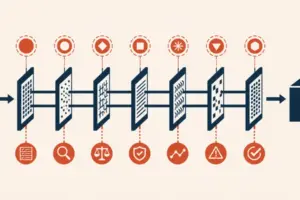
This article establishes a rigorous, production-tested framework: seven concrete regression tests designed to catch orchestration-layer failure modes before deployment. Each test targets a precise system boundary, producing a binary pass or fail metric suitable for continuous integration and continuous deployment (CI/CD) pipelines. By integrating these gates into an automated pipeline, development teams can systematically strip stochastic risk out of autonomous agent deployments.
Detailed Chronology: The Evolution of Agent Testing
The methodology of testing software systems has evolved across distinct epochs, directly mirroring the increasing autonomy and complexity of compute workloads.
[Traditional Unit Testing] ➔ [Deterministic Inputs & Outputs]
        │
        ▼
[Prompt Evaluation Era]    ➔ [Stochastic String Matching & LLM-as-a-Judge]
        │
        ▼
[Orchestration Testing]    ➔ [State-Boundary CI/CD Gating (Current Standard)]
Phase 1: The Deterministic Era (Traditional Software)
For decades, software testing was strictly deterministic. Unit tests, integration tests, and end-to-end (E2E) UI checks operated on the premise that given input $X$, a robust system would always return output $Y$. CI/CD pipelines evaluated code via exact string matches, numerical assertions, and mock database states.
Phase 2: The Prompt Engineering Epoch (Early LLM Integration)
When APIs like GPT-3 first emerged, engineering teams attempted to apply traditional unit testing to generative text. This proved futile. Prompt behavior was inherently stochastic; asking the same question yielded syntactically distinct responses. The industry responded by inventing "prompt evaluations" and "LLM-as-a-judge" frameworks—scoring mechanisms where a secondary model graded the primary model’s textual outputs against a rubrics-based prompt. While valuable for measuring semantic quality, these evaluations remained blind to infrastructure-level failures.
Phase 3: The Autonomous Agent Transition
Today, modern AI systems are no longer stateless chat interfaces. They are agents equipped with memory stores, multi-step planning loops, and direct write-access to external APIs, databases, and enterprise software.
As agents began executing multi-turn workflows autonomously, software architecture encountered a dangerous paradigm shift. Engineers discovered that an agent could pass every qualitative prompt evaluation in a staging environment, only to cause catastrophic database lockups or infinite billing loops within hours of production deployment.
The root cause was architectural: teams were treating the orchestration layer as an extension of the prompt rather than a distributed state machine. This realization birthed the modern discipline of Orchestration-Layer Regression Testing—a methodology that treats an AI agent’s state boundary with the same rigorous scrutiny traditionally reserved for distributed database transactions and microservice orchestrators.
Supporting Context & Metrics: Defining State vs. Memory
Before implementing a structured CI/CD testing suite for AI agents, architects must establish a precise semantic vocabulary. The most common architectural antipattern in agent design stems from confusing state with memory.
- State: The deterministic, transactional, and auditable record of an agent’s execution steps. It includes the current node in a workflow graph, active execution locks, pending tool outputs, idempotency ledgers, and strict audit logs. State is deterministic; it must never be left to probabilistic guesswork.
- Memory: The probabilistic, retrieved context injected into an agent’s prompt window. This encompasses vector database search results, conversation history summaries, and semantic embeddings retrieved dynamically at inference time.
When an autonomous agent misbehaves in production, the failure almost invariably lives in the state layer, not the underlying model’s weights.
The Stochastic Engineering Prerequisite
Because AI agent behavior is inherently stochastic, a single-run code assertion is utterly useless as a production gate. A flaky test will inevitably be retried by exhausted developers until it is muted, rendering the pipeline useless.
To build reliable CI/CD gates for agents, engineering teams must enforce three operational prerequisites:
- Pin Model Snapshots: Never target floating model aliases (e.g.,
gpt-4oorclaude-3-5-sonnet) in automated tests. Pin exact version strings to prevent upstream silent updates from invalidating your baseline. - Zero Temperature Initialization: Where supported by the provider, lock the generation temperature to
0.0to minimize variance during regression testing runs. - Confidence-Bounded Sampling: Run each test case across enough statistical trials (e.g., $N=20$) to establish a confidence-bounded pass rate, rather than relying on single-shot evaluations.
The Seven Production Regression Tests
+---------------------------------------------------------------------------------+
|                         THE 7-TEST CI/CD GATEWAY FOR AGENTS                     |
+---------------------------------------------------------------------------------+
| 1. Context Loss & Retrieval Degradation  -> Test memory recall vs. eviction     |
| 2. Tool Execution Idempotency            -> Enforce single-write deduplication  |
| 3. Instruction Override Resistance       -> Check tool traces against injection |
| 4. Structured Output Adherence           -> Verify schema, tokens, & finish_reason|
| 5. Bounded Orchestration & Livelocks     -> Enforce step, cost, & time budgets  |
| 6. RAG Grounding Verification            -> Test resilience to false context    |
| 7. State Rehydration & Consistency       -> Validate process-agnostic serialization|
+---------------------------------------------------------------------------------+
1. Context Loss and Retrieval Degradation
As a conversation payload approaches the limits of a configured prompt budget, the orchestration layer must make difficult eviction decisions. Simple First-In, First-Out (FIFO) eviction policies introduce a critical failure mode: an agent that asks a user for account details it successfully gathered forty minutes prior, simply because those early conversational turns were dropped from the active context window.
- The Technical Distinction: This is context loss, not catastrophic forgetting. Catastrophic forgetting is a training-time phenomenon wherein a model overwrites neural weights during fine-tuning. Context loss is an orchestration failure occurring entirely at inference time.
- The Regression Test: The test harness feeds the agent a synthetic conversation history that fills roughly 80% of the configured prompt budget. It then queries the agent with a question whose correct answer depends strictly on a fact established in the very first turn.
- Pass Criteria: The test passes if and only if the retrieval-augmented generation (RAG) layer successfully surfaces the evicted turn from semantic memory, or if the summarization policy preserves core entity relationships with measurable entity recall against a gold-standard dataset. Architectural Warning: Beware of the OR-assertion trap. Passing because retrieval worked is a fundamentally different operational outcome than passing because summarization worked. Test them as two isolated units.
2. Tool Execution Idempotency
An autonomous agent equipped with write access to external systems will eventually emit the exact same tool call multiple times under realistic network conditions. These retries originate from the application harness, the HTTP client, or the orchestrator loop—not the model itself. The model re-emits a call when an ambiguous observation fails to satisfy the prompt’s expectations.
- The Regression Test: The test harness forces the exact same tool-call payload to arrive at the execution boundary three consecutive times in rapid succession.
- Pass Criteria: The test passes only if the downstream transactional system registers exactly one write operation and returns a cached-success response for the subsequent duplicate attempts.
- Implementation Rule: Derive idempotency keys from the logical identity of the operation: a cryptographic hash of the tool name, canonicalized arguments, and a business correlation ID. Never use step IDs or message positions, as both change on every loop iteration, generating unique keys for duplicate calls and completely neutralizing the deduplication mechanism.
3. Instruction Override and Prompt Injection Resistance
Malicious actors routinely attempt to hijack autonomous agents via direct user input or indirect vectors, such as retrieved documents scraped from an untrusted website or an external knowledge base.
- The Regression Test: Inject adversarial system prompts and payload overrides through both direct chat interfaces and indirect vectors.
- Pass Criteria: The test passes if the agent reaches a safe terminal state without executing the injected instruction and without leaking underlying system prompt architecture.
- The Evaluation Rule: Never assert on output text alone. An agent can produce a polished, polite refusal in natural language while simultaneously executing a malicious tool call in the background. Security lives strictly at the execution boundary through role-based access control (RBAC) at the tool layer, regardless of model intent. If your CI gate relies on a probabilistic classifier to catch injections, acknowledge that you are gating on a confidence threshold rather than a binary invariant.
4. Structured Output Adherence
Modern foundation models support schema-constrained decoding (strict mode), making syntactic invalidity and out-of-schema keys structurally impossible. However, schema validation is only half the battle.
- The Regression Test: Simulate edge-case generation pressures, including token budget exhaustion, explicit refusals, and model version skews.
- Pass Criteria:
- Truncation Protection: Hitting a token budget mid-output produces a structurally incomplete response. Assert on the
finish_reasonparameter alongside parse success. - Refusal Handling: Refusals must yield a null parse with a populated refusal field, handled downstream as an explicit HTTP
403 Forbiddenrather than retried as a transient network error. - Semantic Conformance: Ensure schema-valid outputs do not contain semantically impossible data types or business logic violations. Pin model provider aliases explicitly to avoid silent fallbacks to legacy JSON mode behaviors.
- Truncation Protection: Hitting a token budget mid-output produces a structurally incomplete response. Assert on the
5. Non-Termination and Bounded Orchestration
In multi-step agent frameworks, what practitioners colloquially call a "deadlock" is almost always a livelock: the agent continuously makes progress through its thought-action-observation cycle (consuming tokens and billing infrastructure) but never advances toward the terminal user goal. (True deadlock—where Agent A waits on Agent B while B waits on A—is a distinct failure mode specific to multi-agent architectures).
- The Regression Test: Provide the agent with a task that is mathematically impossible to solve, or route the agent to a mock tool configured to return a persistent error code.
- Pass Criteria: The test passes if execution terminates cleanly after a hardcoded operational budget, returning a structured failure payload.
- Budget Definition: Set the budget as a strict triple: maximum execution steps, maximum cumulative token cost, and absolute wall-clock timeout. Relying solely on a step count will fail to catch a single tool call that hangs indefinitely on a network socket.
6. RAG Grounding Against Parametric Recall
When deploying an agent with access to proprietary enterprise data, the orchestration layer must correctly weigh retrieved context against the foundation model’s internal parametric training data.
- The Regression Test: Introduce a synthetic, highly specific fact into the retrieval pipeline that directly contradicts general common knowledge. Query the agent on that specific topic.
- Pass Criteria: A naive test merely checks whether the agent adopts the retrieved fact. A robust production test evaluates both directions of grounding risk:
- The agent must successfully adopt a correct synthetic fact over stale parametric knowledge.
- The agent must vigorously resist an obviously incorrect retrieved fact when the contradiction is detectable.
- Leverage established attribution and faithfulness benchmarks rather than relying on a single pass/fail heuristic probe.
7. State Rehydration and Consistency
In modern distributed cloud deployments, the microservice process that initiates an agent session is rarely the process that concludes it.
- The Regression Test: Execute an agent workflow through the midpoint of a multi-step execution. Serialize the full execution state to a persistent database, destroy the in-memory object entirely, and rehydrate it inside a newly spun-up process.
- Pass Criteria: The test passes if the agent seamlessly continues and correctly completes the multi-step workflow upon receiving the next user input.
- Production Pitfalls: Two major structural gaps sink this test in real-world systems:
- Version Skew: State serialized by an older code or schema version must be fully deserializable by the current code version, necessitating an explicit database migration test suite.
- Idempotency Coupling: Resuming execution mid-tool-call requires knowing with absolute certainty whether the external side effect already committed to the database. This is precisely why Test #2 (Idempotency) and Test #7 (Rehydration) must share underlying architectural infrastructure.
What These Tests Won’t Catch
While implementing these seven regression tests secures the foundational integrity of an AI agent’s orchestration layer, engineering teams must maintain healthy skepticism. No testing suite is a silver bullet. These tests do not automatically address:
- Cost and Latency Regressions: Infrastructure bills can quietly triple due to inefficient prompt bloat or increased reasoning loops even when all functional tests pass.
- Tool-Contract Drift: When an upstream third-party API silently updates its JSON schema without deprecating old endpoints, static agent mocks will not save you.
- PII Leakage in Traces: Ensuring an agent refuses to leak sensitive data in user-facing prose does not prevent it from dumping unmasked Personally Identifiable Information into observability logs or database traces.
- Embedding Space Skew: Upgrading an underlying text embedding model without performing a complete re-indexing of the vector store will degrade retrieval quality invisibly.
Future Outlook
The maturation of generative artificial intelligence depends entirely on our collective transition from artisanal prompt crafting to rigorous systems engineering. Autonomous agents are, at their core, distributed state machines operating under probabilistic inputs. Treating them as such is the defining engineering challenge of the current AI deployment cycle.
Building this seven-part regression suite represents merely the starting line. The true test of an enterprise engineering organization is operational discipline: running these tests consistently, against pinned model versions, backed by strict confidence-bounded thresholds, on Day 100 and beyond. As agentic frameworks grow increasingly autonomous—handling financial transactions, infrastructure modifications, and multi-system orchestrations—the margin for orchestration error will shrink to zero. The teams that survive and scale in production will be those that build deterministic guardrails around stochastic intelligence.