Executive Overview
The intersection of consumer technology and athletic performance tracking has never been more crowded or fiercely contested. As running grows in popularity as a daily outlet and competitive pastime, the modern fitness enthusiast is inundated with choices ranging from full-fledged smartwatches to minimalist, screenless tracking bands. Recently, entering this high-stakes landscape are three prominent contenders: the Google Pixel Watch 5, the Samsung Galaxy Watch 9, and the Garmin Cirqa.
Representing two distinct philosophies in wearable design—traditional smartwatches equipped with vibrant displays versus a streamlined, screenless fitness band—these devices promise to capture everything from heart rate zones and route maps to precise step counts. But how do these marketing claims hold up under the sweat and stress of real-world endurance tests?
To find out, a recent series of athletic milestones—including two back-to-back 5K races and a deliberate 5,000-step walking trial—were tracked simultaneously across all three wearables. The objective was straightforward yet demanding: evaluate sensor accuracy, GPS reliability, heart rate responsiveness, and overall consistency between full-featured smartwatches and a dedicated fitness tracker. The findings reveal surprising divergences in how major tech ecosystems handle biometric and spatial data, offering crucial insights for runners and fitness hobbyists navigating their next hardware purchase.
Detailed Chronology
The Emerald City 5K: Race Day Metrics
The testing framework commenced over the weekend at the Emerald City 5K, a certified race spanning slightly over 5 kilometers (3.1 miles). Strapped with the Google Pixel Watch 5 on one wrist, the Samsung Galaxy Watch 9 on the other, and the Garmin Cirqa linked to a smartphone, the grueling trial put the tracking capabilities of each hardware ecosystem to the test from the starting gun to the finishing sprint.
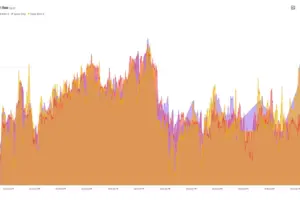
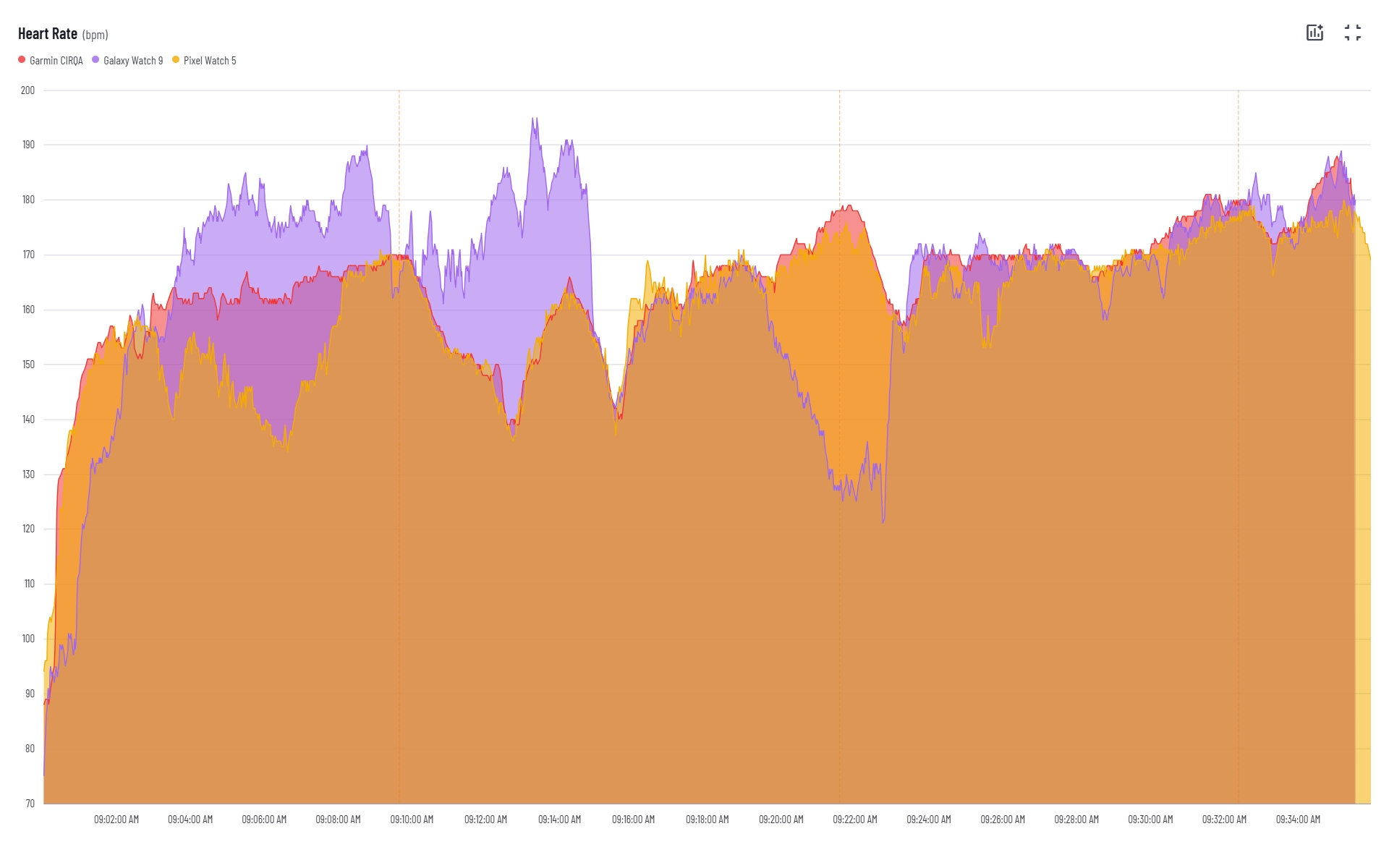
The race began with an immediate wave of adrenaline, yet the initial heart rate (HR) readings told a story of dramatic technological variance. The Samsung Galaxy Watch 9 demonstrated a sluggish start, requiring nearly four minutes to catch up to the baseline heart rate readings established concurrently by the Garmin Cirqa and Pixel Watch 5. Once the Galaxy Watch 9 finally registered the physical exertion, it overcompensated significantly, climbing well above the other two devices and maintaining an unrealistically high elevated reading for more than 10 minutes. Given the early stage of the race, this initial spike conflicted sharply with the user’s actual physical exertion levels.
As the race progressed past the four-minute mark, further divergences emerged. The Garmin Cirqa and Google Pixel Watch 5, which initially tracked closely together, parted ways momentarily when the Pixel Watch dipped unexpectedly to approximately 135 beats per minute (bpm). Meanwhile, the Garmin Cirqa held a steady, uniform trajectory. The Pixel Watch 5 eventually recalibrated, aligning closely with the Garmin device for the vast majority of the mid-race miles.
The most critical test arrived in the closing moments of the race during the final sprint to the finish line. As physical exertion peaked, the Pixel Watch 5 dropped slightly below both the Galaxy Watch 9 and Garmin Cirqa, underreporting the expected high-intensity heart rate spike associated with a finishing kick.
The Subsequent Shorter Run and Walking Trials
To verify these anomalies, a secondary, shorter running session was logged alongside a low-intensity, 5,000-step walking trial.
During the second running session, the Pixel Watch 5 and Garmin Cirqa maintained a cohesive lock, tracking heart rate metrics in close synchronization throughout the 12-minute duration. The Galaxy Watch 9, mirroring its performance in the initial 5K, registered a brief, accurate spike in the opening minute before sharply under-reporting heart rate data for the remainder of the run.
Conversely, the lower-intensity walking trial produced much more uniform results. Because walking generates fewer dynamic movements, sudden heart rate fluctuations, and violent arm swings, all three devices remained within a tight, predictable ballpark. Minor anomalies were observed—such as occasional straight-line data jumps on the Garmin and Galaxy interfaces—which investigators attributed to backend software smoothing algorithms rather than true sensor failures.
Supporting Context & Metrics
Beyond heart rate data, spatial awareness and distance calculations represent the bedrock of any reliable running watch. The results here yielded stark contrasts between native GPS hardware and connected-GPS configurations.
GPS Performance and Mapping Accuracy
An unexpected technical hiccup occurred during the initial 5K: the Google Pixel Watch 5 failed to record or lock onto route mapping data entirely, an issue attributed to a failure to establish a stable GPS fix prior to the race’s commencement. However, this anomaly did not render the Pixel Watch completely useless for distance metrics, as its internal accelerometer and step-calibration algorithms still managed to estimate total distance effectively.
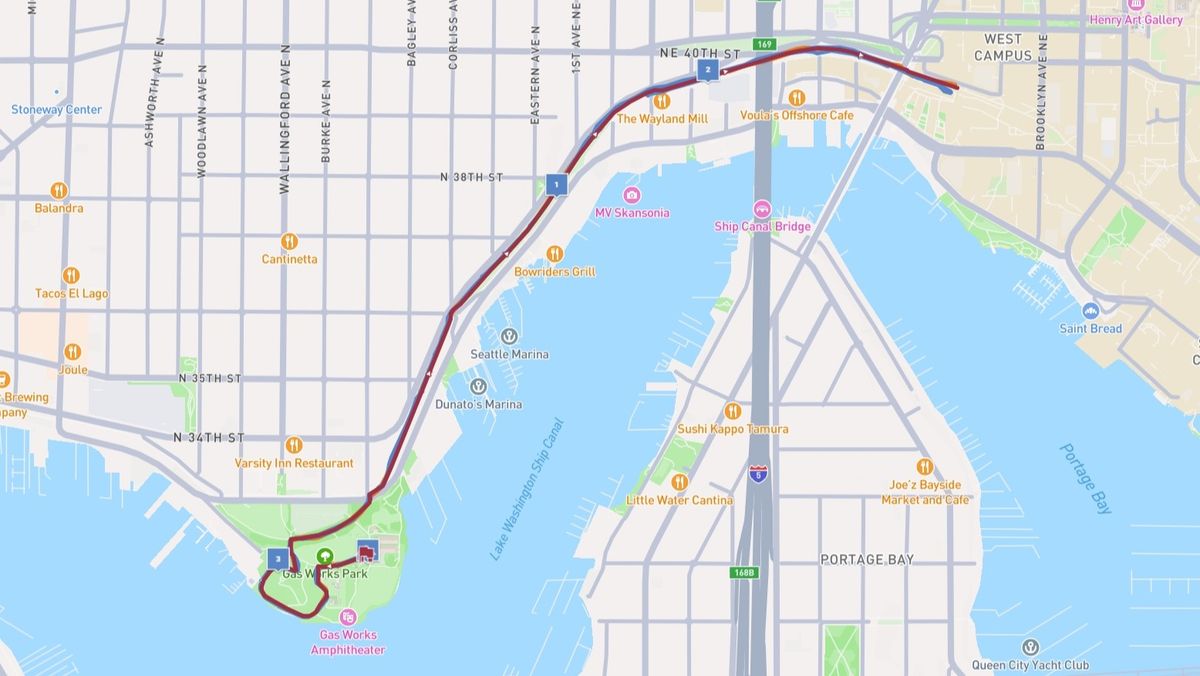
For the devices that did successfully map the course—the Samsung Galaxy Watch 9 and the Garmin Cirqa—the visual data told a fascinating story of spatial precision:
- The Garmin Cirqa (Connected GPS via Phone): Despite leaning on the paired smartphone for location data, the Cirqa struggled with micro-navigation. The mapped route showed the runner drifting onto adjacent grassy areas near the beginning of the race, even though the runner remained strictly on the paved pathway. Further spatial drift occurred near the midpoint turnaround.
- The Samsung Galaxy Watch 9 (Standalone GPS): Surpassing expectations, the Galaxy Watch 9 maintained exceptional route fidelity. It pinned down the runner’s true geographic location accurately, adhering closely to the official race pathway throughout the entirety of the 3.1-mile course.
Distance and Step Count Analytics
Official race metrics placed the Emerald City 5K course distance at 3.146 miles. When comparing how closely each wearable matched this benchmark, the smartwatches proved remarkably precise:
- Samsung Galaxy Watch 9: Logged 3.15 miles (closest overall to the official course distance).
- Google Pixel Watch 5: Logged 3.19 miles (demonstrating that its failure to map the route visually did not impair its raw distance calculation capabilities).
- Garmin Cirqa: Logged 3.29 miles (overestimating the distance, likely due to the aforementioned connected-GPS drift via the phone).
In the step-counting trial—measured against a manual app counter across a 5,000-step walk—the margin of error tightened considerably:
- At the 2,500-step midpoint: The Pixel Watch 5 was dead-on at 2,500 steps, while the Galaxy Watch 9 edged slightly ahead at 2,536 steps (the Garmin Cirqa lacks live on-device step progress reporting).
- At the 5,000-step completion mark: The Garmin Cirqa claimed the crown for sheer step-counting accuracy, overshooting the target by a mere 12 steps. The Pixel Watch 5 followed closely, missing the mark by only 26 steps. The Galaxy Watch 9 performed admirably as well, finishing fewer than 100 steps over the target.
Future Outlook: The Verdict on Wearable Selection
Choosing the right fitness wearable ultimately boils down to a compromise between form factor, ecosystem preference, and specific athletic priorities.
For the casual runner or fitness enthusiast seeking a lightweight, unobtrusive tracker who doesn’t mind relying on a smartphone for GPS mapping, the Garmin Cirqa emerges as a compelling dark horse. Its screenless design encourages comfortable arm or wrist placement, and its step-tracking accuracy is among the best in its class.
However, for users requiring a comprehensive, standalone smartwatch experience equipped with robust biometric monitoring, the Google Pixel Watch 5 takes the lead in overall consistency. Despite its occasional GPS initialization quirks, the Pixel Watch delivers superior heart rate tracking stability during high-intensity interval training and runs, avoiding the erratic over- and under-estimations observed in competing hardware. Furthermore, its ability to retain detailed biometric data from automatically detected workouts cements its utility for everyday health tracking.
The Samsung Galaxy Watch 9 remains a formidable contender, praised for its featherlight chassis and superior native route-mapping consistency. Yet, until its heart rate smoothing algorithms and initial response times are refined via firmware updates, fitness purists prioritizing raw biometric accuracy over route visuals may find themselves leaning toward Google’s ecosystem. As mobile technology and algorithmic fitness tracking continue to evolve, the gap between traditional smartwatches and dedicated athletic bands is narrowing—giving consumers more powerful tools than ever to conquer their fitness goals.