Executive Overview
Digital advertising has long been heralded as the most measurable, targeted, and efficient medium for brands to reach consumers. Unlike traditional media—such as print, billboards, or linear television—digital campaigns offer granular data down to the exact impression, click, and conversion. Yet, beneath this veneer of absolute transparency lies a sprawling, multi-billion-dollar underworld of digital ad fraud.
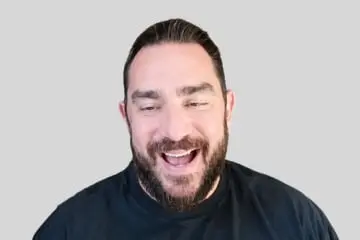
To uncover the mechanics of this shadow economy, industry veteran and fraud detection expert Jeromy Sonne recently sat down for an in-depth interview. Sonne, the founder of the ad fraud detection and auditing firm Daypart, transitioned from managing high-volume Facebook ad campaigns to policing the digital ecosystem on behalf of major agencies and enterprise-level advertisers.
According to Sonne, ad fraud is not merely a technical glitch or an isolated nuisance; it is a sophisticated, evolving enterprise encompassing everything from automated bot impressions and low-quality site spoofing to outright money laundering. While walled gardens like Meta and Google offer varying degrees of safety and responsiveness, the open web and programmatic networks remain a perilous landscape. In these decentralized environments, up to one-third—or even more—of total ad spend can be systematically drained by fraudulent actors.
This article explores the core insights from Sonne’s interview, diving deep into the mechanics of ad fraud, the stark differences between walled gardens and programmatic networks, actionable detection strategies for modern brands, and the economic thresholds that necessitate specialized third-party auditing.
Detailed Chronology: From Media Buying to Fraud Mitigation
Understanding how Jeromy Sonne arrived at the forefront of the ad fraud detection industry requires looking at his professional evolution within the digital marketing landscape. His journey mirrors the maturation—and the subsequent corruption—of the digital ad economy.
The Early Years: Mobile Apps and Facebook Ads (2011)
Sonne’s career in digital marketing began in 2011, an era when performance marketing on social media was rapidly scaling. Specializing in Facebook ads, Sonne spent years managing substantial budgets, primarily focused on the user acquisition market for mobile applications. During this period, the mechanics of paid social advertising were straightforward: drive installs, optimize for cost-per-acquisition (CPA), and scale winning creatives. Over time, his portfolio expanded to include direct-to-consumer ecommerce brands.
The Pivot to Ad Tech: The Rise and Fall of Decibel
As Sonne deepened his expertise in digital media buying, he observed systemic inefficiencies in emerging digital channels. This prompted a transition from pure media buying to ad technology development. He founded Decibel, an innovative ad tech platform specifically designed for podcast advertising.
Despite the growing popularity of podcasting as an intimate, high-engagement medium, the ad infrastructure surrounding it at the time was fragmented and difficult to measure. Unfortunately, despite pioneering efforts, Decibel ultimately did not succeed in the marketplace. However, the closure of the startup was not the end of Sonne’s journey in ad tech; rather, it served as a critical crucible. Navigating the operational challenges of the audio ad landscape exposed him to the structural vulnerabilities plaguing the broader digital advertising ecosystem.
Entering the Fight Against Ad Fraud
Out of the closure of Decibel emerged a new professional calling. Recognizing a critical market gap—agencies and enterprise brands were hemorrhaging millions of dollars into opaque, unverified channels without the internal capabilities to audit them—Sonne pivoted toward ad fraud detection and remediation.
Leveraging his deep foundational knowledge of how ad networks operate from the inside, he founded Daypart. Today, Daypart acts as an independent watchdog for agencies and big-spend advertisers, interrogating campaign data to verify authenticity, combat bad actors, and ensure that advertising dollars translate into genuine human engagement. Reflecting on this career trajectory, Sonne notes that combating ad fraud has ultimately proven to be the most successful and impactful venture of his career.
Defining the Threat: What Is Ad Fraud?
When discussing ad fraud, many marketers picture basic bot scripts clicking links automatically. However, Sonne emphasizes that ad fraud is an umbrella term encompassing a wide spectrum of malicious and deceptive practices designed to siphon money from unsuspecting brands.
1. Bot Impressions and Automated Clicks
At the foundational level is the classic programmatic fraud: bots and automated scripts programmed to mimic human browsing behavior. These automated entities load web pages, view video ads, and generate fraudulent clicks. Advertisers are subsequently billed for impressions that were never viewed by a real, purchasing human being.
2. Domain and Placement Spoofing
Another prevalent form of deception involves misrepresenting where an ad actually appears. For instance, an advertiser might pay a premium CPM (Cost Per Mille)—such as $30—under the impression that their brand-safe commercial is running alongside premium content on a reputable television network’s streaming app or a high-end editorial site. In reality, the ad is covertly routed to a low-quality, scraped "content farm" or an obscure mobile app designed solely to generate ad revenue.
3. Sophisticated Scams and Fake Offers
Fraudsters also use ad platforms to promote illegitimate products or services. These can range from outright financial scams featuring individuals posing with rented luxury cars to promote "get-rich-quick" courses, to operations that begin with a seemingly legitimate e-commerce storefront that quietly transitions into a scam once ad spend is secured.
4. Money Laundering via Shell Companies
At the most extreme and dangerous end of the spectrum is financial crime. Sophisticated criminal syndicates utilize programmatic ad exchanges to launder money. By establishing shell companies, purchasing ad inventory from themselves, and routing funds through complex digital supply chains, bad actors can launder illicit capital through the global ad economy with minimal oversight.
Walled Gardens vs. The Programmatic Wild West
A central theme of Sonne’s expertise is the stark contrast in fraud risk between centralized ad platforms (often called "walled gardens") and open programmatic networks.
The Relative Safety of Meta and Google
Platforms like Meta (Facebook and Instagram) and Google operate within closed ecosystems. While these platforms are not entirely immune to malicious actors—bad actors frequently attempt to bypass their automated review systems—their respective teams invest heavily in policing their infrastructure.
According to Sonne, walled gardens are nominally better at maintaining platform integrity because they control both the supply of inventory and the demand side within a unified environment. Furthermore, their corporate accountability and responsiveness to enterprise advertisers make it relatively easier to challenge fraudulent activity or secure refunds for invalid traffic.
The Programmatic Wild West
In stark contrast, the open web—comprising display advertising networks, independent video platforms, mobile application exchanges, and connected television (CTV) environments—operates like the Wild West.
Programmatic advertising relies on complex, multi-layered supply chains involving demand-side platforms (DSPs), supply-side platforms (SSPs), ad exchanges, and broker networks. Each intermediary introduces opacity. Because data visibility degrades across these disparate touchpoints, bad actors find ample opportunity to mask fraudulent traffic. Sonne estimates that on open programmatic networks, upwards of one-third or more of total ad spend can be fraudulent to some degree.
Actionable Detection: How to Spot Fraud Like a Detective
For brands and agencies spending significant sums on digital advertising, relying solely on the fraud-reporting metrics provided by ad networks is a recipe for financial loss. Sonne advocates for a proactive, forensic mindset: advertisers must "put on their Sherlock Holmes hat" to interrogate the data.
The Imperative of Transparency
Transparency is the single most powerful weapon against ad fraud. Advertisers must demand granular data logs from their partners rather than relying on aggregated summary reports. With sufficient data points—such as device IDs, IP ranges, timestamps, and publisher URLs—marketers can uncover hidden discrepancies.
A Real-World Case Study in Device Spoofing
To illustrate how forensic detection works in practice, Sonne shared a recent audit of a mobile ad campaign. At first glance, the campaign metrics appeared entirely legitimate, showing steady performance and standard engagement rates. However, when Sonne dug deeper into the specific hardware devices reporting the impressions, glaring anomalies emerged.
The campaign was ostensibly running across Apple iPad devices powered by Intel computer chips. For anyone familiar with consumer technology, the discrepancy is immediately obvious: Apple iPads have never utilized Intel chips. They run on Apple’s proprietary Silicon (M-series or A-series chips).
This impossible technical pairing revealed that the publishers were actively spoofing device signatures—likely utilizing automated bot farms or device-emulation software to fake user environments. By scrutinizing the data for technical impossibilities and logical inconsistencies, fraud experts can unmask hidden bad actors.
Cross-Referencing and Internal Ad Servers
Even when advertising within walled gardens like Meta, brands can encounter fraudulent traffic, particularly through ancillary channels like Meta’s Audience Network (which extends ads beyond Facebook and Instagram into third-party mobile apps and websites).
Sonne recommends that advertisers actively block low-performing or suspicious apps within the Audience Network. Furthermore, enterprise brands should utilize their own independent ad servers or first-party analytics tracking to cross-reference data. When discrepancies arise between what the ad platform claims and what independent first-party tracking records, advertisers must challenge the platforms, call out the discrepancies, and push for ad-spend refunds.
Economic Thresholds: When to Hire an Ad Fraud Expert
Because specialized fraud detection requires intensive data analysis and proprietary tooling, it is rarely cost-effective for smaller, direct-to-consumer startups spending modest budgets. Understanding when to bring in outside expertise is critical for financial efficiency.
Who Needs Specialized Auditing?
Sonne notes that his firm, Daypart, typically works with large media agencies and major enterprise brands that are deploying multi-million-dollar budgets across open web programmatic channels—such as Connected TV (CTV) and digital audio. These are channels deployed after brands have already maximized their efficient spend within closed ecosystems like Meta and Google.
Generally, companies with annual advertising expenditures ranging between $25 million and $50 million can easily justify the cost of hiring a specialized fraud detection firm. For brands operating exclusively within Meta and Google—where the walled gardens manage their own policing—the internal risk profile is lower, and budgets are rarely large enough to support external forensic retainers.
The Best Optimization Tactic: Cut Out Fraud
Many marketers constantly look for sophisticated AI optimization tools, advanced copywriting frameworks, or complex audience-targeting hacks to improve their Return on Ad Spend (ROAS). However, Sonne argues that the most effective optimization tactic available to any brand is fundamentally simple: stop wasting money on fake impressions. By systematically auditing campaigns, eliminating fraudulent placements, and ensuring that 100% of ad budgets are directed toward real human beings, brands immediately lift their efficiency and maximize their net returns.
Future Outlook: The Road Ahead for Digital Advertising
As the digital advertising industry continues to evolve, the cat-and-mouse game between fraudsters and detection experts will only intensify. Several critical trends are shaping the future of ad fraud and campaign verification:
- The Rise of AI Agents and Advanced Bots: As artificial intelligence technologies become more sophisticated, automated bots are evolving beyond simple click scripts. Modern fraudulent entities increasingly mimic complex human browsing patterns, utilizing generative AI agents to interact with pages, fill out forms, and evade traditional bot-detection algorithms.
- The Connected TV (CTV) Gold Rush: With billions of dollars rapidly migrating from linear television to streaming and Connected TV environments, fraudsters are shifting their focus accordingly. CTV inventory commands high CPM rates, making it an extremely lucrative target for domain spoofing and fraudulent impression billing.
- The Shift Toward Trust-But-Verify Standards: The era of blind trust in programmatic advertising is drawing to a close. As enterprise brands face tighter economic margins and greater scrutiny over marketing ROI, independent verification, supply-path optimization (SPO), and strict transparency mandates are becoming non-negotiable operational standards.
Ultimately, while the digital advertising landscape will always harbor bad actors seeking to exploit systemic complexities, the emergence of specialized firms like Daypart signals a maturing industry. By combining rigorous data transparency, forensic auditing, and a refusal to accept aggregated metrics at face value, modern advertisers can reclaim control of their budgets and ensure their marketing investments truly reach real human audiences.
For agencies and enterprise brands interested in learning more about ad fraud detection or retaining Daypart’s auditing services, visit Daypart.ai. Jeromy Sonne can also be reached directly on X (@JeromySonne) and LinkedIn.