
Executive Overview
For international merchants looking to break into the lucrative and highly competitive United States consumer market, the default playbook has long been standardized: set up shop on Amazon, funnel capital into sponsored search ads, and optimize listings for keywords. While Amazon remains an indispensable retail juggernaut, a tectonic shift is underway in the e-commerce landscape.
Branded direct-to-consumer (DTC) e-commerce sites and rapidly expanding social commerce ecosystems—most notably TikTok Shop—are no longer mere alternatives; they are frontline battlegrounds for brand discovery, community building, and exponential sales growth.
Yet, succeeding outside the traditional marketplace infrastructure requires a fundamentally different mindset. It demands patience, iterative testing, and a deep understanding of algorithmic behavior and localized audience segmentation.
Consider the trajectory of a rising international hair-care brand that entered the U.S. market in 2021. Eschewing the conventional Amazon-first route, the company launched its U.S. operations through Instagram before rapidly integrating Shopify and TikTok Shop. For the first 24 months, the brand’s journey was characterized by unglamorous, grinding persistence: sending products to small-scale creators, purchasing localized digital ads, and running affiliate deals with little immediate financial payoff. Its average basket size hovered at a modest $59, and overall growth remained stagnant.
Then came the inflection point. A single product demonstration video went viral, triggering a staggering 50-fold surge in sales. Within months, the brand’s annual growth skyrocketed past the $1 million mark, transforming a quiet cross-border experiment into a high-growth asset that immediately caught the attention of major U.S. national distributors.
This case study is not an isolated fluke, but a masterclass in modern digital commerce. It underscores an essential truth of the modern retail era: overnight successes are almost always built on years of unseen infrastructure, disciplined testing, and positioning.
As international brands evaluate how to launch in the U.S., the path forward requires a nuanced understanding of where and how consumers discover products versus how they complete transactions. This report examines the mechanics behind this viral breakout, the strategic deployment of localized micro-influencers, the profound "halo effect" bridging social commerce and marketplace giants like Amazon, and the definitive framework for determining the ideal channel mix for cross-border expansion.
Detailed Chronology: The Two-Year Build-Up to a Viral Breakout
To understand how a cross-border enterprise can achieve a 50-fold sales increase overnight, one must dissect the arduous timeline that preceded it. Breakthroughs in social commerce do not occur in a vacuum; they are the compounding result of systemic preparation meeting serendipitous algorithmic alignment.
Phase 1: The Foothold and Infrastructure Setup (2021–2022)
When the hair-care brand entered the United States, its primary objective was market validation. Rather than burning through capital on broad-scale awareness campaigns or complex logistics networks, the founders adopted a lean DTC framework.
- Platform Integration: Operations began on Instagram to test visual messaging, quickly supplemented by Shopify to handle backend transactions, inventory management, and customer data collection.
- The Pricing Sweet Spot: Establishing an average basket size of $59 placed the brand firmly in the "consideration" rather than "impulse" bracket, requiring products to justify their cost through perceived efficacy and quality.
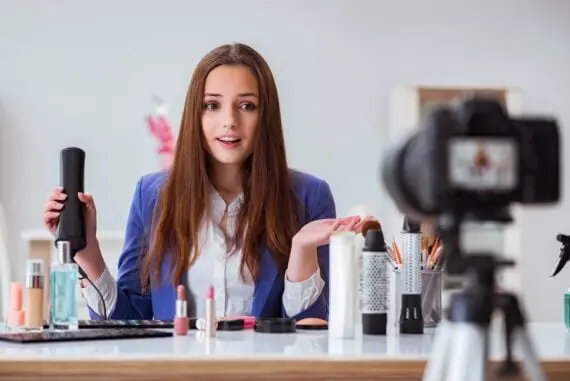
- The Creator Seed Program: For two consecutive years, the brand engaged in the tedious, manual labor of gifting products to small, specialized content creators. They concurrently ran modest paid advertising campaigns and structured affiliate percentage deals.
During this initial 24-month window, the financial returns were negligible. Sales trickled in slowly, and the brand faced the existential threat common to international entrants: high customer acquisition costs (CAC) eating away at margins without achieving critical mass.
Phase 2: Algorithmic Refinement and Niche Localization
What separated this brand from the countless others that abandon social commerce during the plateau phase was its refusal to rely solely on macro-celebrities or one-size-fits-all messaging. Instead, the company recognized that the American consumer base is not a monolith, but a mosaic of distinct linguistic and cultural communities.
The brand executed a sophisticated localization strategy:
- Language Pairing: The marketing team systematically identified and partnered with Spanish-speaking creators to target Hispanic communities, alongside Russian- and Ukrainian-speaking creators who commanded highly engaged sub-niches within the broader U.S. digital landscape.
- Algorithm Alignment: TikTok’s recommendation engine naturally silos content based on language and user engagement patterns. By distributing localized variations of product reviews across these discrete linguistic clusters, the brand effectively multiplied its surface area for discovery, bypassing the hyper-saturated English-speaking beauty feeds where acquisition costs were prohibitively high.
- The Micro-Creator Advantage: Rather than chasing vanity metrics with high-follower influencers, the brand doubled down on micro- and nano-creators. These individuals—often licensed cosmetologists, estheticians, or passionate hair-care enthusiasts—offered authentic, peer-to-peer recommendations. Their advice carried the weight of a trusted specialist rather than a paid billboard.
Phase 3: The Inflection Point and Explosive Scale
In late 2023, the cumulative effect of hundreds of small, niche videos reached a critical mass. A Spanish-language product review video demonstrating the immediate visual transformation of hair using the brand’s core $59 treatment caught fire on the TikTok algorithm.
The metrics that followed disrupted the company’s baseline operations overnight:

- Sales Velocity: Daily transactions multiplied by 50 within a 72-hour window.
- Revenue Milestone: Annualized revenue surpassed the $1 million threshold, shifting the company from a bootstrapped startup to a stable, high-velocity revenue generator.
- Distribution Interest: The sudden influx of consumer demand and social proof alerted major domestic distributors, who proactively reached out to secure wholesale and retail partnerships.
Crucially, none of this could have been planned. As digital marketing experts note, it is impossible to reverse-engineer a viral video, especially given the hyper-volatile and opaque nature of TikTok’s constantly shifting recommendation algorithms.
The viral explosion was simply the spark; the dry timber had been meticulously stacked over two years of testing infrastructure, building creator relationships, and ensuring that website conversion funnels were frictionless when the traffic tsunami arrived.
Supporting Context & Metrics: The Anatomy of Social Commerce
To evaluate the broader implications of this brand’s success, one must examine the macro-level shifts occurring within the U.S. e-commerce ecosystem. Beauty and personal care have emerged as the definitive crown jewel of social commerce platforms, driven by unique consumer behaviors and measurable cross-channel phenomena.
Why Beauty Dominates TikTok Shop
Beauty and personal care products represent the single largest category on TikTok Shop, and for good reason. The category thrives on three foundational pillars:
- Immediate Visual Proof: Unlike consumer electronics or abstract software, hair care, cosmetics, and skincare offer undeniable, instantaneous visual transformations. Viewers can watch a creator apply a product and witness a tangible difference in real-time on a real person.
- The "Specialist" Trust Factor: Consumers hunting for personal care solutions actively seek validation from individuals who share their hair or skin type. When an esthetician or niche creator explains why a formula works, conversion rates skyrocket.
- Frictionless Checkout: The integration of in-app purchasing features allows consumers to move from passive viewers to active buyers in fewer than three taps, eliminating the drop-off rates traditionally associated with redirecting users to external browsers.
The Cross-Channel Halo Effect
A persistent misconception among digital marketers is that sales channels operate in complete isolation—that revenue generated on TikTok stays on TikTok, and revenue on Amazon is driven solely by Amazon PPC ads. Reality is far more integrated.
Industry data and cross-platform case studies consistently highlight a powerful halo effect:
- A surge in social media visibility directly correlates with a spike in branded search queries on competing marketplaces.
- For instance, when a brand accumulates 500,000 views across TikTok content, retailers frequently observe an immediate lift of several thousand incremental branded searches on Amazon and Google.
- Consumers frequently use social media feeds as their primary discovery engine, viewing content while relaxing, only to migrate to traditional search engines or marketplace apps later to complete the purchase or check reviews.
[TikTok / Instagram Discovery]
        │
        ▼ (Generates Awareness & Desire)
[Cross-Channel Halo Effect]
        ├──> Direct In-App Purchase (TikTok Shop)
        ├──> DTC Website Conversion (Shopify)
        └──> Marketplace Search Spike (Amazon / Google)
This symbiotic relationship proves that social commerce does not cannibalize traditional retail channels; rather, it acts as the top-of-funnel engine that feeds them.
Strategic Analysis: The Cross-Border Launch Playbook
For international merchants weighing their options for U.S. market entry, the strategic imperative is clear: abandon the "either/or" mentality regarding marketplaces and social commerce. Instead, adopt a hybrid methodology tailored to product characteristics and consumer purchasing psychology.
Choosing Your Entry Channel: Discovery vs. Search
When deciding whether to launch on Amazon, a branded DTC site, or a social commerce platform like TikTok Shop, founders must ask one fundamental question: How do consumers find products in this category?
- Search-Driven Products (The Amazon Domain):
- Characteristics: Commodities, replacement goods, highly technical items, or problem-solving goods where consumers already know the exact category they need (e.g., "HEPA air purifier replacement filters" or "USB-C charging cables").
- Best Channel: Amazon. Shoppers enter the platform with high intent, typing specific keywords into a search bar, ready to buy based on price, reviews, and Prime shipping speed.
- Discovery-Driven Products (The Social Commerce Domain):
- Characteristics: Impulse buys, visually transformative items, innovative lifestyle goods, and beauty/personal care products where the consumer didn’t know they needed the item until they saw it in action.
- Best Channel: TikTok Shop and Instagram paired with a Shopify backend. These platforms rely on algorithmic curation rather than explicit user search, making them ideal for emotional and visual storytelling.
The Ideal Hybrid Framework
The most resilient cross-border brands do not choose just one channel; they sequence them intelligently:
- Step 1: Validate and Ignite via Social. Use TikTok Shop and niche creator seeding to test product-market fit, refine messaging, and generate organic consumer demand without sinking massive capital into upfront inventory for physical retail.
- Step 2: Capture Search Intent via Marketplaces. Once social proof, reviews, and brand awareness reach critical mass, expand onto Amazon to capture high-intent search traffic from consumers who have encountered the brand online and want transactional convenience.
- Step 3: Own the Customer Relationship via DTC. Direct traffic from both ecosystems back to a branded Shopify storefront to build a first-party data repository, launch subscription models, and maximize lifetime customer value (LTV).
Future Outlook: The Evolution of U.S. Social Commerce
As we look toward the horizon of digital retail, the boundary between entertainment and e-commerce will continue to dissolve. Several key trends will dictate the success of international merchants entering the U.S. market over the coming years:
- The Maturation of Live Shopping: While asynchronous video reviews currently drive massive discovery and impulse sales, real-time live shopping streams—modeled after the explosive success of Asian markets—are gaining steady traction in the U.S. Brands that master the art of interactive, broadcast-style sales will capture disproportionate market share.
- Hyper-Localization as Standard Practice: The U.S. melting pot will increasingly demand segmented marketing strategies. Brands that rely solely on broad, English-language generic campaigns will face escalating ad costs. The future belongs to brands that deploy native-language creators to speak directly to multicultural sub-communities.
- Algorithm Agility: With platform algorithms constantly shifting to prioritize community-driven engagement over polished corporate advertising, flexibility will remain the ultimate competitive advantage. Enterprises must build agile internal teams—or partner with specialized agencies—capable of pivoting content strategies weekly.
Conclusion
The journey of the international hair-care brand that turned two years of quiet testing into a $1 million+ breakout serves as an enduring blueprint. Breaking into the U.S. market is rarely a matter of pressing a single button or executing a flawless single campaign. It is an exercise in structural readiness.
By building a robust technical infrastructure, committing to the unglamorous work of seeding micro- and localized creators, and recognizing the powerful interplay between social discovery platforms and traditional search marketplaces, international merchants can transform the daunting American retail landscape from an insurmountable barrier into a boundless frontier of opportunity.