Executive Overview
In the high-stakes theater of fast-moving consumer goods (FMCG), few cultural moments match the commercial gravity of Halloween. Long viewed as a playground for confectionery brands, costume retailers, and cinematic horror franchises, the autumn holiday has increasingly become a battleground for beverage giants vying for the attention of Gen Z and Millennial consumers. For decades, brands have relied on temporary packaging refreshes, limited-edition flavor drops, and fleeting digital ad spends to capture a slice of the seasonal pie.
However, a paradigm shift is underway. Moving beyond the traditional playbook of seasonal marketing, Coca-Cola-owned beverage brand Fanta has launched its most ambitious cultural bet to date: Fanta’s Haunted Universe.
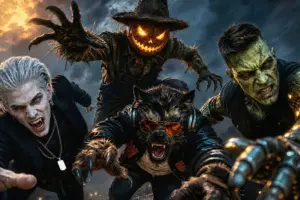
Unveiled on August 24, this expansive intellectual property (IP) represents a fundamental evolution for the brand. Rather than merely participating in Halloween through traditional advertising, Fanta is transforming into an original content creator and world-builder. Featuring four distinct, proprietary characters, interconnected storytelling, and a hybrid of live and digital consumer experiences, the initiative is designed to run through the spooky season and stretch far beyond it.
This strategic gambit addresses a critical challenge in modern brand marketing: how to build enduring, year-round equity from a seasonal spike. By establishing an owned entertainment ecosystem, Fanta is attempting to move away from rented attention—such as buying ad slots during horror movie marathons—and toward owned attention, where the brand is the entertainment.
This report provides a comprehensive examination of Fanta’s strategic pivot. Through a detailed chronology of the launch, an analysis of the broader economic and cultural context surrounding seasonal marketing, official statements from key stakeholders, and an outlook on the future of branded entertainment, we explore whether Fanta’s Haunted Universe can successfully redefine how consumer brands capture culture.
Detailed Chronology: From Limited-Edition Scares to Cinematic World-Building
To understand the magnitude of Fanta’s recent announcement, it is necessary to examine the timeline of how the brand has approached Halloween over the past decade, culminating in this unprecedented leap into original entertainment.
Phase 1: The Tactical Play (2015–2019)
For much of the mid-2010s, Fanta’s approach to Halloween mirrored that of its industry peers. The brand relied heavily on tactical, execution-led campaigns. These included "spooky" packaging redesigns featuring classic Halloween motifs—mummies, vampires, and jack-o’-lanterns—alongside temporary flavor variants like "Blood Orange" or mystery flavors. While these efforts successfully drove short-term retail lift and secured prime end-cap displays in grocery stores, they lacked a cohesive narrative thread. The marketing was ephemeral, disappearing from shelves and consumer consciousness by November 1.
Phase 2: The Digital Experimentation Era (2020–2023)
As digital media consumption fragmented and consumer expectations shifted toward immersive experiences during the COVID-19 pandemic, Fanta began experimenting with richer digital touchpoints. The brand leveraged augmented reality (AR) filters on social media platforms like Snapchat and Instagram, allowing consumers to interact with spooky elements overlaid on their physical environments.
Concurrently, Fanta began partnering with prominent digital creators and influencers within the gaming and horror communities. These campaigns drove strong engagement metrics, proving that Fanta’s vibrant, playful aesthetic resonated naturally with horror-adjacent digital subcultures. However, the brand was still largely borrowing equity from external platforms and creators rather than housing its own proprietary universe.
Phase 3: The Genesis of the Haunted Universe (2024)
The groundwork for Fanta’s Haunted Universe was laid in early 2024, as global marketing teams recognized the diminishing returns of repetitive seasonal campaigns. Consumers—particularly younger demographics saturated with high-production-value content from streaming services and gaming platforms—were growing immune to standard holiday ads.
Fanta’s leadership team, in collaboration with creative agency partners, began conceptualizing a multi-dimensional narrative ecosystem. Instead of designing a one-off campaign for October, the mandate was to construct a living, breathing fictional universe that could sustain audience interest across multiple quarters and years.
Phase 4: The Official Unveiling (August 24)
On August 24, the strategy materialized with the public debut of Fanta’s Haunted Universe. Kicking off with a high-production cinematic trailer released across digital and social channels, the launch introduced four original characters designed to anchor the brand’s storytelling moving forward.
The rollout strategy was engineered to be multi-layered:
- Cinematic Content: High-fidelity visual narratives establishing the lore of the Haunted Universe.
- Digital Engagement: Interactive online platforms where fans can explore the lore, unlock easter eggs, and interact with the new characters.
- Experiential Activations: Plans for live, immersive real-world events slated for the peak of the Halloween season, bridging the digital-physical divide.
By launching in late August—weeks before competitors typically activate their Halloween campaigns—Fanta successfully captured early mindshare, signaling to the industry that its spooky season would be an extended, deliberate event rather than a last-minute retail push.
Supporting Context & Metrics: The Economics of Branded Entertainment
To evaluate the viability of Fanta’s Haunted Universe, one must examine the macroeconomic trends governing modern advertising, the evolving behavior of Gen Z consumers, and the economics of seasonal retail spending.
The Rise of the "Attention Economy" and Ad Fatigue
Modern consumers are subjected to thousands of commercial messages daily. Traditional interruptive advertising—such as pre-roll video ads or banner placements—suffers from severe consumer fatigue, evidenced by the ubiquitous use of ad-blockers and the rise of paid subscription tiers on streaming services that eliminate commercials entirely.
In this climate, brands are forced to act less like advertisers and more like media companies. By creating original entertainment, Fanta is employing a "pull" strategy rather than a "push" strategy. Consumers do not skip compelling narratives; they actively seek them out. By embedding its brand identity within a captivating fictional universe, Fanta bypasses consumer resistance to traditional advertising.
The Lucrative and Growing Halloween Market
Halloween has evolved from a children’s holiday into a massive, multi-billion-dollar cultural and economic powerhouse. According to data from the National Retail Federation (NRF), total Halloween spending in the United States alone frequently eclipses $10 billion to $12 billion annually, encompassing spending on costumes, decorations, candy, and seasonal food and beverage products.
Crucially, adult participation in Halloween has surged over the past decade. Millennials and Gen Z consumers view the holiday as a prime opportunity for self-expression, social media content creation, and experiential consumption. For beverage brands like Fanta—whose brand ethos centers on playfulness, vibrancy, and youth culture—Halloween represents a vital alignment of brand identity and consumer passion points.
Capturing Gen Z Through Lore and World-Building
Gen Z consumers place a high value on authenticity, immersion, and participatory culture. They do not merely consume content; they analyze, critique, and expand upon it through fan fiction, memes, and digital communities.
By building a comprehensive "universe" complete with deep lore and original characters, Fanta is providing Gen Z with the raw materials needed for community engagement. When a brand creates a fictional universe, it invites consumers to become co-creators and active participants. This level of engagement fosters brand loyalty that transactional advertising simply cannot replicate.
Official Statements: Inside the Strategy
The rationale behind Fanta’s Haunted Universe reflects a sophisticated understanding of contemporary brand architecture. Leadership at Fanta and Coca-Cola have articulated a clear vision for how this initiative alters the brand’s long-term trajectory.
Ibrahim Khan, Global Vice President of Marketing at Fanta, emphasized the shift from campaign-based thinking to platform-based thinking during the launch:
"The aim is for Fanta’s Haunted Universe to be a platform that entertains fans for many years to come. This marks a major shift for the brand as it evolves from a seasonal Halloween marketer to an original content creator."
Khan’s statement underscores a vital distinction in modern marketing strategy: the transition from renting consumer attention to building owned equity. While a traditional ad campaign is designed to generate immediate, short-term sales spikes, a proprietary entertainment platform builds long-term cultural capital.
Industry analysts tracking the rollout have noted that this move aligns with a broader trend within The Coca-Cola Company to leverage its iconic brands as cultural catalysts. By investing in high-end production values and rich storytelling, Fanta is positioning itself not just alongside entertainment properties, but as an entertainment property in its own right.
Future Outlook: What’s Next for Fanta and Branded IP?
As Fanta’s Haunted Universe rolls out its initial wave of content and experiences, the broader marketing industry will be watching closely to evaluate its long-term success and scalability. Several key questions and opportunities define the brand’s future outlook:
1. Sustaining Engagement Beyond October
The ultimate test of Fanta’s new strategy will be its ability to maintain audience interest after Halloween concludes. While the spooky season serves as the natural peak for the Haunted Universe, the characters and storylines are engineered to endure. Future iterations may see the universe expanding into adjacent cultural moments, gaming integrations (such as activations within platforms like Roblox or Fortnite), or episodic digital content released throughout the year.
2. Global Scalability and Cultural Localization
Halloween is celebrated with varying intensity across different global markets. For a global brand like Fanta, the challenge will be scaling the Haunted Universe across diverse cultural landscapes. While the core characters and cinematic lore provide a universal foundation, local market teams will likely need to adapt the experiences to resonate with regional traditions, folklore, and consumer preferences.
3. The Future of Branded Entertainment
Fanta’s pivot may well serve as a case study for other FMCG brands looking to escape the diminishing returns of traditional seasonal marketing. If the Haunted Universe successfully drives sustained brand affinity and measurable business growth, we can expect a wave of consumer brands attempting to build their own proprietary cinematic and narrative universes.
Conclusion
Fanta’s Haunted Universe is more than an innovative marketing campaign; it is a bold declaration of intent. By stepping out of the shadows of traditional seasonal advertising and into the role of an original content creator, Fanta is redefining the relationship between beverage brands and their consumers. As the boundaries between commerce, entertainment, and culture continue to dissolve, Fanta’s spooky cinematic bet offers a compelling glimpse into the future of brand storytelling—proving that with the right narrative vision, even a temporary holiday can become an eternal playground.