
Executive Overview
The global e-commerce infrastructure is experiencing an unprecedented phase of transformation, driven by the rapid maturation of generative artificial intelligence (AI), advanced visualization technologies, and innovative logistics frameworks. In this week’s comprehensive product release cycle, digital merchants are being handed an expansive toolkit designed to optimize everything from onsite customer conversion to cross-channel marketing automation, autonomous delivery, and generative media production.
The prevailing theme of this development wave is the convergence of fragmented workflows into unified, AI-native ecosystems. Platforms are no longer just passive repositories for storefront listings; instead, they are evolving into active, agentic collaborators. From Hostinger’s all-in-one web app builders to Alipay’s merchant-focused AI agents, software providers are dismantling the technical barriers that have historically separated design, data storage, marketing automation, and payment processing.

Simultaneously, the boundaries between social media, entertainment, and digital retail continue to dissolve. Innovations such as Tilt’s "Clips" and Meta’s expanded AI feature set highlight an industry shifting toward instant, scrollable, and conversational commerce. Logistics, too, is taking a giant leap forward, underscored by high-profile investments in drone delivery networks that aim to redefine the speed and efficiency of last-mile fulfillment. This report provides an in-depth, authoritative analysis of the latest tools, platforms, and strategic partnerships shaping the future of digital commerce.
Detailed Chronology: Weekly Product Releases and Platform Innovations
To understand the trajectory of modern digital retail, one must examine the specific technical integrations and platform rollouts introduced across the merchant ecosystem this week.
1. Advanced Conversion and Popup Analytics
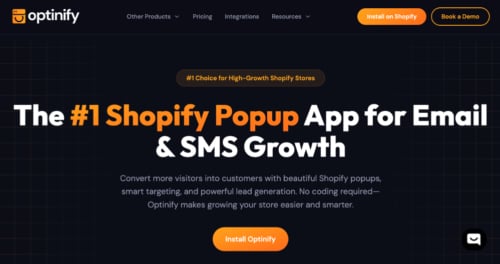
- Optinify (Shopify Integration): Recognizing the critical role of list-building in direct-to-consumer (D2C) strategies, Optinify has completely rebuilt its Shopify popup application from the ground up. The updated platform shifts focus from mere lead capture to holistic campaign optimization. Merchants can now track granular metrics including popup views, conversion rates, and exact revenue generated from specific interactions. Furthermore, the tool supports robust A/B testing frameworks, allowing sellers to experiment with varied headlines, discount offers, visual designs, and messaging sequences in real time.
2. Unified Infrastructure and Website Builders
- Hostinger AI Builder: In an effort to streamline technical overhead for micro-merchants and startups, Hostinger has merged its standalone website builder and infrastructure tools into a single, cohesive platform. The new AI Builder handles complex backend processes—such as account creation, database provisioning, and ecommerce functionality setup—alongside front-end site generation. By integrating email marketing tasks directly into the initial setup, Hostinger enables non-technical founders to launch fully operational digital storefronts with minimal friction.
3. Shoppable Video and Social Commerce
- Tilt’s "Clips": Live-shopping platform Tilt is addressing a fundamental limitation of real-time broadcasting—namely, the post-stream drop-off in sales. With the launch of "Clips," merchants gain a continuous, scrollable feed of short-form videos derived from previous livestreams or recorded independently. Leveraging built-in computer vision and voice recognition, sellers simply hold an item up to a camera and describe its attributes aloud. Tilt’s AI automatically logs the product category, brand, sizing, and item condition, generating a ready-to-buy video asset instantly.
4. Enterprise Marketing and Generative AI Integrations
- Meta AI for Small Businesses: Meta has rolled out a suite of generative AI capabilities tightly integrated with Facebook and Instagram accounts, ad manager suites, and Google Workspace environments. Small business owners can now prompt Meta AI to pull data from internal files and live web sources to automatically generate business presentations, operational documents, spreadsheets, and marketing copy.
- Attentive AI Grow: Omnichannel marketing leader Attentive has introduced AI Grow, an intelligent list-growth engine. Designed to optimize the timing of email and SMS acquisition, AI Grow analyzes real-time browsing behaviors of both logged-in customers and anonymous visitors. By identifying the precise micro-moment when a user is most likely to convert, the system triggers targeted subscription prompts. Each deployment is continuously evaluated through automated A/B testing against legacy setups.
- GrowthLoop Composable Media Network: GrowthLoop has expanded its AI-powered marketing infrastructure by embedding technologies from prominent adtech partners, including The Trade Desk, Moloco, and Audience Acuity. Operating directly atop cloud data warehouses like Google BigQuery, Snowflake, and Databricks, the network empowers enterprise retail teams to orchestrate unified onsite and offsite media campaigns with closed-loop measurement.
5. Generative Visuals and Advertising Automation
- Designkit AI Video Platform: To help brands keep pace with the insatiable demand for short-form video content, Designkit has launched a tool that converts static product photographs into dynamic, platform-optimized marketing videos suitable for TikTok, Instagram, YouTube, and traditional storefronts.
- Sell The Trend AI Ads Blueprint: Tailored specifically for the dropshipping and rapid-testing community, Sell The Trend’s new module allows merchants to translate raw product ideas into campaign-ready advertisements. Users can select desired ad formats, permit the AI to generate initial creative assets and copywriting, and iteratively refine layouts and messaging within a single, end-to-end workflow.
- LibAI Lab’s "NewFace": Targeting e-commerce agencies and creators, LibAI Lab introduced NewFace, an advanced AI creation suite. Users outline their creative brief in natural language, and the system builds out multi-nodal projects on a unified canvas, retaining context, visual references, and historical edits across every iteration.
- Koozee Apparel Visual Platform: Built explicitly for the apparel sector, Australia-based Koozee enables merchants to upload a single garment image and automatically generate diverse model shots, varied poses, flat lays, ghost mannequin assets, and dynamic fitlog videos without traditional photoshoots.
6. B2B Creator Management and Marketplace Accelerators
- Astute ($1.2M Pre-Seed Funding): Addressing the fragmented landscape of influencer and creator marketing, Astute launched a new B2B media platform alongside a $1.2 million pre-seed funding round backed by Flyer One Ventures, Silicon Gardens, and other notable investors. The platform assists B2B enterprises in discovering, vetting, and managing partnerships with newsletter authors, podcasters, and social media influencers.
- BPMS Bloom: Marketing agency BPMS introduced "Bloom," a specialized marketplace growth accelerator. Designed to guide brands through the complex lifecycles of platforms like Amazon, Walmart Marketplace, Target Plus, and TikTok Shop, Bloom offers comprehensive catalog management, search optimization, and inventory scaling services.
7. Logistics, Payments, and Trust Verification
- Uber and Zipline Partnership: In a landmark logistics alliance, autonomous drone delivery provider Zipline and Uber Technologies have announced a strategic partnership to scale last-mile delivery operations across the United States. Backed by an equity investment from Uber, the initiative aims to facilitate one million daily drone deliveries by the end of 2029, with initial Uber Eats deployments slated to begin shortly.
- Alipay Agentic Commerce Platform: Alibaba Group’s Alipay has unveiled an agentic commerce platform for merchants. The system allows businesses to convert standard web pages, products, and operational workflows into autonomous AI agent skills and Model Context Protocol (MCP) tools, orchestrating complex task execution automatically.
- ShouldEye AI Verification Platform: As consumers increasingly rely on AI models for product discovery and brand evaluation, ShouldEye has launched a B2B platform that monitors a company’s reputation, visibility, and sentiment across major AI systems. The tool identifies information gaps and provides trust badges for digital properties.
- Remark Real-Time Virtual Try-On: Catering to luxury e-commerce brands, Remark has launched a high-definition virtual try-on engine that maps garments onto users in real time, mirroring their body movements without requiring mobile app downloads or cumbersome plugins.
- Shoppa.ca Marketplace: Celebrating national commerce, Buy Canadian Group Inc. launched Shoppa.ca, a dedicated discovery engine and marketplace explicitly highlighting Canadian-owned businesses and products labeled "Made in Canada."
Supporting Context & Metrics: The Shift Toward Agentic Infrastructure
The proliferation of these tools reflects a deeper structural shift in the e-commerce economy. For years, digital retail was characterized by software accumulation—merchants added distinct applications for email marketing, popup capture, video editing, translation, and logistics tracking. This approach frequently resulted in bloated software stacks, slow site speeds, and siloed data streams.
The introduction of unified platforms like Hostinger’s AI Builder, Alipay’s agentic framework, and GrowthLoop’s composable data integrations signals the arrival of the "Agentic Era" in commerce. Industry data underscores why this shift is occurring:

- Conversion Velocity: Studies show that personalized, real-time engagement tools—such as Attentive’s behavior-triggered AI Grow—can lift subscriber capture rates by double-digit percentages compared to static forms.
- Content Fatigue: With consumers demanding constant video engagement across TikTok, Instagram Reels, and YouTube Shorts, manual content creation has become a severe bottleneck. Platforms like Designkit and Koozee aim to reduce content production costs by up to 70%, democratizing studio-grade visual assets for small and medium-sized enterprises (SMEs).
- Last-Mile Economics: Logistics partnerships like Uber and Zipline highlight the urgency of reducing delivery times. Traditional ground delivery in densely populated urban centers faces mounting congestion penalties; autonomous aerial delivery represents a viable, scalable alternative for lightweight, time-sensitive goods.
Official Statements and Industry Perspectives
The architects behind these innovations emphasize that technology must ultimately reduce cognitive load for business operators rather than add to it.
Regarding the partnership between Uber and Zipline, logistics executives noted that scaling autonomous delivery requires bridging the gap between established consumer-facing apps and advanced aviation technology. By embedding Zipline’s autonomous aircraft into the Uber Eats ecosystem, the companies intend to normalize aerial fulfillment as a standard consumer option.

In the realm of marketing automation, leadership at Attentive remarked on the evolution of subscriber acquisition: "The challenge is no longer merely asking a visitor for their contact information; it is understanding the psychological and behavioral context of their visit. By deploying real-time AI to assess intent, brands can respect the user experience while maximizing long-term revenue growth."
Similarly, the founders of emerging platforms like Astute and ShouldEye point to the rising importance of non-traditional channels. As B2B buyers and consumers increasingly bypass traditional search engines in favor of AI assistants and creator networks, brand visibility must be managed across decentralized ecosystems.

Future Outlook: What Lies Ahead for Digital Merchants
As these technologies transition from early-access rollouts to mainstream adoption over the next 12 to 36 months, digital merchants must prepare for a fundamentally altered operational environment.
- The Rise of Zero-UI Workflows: Administrative dashboards will increasingly give way to conversational and agentic interfaces. Merchants will manage inventory, launch ad campaigns, and adjust pricing strategies simply by instructing AI systems in natural language, much like LibAI Lab’s NewFace or Alipay’s MCP tools facilitate today.
- Hyper-Personalization at Scale: Virtual try-ons, such as Remark’s motion-tracked rendering engine, will move from novelty status to baseline consumer expectations. Brands that fail to offer immersive, interactive visualization tools will struggle to maintain conversion parity in apparel and luxury segments.
- Decentralized Discovery and AI Reputation Management: Tools like ShouldEye will become essential components of digital PR. As AI models increasingly synthesize the internet to recommend products to users, managing how large language models perceive, evaluate, and describe a brand will be just as critical as traditional search engine optimization (SEO).
Ultimately, the merchants who thrive in this next era will be those who successfully embrace unified, AI-driven architectures—streamlining their operations while delivering deeply personalized, frictionless experiences to consumers across every digital and physical touchpoint.