Executive Overview
In the fast-paced ecosystem of digital commerce, conventional wisdom dictates that email marketing should be treated with delicate care. For years, digital marketing textbooks have preached the gospel of permission marketing: keep frequencies low, meticulously scrub your mailing lists of unengaged subscribers to protect deliverability, treat open rates as the holy grail of health metrics, and never, under any circumstances, risk ticking off your audience.
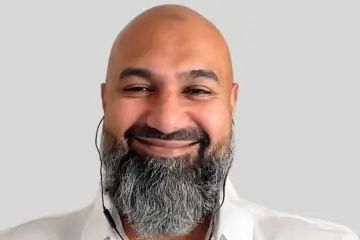
Nabeel Azeez is here to tear that playbook to shreds.
As the co-owner of Dropkick Copy—a Dubai-based copywriting and email marketing agency catering primarily to United States brands across ecommerce, SaaS, and private equity—Azeez has built a reputation on aggressive, unorthodox strategies. While most standard ecommerce brands send a modest two to three emails a week, Azeez’s agency regularly scales frequencies to daily cadences, and in some extreme cases, up to eight emails a day to hyper-targeted segments.
In a recent, wide-ranging industry interview with Eric Bandholz, Azeez pulled back the curtain on the aggressive mechanics that drive high-volume revenue generation. Rejecting widely accepted industry tenets, Azeez openly challenges the sanctity of open rates, brands them as vanity metrics, defends unengaged subscribers against immediate deletion, and leverages advanced dynamic segmentation to maximize lifetime value. This deep dive explores Azeez’s controversial methodologies, examining how high-frequency emailing, behavioral segmentation, and SMS integration can unlock unprecedented growth for modern digital brands.
Detailed Chronology: Unpacking the Azeez Methodology
To understand how Dropkick Copy transforms stagnant or moderately successful email programs into revenue-generating powerhouses, one must examine the step-by-step roadmap Azeez deploys when onboarding a new client.
Phase 1: The Diagnostic and the Initial "Raise Your Hand"
When onboarding a new B2B client, Azeez does not waste time warming up the audience with soft, purely aesthetic branding campaigns. Instead, he goes straight for direct response validation.
The first tactical move is deploying a deceptively simple "nine-word email" to all subscribers who have yet to make a purchase. The core objective of this brief, conversational message is simple: get people to raise their hands. By asking a direct, low-friction question—such as, "Are you still interested in what we’re selling?"—the agency prompts an immediate behavioral reaction. Depending on the size of the list, this single email routinely generates hundreds of direct responses, instantly sorting active prospects from digital dead weight.
For ecommerce clients, the initial diagnostic process looks slightly different. The agency immediately audits existing infrastructure to identify missing automated flows—such as post-purchase sequences, browse abandonment, and advanced cart recovery. Once the foundational automated architecture is locked in, Azeez and his team waste no time ramping up outbound campaign frequencies.
Phase 2: Hyper-Segmentation and High-Frequency Execution
The cornerstone of Azeez’s high-frequency strategy is the absolute elimination of list overlap. When sending multiple emails a day, the danger is subscriber fatigue—bombarding the exact same inbox with redundant messages. Azeez bypasses this risk through aggressive, micro-targeted segmentation.
During the interview, Azeez broke down how his team constructs up to eight distinct segments for a single client:
- Recency Segments: Subscribers categorized by their last engagement window (the past 7 days, 30 days, or a lapsed 60-to-90-day bracket).
- The "Whales": High-value, high-frequency buyers who spend significantly above average.
- Potential Whales: Customers who purchase frequently but with lower average order values (AOV).
- Loyal Customers: Regular buyers who make smaller, consistent purchases.
- Churned or Lapsed Whales: High-value customers who have historically spent large amounts but have fallen dormant.
By dividing the subscriber base into mutually exclusive segments, Azeez ensures that a consumer receiving multiple emails in a single day is getting entirely different, highly relevant content. For instance, a "potential whale" might receive an email incentivizing a higher basket size through a minimum-order-value gift, while a loyal customer receives a loyalty reward prompt. Alternatively, the agency leverages advanced tools like Klaviyo’s dynamic content selectors to push a single email blast that automatically morphs its core messaging based on the reader’s segment data.
Phase 3: Pushing Boundaries and Managing Deliverability
Executing an eight-emails-a-day strategy naturally raises red flags among email service providers (ESPs). Azeez admits that platforms like Klaviyo frequently send warning notices cautioning against emailing unengaged subscribers at such a high velocity.
However, Azeez remains unfazed. In his view, ESP warnings are often built around protective metrics that do not necessarily align with a merchant’s ultimate bottom line. "Klaviyo ought to know that open rate is a vanity metric," Azeez asserts. "The only thing that matters is revenue."
Supporting Context & Metrics: Scaling from $10K to $20K and Beyond
For a smaller ecommerce brand currently generating $10,000 per month in email revenue while sending three times a week with basic automation flows, scaling to the next tier requires calculated adjustments. Azeez outlines several foundational factors that dictate whether a brand can safely accelerate its email engine.
Evaluating Product Type and Acquisition Velocity
Before ramping up frequency, merchants must analyze two vital variables:
- Product Lifespan: Are the items consumable repeat-purchase goods (e.g., supplements, cosmetics, food items), or are they one-off durable goods?
- Subscriber Growth Rate: How many new subscribers are entering the top of the funnel every week?
"The more new subscribers you have, the more aggressively you can email them," Azeez notes. Brands with high customer acquisition rates can afford to burn through unengaged audiences much faster than boutique brands fighting to retain a tiny, static pool of high-end clients.
Optimizing Opt-In Pop-Ups and Monetization Channels
A common blind spot for emerging ecommerce companies is a failure to rigorously test opt-in incentives. Many merchants default to a blanket 10% discount pop-up, inadvertently training their audience to expect price cuts on every future transaction. Azeez advises testing alternative lead magnets—such as free shipping, bundled product packages, or exclusive free gifts—to see which offer yields the highest conversion margin rather than just the highest raw submission volume.
Furthermore, email performance cannot be evaluated in a vacuum. A robust, aggressive email marketing program directly influences top-of-funnel paid acquisition channels like Meta Ads, driving up Return on Ad Spend (ROAS) and Marketing Efficiency Ratio (MER). Azeez recommends shifting email attribution models from last-click to first-click to capture the true holistic value that email brings to initial brand discovery.
Official Statements and Contrarian Viewpoints
Throughout his conversation with Eric Bandholz, Azeez doubled down on several contrarian philosophies that run counter to standard digital marketing agency advice. Two viewpoints, in particular, stand out for their unconventional approach to list health and customer retention.
1. The Death of the Open Rate
In an industry obsessed with pixel tracking, subject line optimization, and Apple Mail privacy patch workarounds, Azeez dismisses open rates outright.
"Klaviyo sent us a warning the other day stating we’re emailing too many unengaged subscribers. But Klaviyo ought to know that open rate is a vanity metric. The only thing that matters is revenue."
By refusing to let low open rates dictate operational limits, Azeez allows his agency to mine hidden revenue from segments that traditional marketers write off as dead.
2. Never Unsubscribe Dormant Recipients
The standard industry practice for list hygiene is the "sunset policy": if a subscriber hasn’t opened an email in 60 to 90 days, scrub them from the list to protect sender reputation and deliverability. Azeez views this as throwing money away.
Instead of permanently unsubscribing unengaged users, Azeez utilizes an automated 90-day sunset sequence. If subscribers show no engagement across opens, clicks, or purchases during that window, the agency pauses their active campaign delivery rather than deleting them.
Once paused, these dormant accounts are entered into a strategic reactivation cadence, receiving a targeted email once every month or quarter. According to Azeez, roughly 10% of these "dead" subscribers eventually wake up and re-engage. To maximize inbox placement for these recovery attempts, the agency often deploys plain-text, long-form educational emails that bypass promotional tab filters and land squarely in the primary inbox.
Future Outlook: The Role of SMS and Omnichannel Aggression
Looking ahead, Azeez sees text message marketing (SMS) as an essential sibling to high-frequency email strategies, though it requires its own set of guardrails due to higher delivery costs.
While email campaigns can comfortably run daily—or multiple times a day—SMS frequencies are typically capped at two to three times per week to prevent severe subscriber churn and high opt-out rates. However, because SMS frequently outperforms email in immediate revenue generation, brands looking for a quick cash injection can strategically dial up SMS volume, keeping promotional texts as concise and direct as possible.
Summary Takeaways for Digital Brands
For ecommerce founders and digital marketers looking to break through revenue plateaus, Azeez’s playbook offers a provocative blueprint:
- Increase Frequency with Cautionary Precision: Move away from arbitrary two-to-three-email weekly caps. If your subscriber acquisition rate supports it, scale up to daily emails backed by strict, non-overlapping behavioral segments.
- Stop Fearing the Unsubscribed: Re-evaluate your sunset policies. Pause unengaged users instead of deleting them, and aggressively mine your dormant list with plain-text reactivation campaigns.
- Prioritize Revenue Over Vanity Metrics: Ignore low open rates if your bottom-line revenue and overall blended ROAS are climbing.
- Optimize Opt-In Economics: Continuously test your pop-up incentives to avoid training your customer base to expect perpetual discounts.
As privacy updates continue to degrade traditional tracking metrics, marketers willing to challenge conventional dogmas—just as Nabeel Azeez has done—may find that aggressive, revenue-obsessed execution is the ultimate key to surviving and thriving in modern digital commerce.