Executive Overview
In the rapidly evolving landscape of artificial intelligence development, hardware bottlenecks remain one of the most significant hurdles for engineers, data scientists, and software architects. While consumer-facing AI features often dominate tech headlines—such as Microsoft’s recent showcase of the Surface Laptop Ultra during its latest Windows-focused ecosystem event—the true engine driving the generative AI revolution operates behind the scenes in development environments. To bridge this critical infrastructure gap, Microsoft has officially taken the wraps off its most specialized, high-performance desktop workstation to date: the Surface RTX Spark Dev Box.
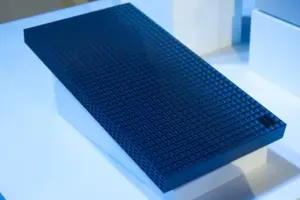
Priced at a staggering $5,999.99, this machine is not built for the casual consumer, nor is it a standard enterprise office PC. Instead, it is a purpose-built, ultra-powerful workstation explicitly optimized for local AI development, machine learning model training, and heavy computational tasks. First teased earlier in the year as a "compact PC," hands-on impressions reveal a device that defies traditional desktop categorization. Covered in roughly 1,000 precision-engineered air vents and bearing a striking resemblance to an oversized, industrial-grade Lego brick, the Spark Dev Box is a physical manifestation of raw, unfiltered processing power.
Featuring an astonishing 6,144-core GPU, 128GB of high-speed memory, and a spacious 2TB solid-state drive, the hardware specification sheet reads like a high-end server rack compressed into a desktop chassis. However, its unorthodox form factor—characterized by a thin yet elongated body resting upon an elevated base—raises questions about desk ergonomics and thermal dissipation. Apple’s Mac Studio immediately comes to mind as a conceptual peer, yet Microsoft’s approach appears uniquely tailored to the Windows developer ecosystem, leaning heavily into NVIDIA-powered RTX architecture.
As pre-orders open for enterprise clients and elite developers, the Surface RTX Spark Dev Box represents a major strategic pivot for Microsoft’s hardware division. It signals that the tech giant is willing to cater directly to the heavy lifters of the AI boom, providing localized compute power capable of running massive Large Language Models (LLMs) and complex neural networks right on the desktop. This report provides a comprehensive analysis of the Spark Dev Box, examining its design philosophy, technical specifications, I/O capabilities, and long-term implications for the future of AI development hardware.
Detailed Chronology: From Teaser to Pre-Order
The journey of the Surface RTX Spark Dev Box reflects Microsoft’s broader, aggressive pivot toward artificial intelligence integration across both software and hardware verticals. Understanding how this machine came to market requires tracing its path through recent product pipelines and industry events.
Early 2024: The Initial Whisper
Rumors and early conceptual glimpses of Microsoft’s dedicated AI development hardware began circulating within developer circles early in the year. As enterprise demand for local AI inference skyrocketed—driven by privacy concerns, latency issues with cloud-based APIs, and the sheer volume of parameters in modern LLMs—developers made it clear that standard consumer rigs were no longer cutting edge enough. Microsoft acknowledged these pain points during closed-door developer roundtables, briefly flashing concept renders of a compact, ventilated desktop box designed explicitly to handle local AI workloads without melting down.
The Microsoft Windows Ecosystem Event
The definitive unveiling occurred during Microsoft’s major AI-focused Windows hardware showcase. While consumer-facing announcements like the Surface Laptop Ultra captured the mainstream media spotlight, the company dedicated crucial presentation segments to its professional developer tooling. It was here that attendees and journalists received their very first physical look at the production-ready Surface RTX Spark Dev Box.
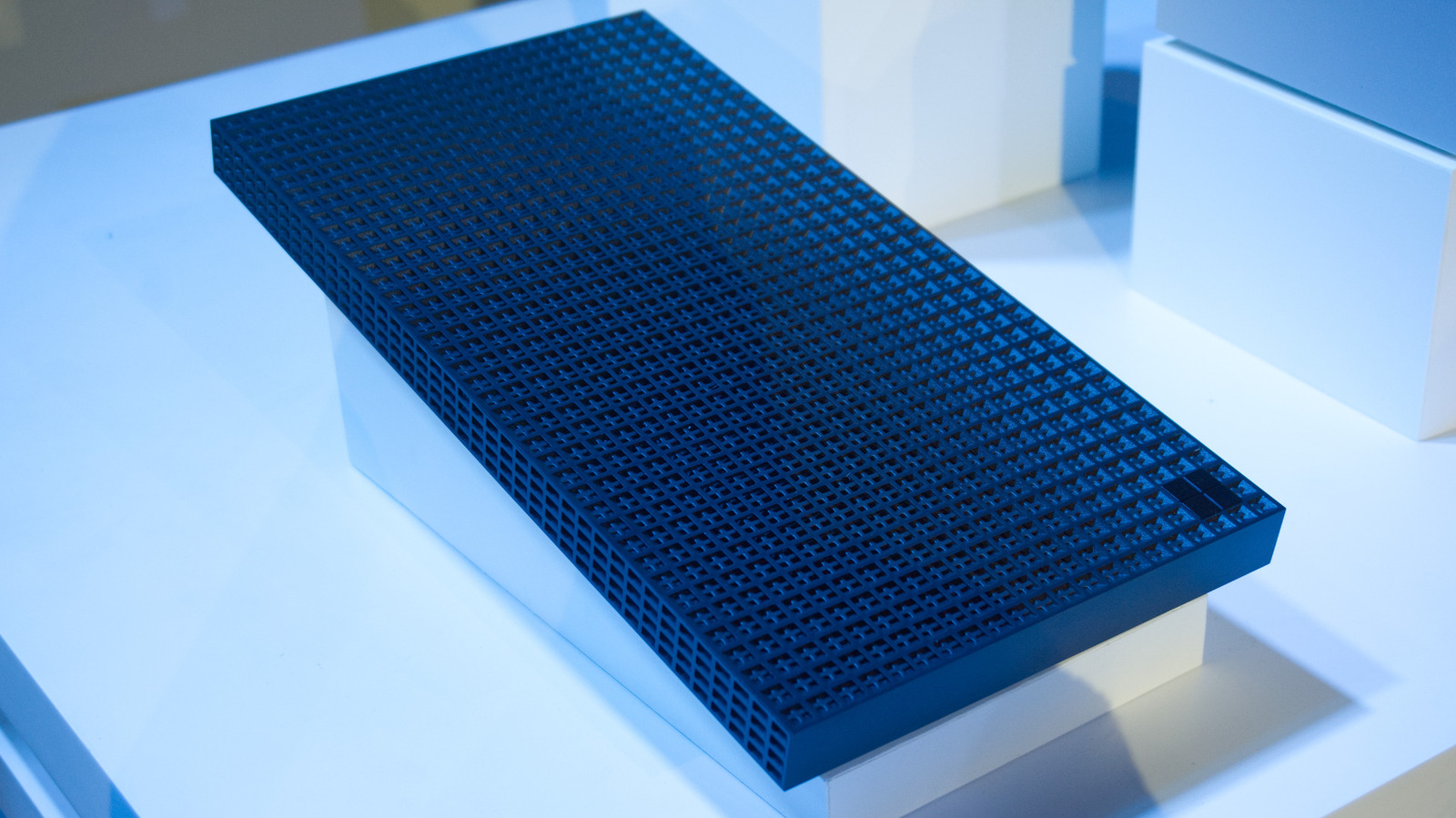
Rather than keeping the device safely locked behind glass display cases, Microsoft permitted hands-on inspections, allowing tech journalists to evaluate its weight, tactile finish, and build quality. This transparency revealed a machine that was significantly more substantial than early marketing renders suggested. Observers noted that the device was heavy, tipping the scales at an estimated 5 to 6 pounds or more, and featured an awkward elevated base that demanded careful consideration of desk real estate.
Immediate Availability and Pre-Order Launch
Hot on the heels of the physical reveal, Microsoft activated pre-order channels for the device, listing the Surface RTX Spark Dev Box directly on its Microsoft Store configuration portal with a firm price tag of $5,999.99. By bypassing a protracted waiting period and moving straight from announcement to pre-order, Microsoft is signaling to enterprise partners and independent AI developers that the hardware is ready for immediate deployment into production pipelines. Deliveries are slated to follow standard enterprise logistics chains, positioning the machine as a premier workstation option for teams needing immediate, high-end local compute capabilities.
Supporting Context & Metrics: Under the Hood of the Beast
To understand why the Surface RTX Spark Dev Box commands a $6,000 price point, one must look beyond its eccentric exterior and examine the silicon and engineering architecture powering the machine.
Processing Power and Memory Configuration
At the heart of the Spark Dev Box lies an enterprise-grade GPU architecture boasting an incredible 6,144 cores. This massive parallel processing capacity is explicitly tailored for deep learning workflows, enabling developers to train, fine-tune, and run inference on complex neural networks locally rather than relying exclusively on costly cloud instances (such as Azure or AWS clusters).
Complementing this powerhouse GPU is 128GB of high-speed memory. In the realm of AI development, memory capacity is often the ultimate bottleneck. Running modern LLMs or multimodal AI models locally requires massive amounts of VRAM and system memory to hold model weights in an active state. With 128GB at their disposal, developers can comfortably load and test sophisticated models without hitting out-of-memory (OOM) errors that plague lesser hardware.
Storage is handled by a swift 2TB solid-state drive (SSD). While 2TB may seem modest given the massive footprint of modern AI datasets—which often span tens or hundreds of terabytes—it provides more than enough breathing room for operating system environments, software toolchains (such as PyTorch, TensorFlow, and CUDA libraries), and multiple localized model checkpoints. Network-attached storage (NAS) or enterprise server arrays will undoubtedly handle the heavy data storage lifting, making the local 2TB NVMe drive an ideal staging ground for active projects.
Thermal Engineering and the "Lego Brick" Aesthetic
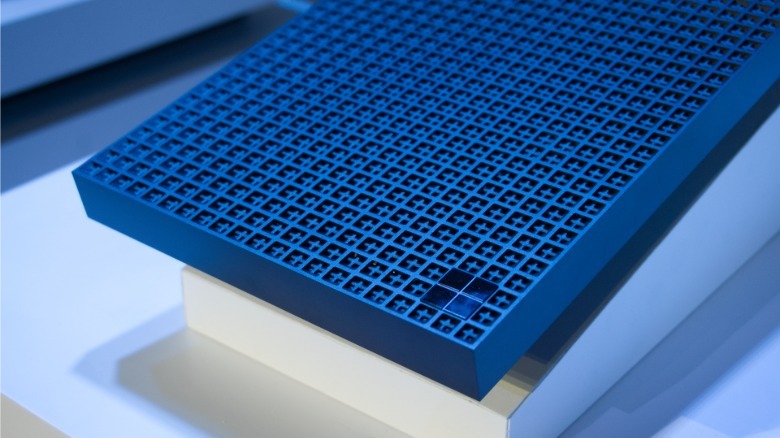
Perhaps the most striking physical characteristic of the Spark Dev Box is its ventilation system. The chassis is enveloped in approximately 1,000 precision-drilled air vents, giving it the uncanny appearance of an oversized, industrial Lego brick.
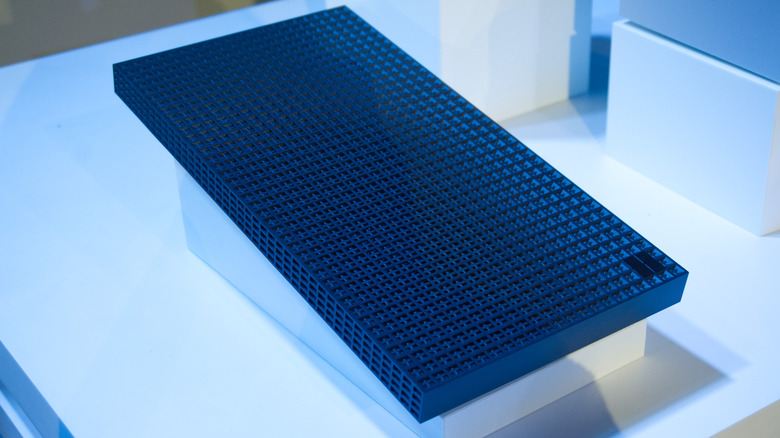
This extreme focus on airflow is not merely aesthetic; it is a thermal necessity. High-end GPUs and neural processing units generating intensive computational workloads output immense amounts of heat. Without aggressive thermal management, thermal throttling would severely degrade performance during prolonged model training sessions. The device’s thin yet elongated profile, combined with its elevated base, is deliberately designed to optimize passive and active airflow dynamics, ensuring that cool air is drawn in efficiently and exhaust is expelled away from internal components.
However, this thermal-first design introduces ergonomic trade-offs. Weighing between 5 and 6 pounds (with some estimates placing it slightly higher), and featuring an awkward form factor due to its elevated base, the Spark Dev Box is decidedly not a portable machine. It is designed to occupy a permanent, dedicated spot on a professional workstation desk—much like Apple’s Mac Studio, though with a distinctly different physical footprint.
I/O and Connectivity Options
Connectivity is a vital consideration for developers juggling high-resolution multi-monitor setups, external storage arrays, and specialized peripherals. The back panel of the Spark Dev Box offers a curated, albeit somewhat contentious, selection of ports:
- USB-C Ports: Three high-bandwidth USB-C connections for modern peripherals and display output.
- HDMI Port: Standard video output for driving primary or secondary monitors.
- Ethernet Port: Hardwired gigabit networking for lightning-fast data transfers and cloud synchronization.
- USB-A Port: A legacy USB-A connection for traditional mice, keyboards, or hardware security keys.
- Audio Jack: A standard 3.5mm headphone jack for local audio monitoring and playback.
Notably absent from this lineup—unlike Apple’s Mac Studio—is a built-in SD card slot, an omission that photographers and videographers working at the intersection of media and AI might mourn, though it remains largely inconsequential for pure software and machine learning developers.
Official Statements and Industry Perspectives
Microsoft’s positioning of the Surface RTX Spark Dev Box reveals a deliberate strategy to capture the high-end developer market. While official corporate messaging has frequently emphasized the "compact" nature of the PC, hands-on reviews and technical commentary suggest a more nuanced reality.
Industry analysts have pointed out that while the machine is physically smaller than a traditional mid-tower or full-tower gaming rig, calling it truly compact is a stretch given its elongated footprint and heavy, elevated base. Nevertheless, the engineering achievement lies in packing server-grade AI development capabilities into a desktop-friendly enclosure.
During briefings, Microsoft representatives have framed the Spark Dev Box as a crucial tool for democratizing local AI iteration. By giving developers immediate access to a 6,144-core GPU and 128GB of memory right on their desks, the company aims to drastically reduce the friction associated with cloud latency and recurring API usage fees during the experimental phases of model creation.
Furthermore, developer reactions within tech forums and engineering communities have been largely positive regarding the hardware specifications, though sticker shock remains a prevailing theme. At $5,999.99, the device is positioned as an enterprise capital expenditure rather than an impulse buy for individual hobbyists. It competes directly with high-end custom-built workstation rigs and Apple’s top-tier Mac Studio configurations, forcing developers to weigh the benefits of the Windows/NVIDIA ecosystem against competing platforms.
Future Outlook: The Role of Local AI Workstations
As the artificial intelligence landscape matures, the debate between cloud-based computing and local on-premise hardware continues to intensify. While cloud infrastructure will always dominate massive, enterprise-scale training runs involving clusters of thousands of GPUs, the day-to-day workflow of the modern AI engineer increasingly demands rapid, iterative testing on local machines.
The launch of the Surface RTX Spark Dev Box suggests that Microsoft anticipates a future where local AI development is standard practice across corporate software engineering departments. Privacy regulations, data sovereignty laws, and the sheer cost of continuous cloud compute time are driving companies to bring sensitive AI workloads back in-house.
Looking ahead, we can expect to see iterative refinements in form factor and thermal engineering as silicon manufacturers squeeze even more performance out of smaller dies. Whether the "Lego brick" aesthetic of the Spark Dev Box sets a new design trend for professional workstations or remains a quirky anomaly in Microsoft’s hardware history remains to be seen. However, one thing is certain: as long as developers demand desktop-bound supercomputing power to build the next generation of artificial intelligence, hardware manufacturers will continue to push the boundaries of thermal design, silicon integration, and pricing conventions. For elite developers willing to make the investment, the Surface RTX Spark Dev Box sets a formidable new benchmark for what a local AI workstation can achieve.