
Executive Overview
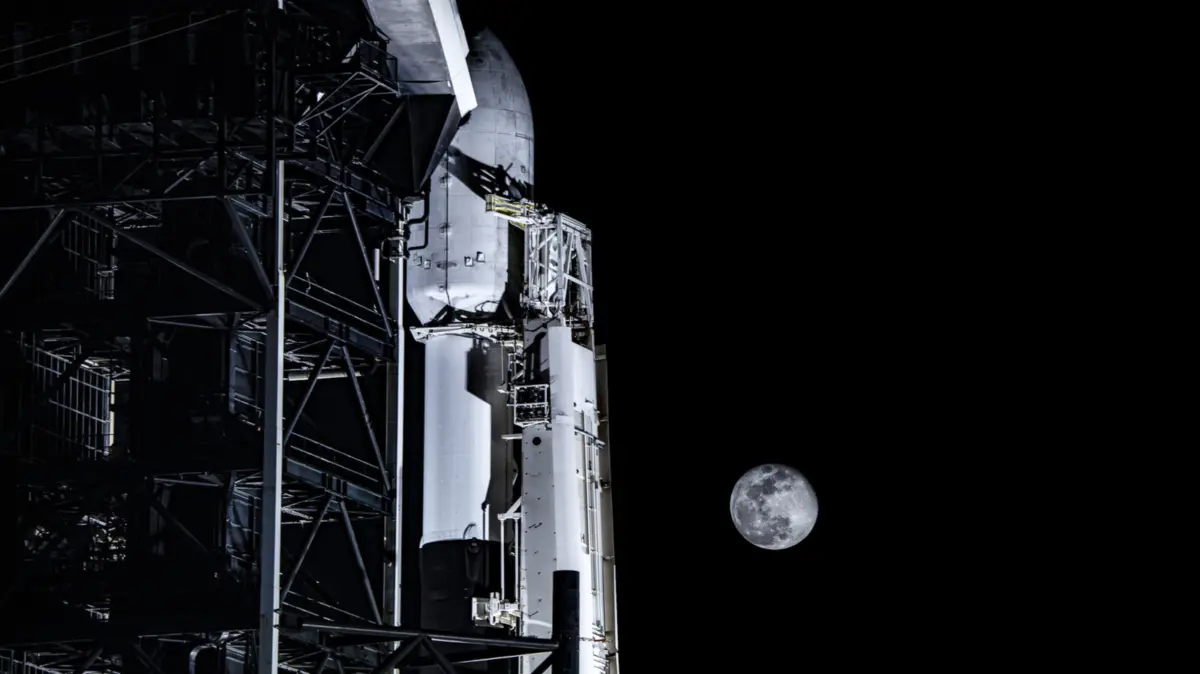
In the early hours of August 5, an errant piece of human spaceflight hardware met its end on the barren surface of the lunar landscape. A derelict upper-stage booster from a SpaceX Falcon 9 rocket—left drifting in a high-energy orbit following a lunar transfer mission—slammed into the moon at a blistering speed of approximately 5,400 miles per hour (8,690 kilometers per hour).
The impact, first projected months in advance by independent orbital mechanics analysts and later confirmed via ground-based telescopic spectroscopy, has injected a fresh wave of urgency into global conversations surrounding cislunar debris management, orbital tracking protocols, and the long-term environmental sustainability of deep-space exploration.
While the collision generated a vaporized plume of gas and is anticipated to carve out a fresh, double-lobed crater roughly 60 feet wide, space agencies and regulatory bodies emphasize that such lunar impacts are dwarfed by the natural bombardment of meteoroids. Nevertheless, the incident serves as a prominent, high-profile case study of the hidden logistical challenges of deep-space logistics. As lunar orbiters now scour the sunlit impact site for visual confirmation, scientists and policy experts alike are weighing the trade-offs of deep-space orbital dynamics against the growing footprint of commercial aerospace operations.
Detailed Chronology: From Launch to Lunar Impact
To understand how a multi-ton piece of rocket hardware ended up on a collision course with Earth’s natural satellite, one must trace a timeline spanning more than a year and a half of orbital drift, complex gravitational interactions, and scientific detection methods.
The Genesis: January 2025
The story of this wandering piece of space debris began on January 15, 2025, during a high-energy launch execution. A SpaceX Falcon 9 rocket lifted off, carrying out a complex payload delivery for a lunar transfer mission known as the Blue Ghost mission, which successfully ferried two lunar landers toward the moon’s orbital regime.
During typical low-Earth orbit (LEO) missions, a Falcon 9 second stage is subjected to a deliberate, controlled deorbit burn shortly after payload separation. This maneuver directs the spent metal casing safely back down toward Earth, where it disintegrates and falls harmlessly into remote oceanic expanses, typically the southern Pacific Ocean. However, high-energy trajectories—such as those required to inject payloads into lunar transfer orbits—demand almost every ounce of propellant the vehicle can muster to achieve the necessary escape velocity. Consequently, the upper stage was left stranded in space without sufficient fuel reserves to execute a controlled return maneuver.
The Long Drift and Discovery: April
For months, the spent booster—measuring roughly four tons in mass—drifted through the cislunar void, caught in a complex gravitational dance between the Earth, the sun, and the moon. Because it lacked active transponders or propulsion systems, the discarded rocket stage was effectively a ghost ship navigating the inner solar system.
It was not until April that the object’s true trajectory came to light. Independent astronomer Bill Grey, operating the Project Pluto orbital tracking software, published calculations on his website indicating that the wandering Falcon 9 upper stage was on a definitive collision course with the moon. Grey’s calculations pinpointed the exact timing of the impending impact: the early morning hours of August 5.
Confirmation Day: August 5
As the predicted impact date arrived, professional and amateur astronomers faced a major observational hurdle. The predicted crash site was situated on the sunlit side of the moon. The intense glare of reflected solar radiation created a difficult atmospheric and optical barrier, preventing direct visual confirmation of the impact as it happened.
Despite these optical challenges, indirect evidence of the collision was captured by terrestrial observatories. Carl Schmidt, a planetary scientist from Boston University’s Center for Space Physics, reported that the Very Large Telescope (VLT) in Chile successfully detected a transient spectroscopic anomaly shortly after the predicted impact window. The telescope observed a distinct plume composed of vaporized sodium and lithium gas—volatile compounds commonly found in rocket pyrotechnics and materials. Speaking with Leonard David’s Inside Outer Space, Schmidt noted that the expanding gas plume measured "tens of kilometers in size" and persisted for roughly five to ten minutes before dissipating into the lunar exosphere.
Supporting Context & Metrics: Physics, Cislunar Debris, and Scientific Stakes
The collision of a four-ton rocket body with the moon may sound catastrophic on paper, but when viewed through the lens of planetary physics and orbital mechanics, the event provides a unique opportunity to study hyper-velocity impacts in a vacuum environment.
The Mechanics of the Crash
- Impact Velocity: ~5,400 mph (approx. 8,690 km/h)
- Mass of the Object: ~4 tons (approx. 3,600 kg)
- Expected Crater Dimensions: ~60 feet (18 meters) wide and ~12 feet (3.6 meters) deep
- Spectroscopic Signature: A temporary plume of sodium and lithium gas lasting 5 to 10 minutes
Even though the kinetic energy of a 5,400-mph impact is immense, the moon’s surface is well-accustomed to high-energy trauma. The lunar regolith is constantly battered by natural meteoroids and asteroid fragments traveling at even higher velocities—often exceeding tens of thousands of miles per hour. According to lunar scientists, the energy released by the Falcon 9 upper stage is roughly comparable to natural impacts that occur naturally on the lunar surface on a regular basis.
NASA estimates that the physical aftermath of the crash will be a fresh, clean crater approximately 60 feet in diameter and 12 feet deep. However, finding this microscopic scar on a vast lunar landscape is no small feat. NASA’s long-serving Lunar Reconnaissance Orbiter (LRO) and South Korea’s newly operational Korea Pathfinder Lunar Orbiter (KPLO) have been tasked with sweeping the predicted impact coordinates. Researchers warn that locating the new crater could take days or even weeks, as success relies heavily on precise lighting conditions, optimal orbital timing, and high-resolution imaging passes.
The Broader Challenge of Cislunar Debris
While the environmental impact on the moon is negligible, the incident has reignited broader anxieties regarding the proliferation of space debris beyond Earth orbit. For decades, international space debris mitigation guidelines focused primarily on Low Earth Orbit (LEO) and Geostationary Earth Orbit (GEO), where defunct satellites and spent rocket bodies pose active collision hazards to operational spacecraft, crewed missions, and vital telecommunications infrastructure.
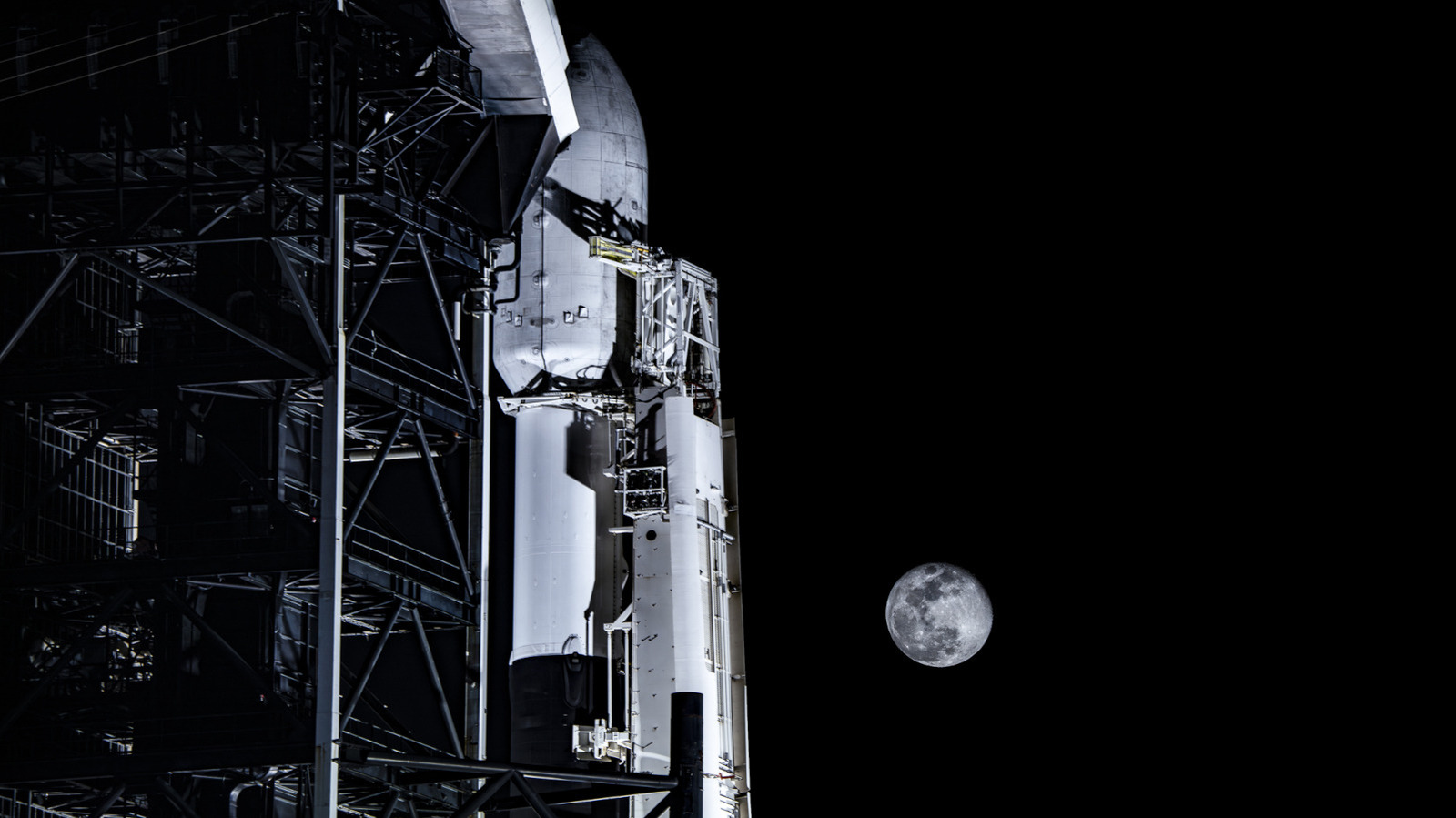
However, as commercial lunar exploration accelerates, the cislunar highway—the space between Earth and the moon—is becoming increasingly congested. Historically, objects left in high-eccentricity Earth orbits or lunar transfer orbits were largely ignored because they were far removed from heavily trafficked orbital planes. Today, with dozens of robotic and crewed missions planned for the lunar surface over the coming decade, tracking and managing "deep-space junk" has shifted from a theoretical concern to an urgent operational necessity.
Official Statements and Industry Perspectives
The high-profile nature of the moon impact prompted transparent responses from both commercial launch providers and space agencies, shedding light on the harsh physical limitations of rocket science.
SpaceX’s Official Explanation
In a public statement shared via a post on X (formerly Twitter), SpaceX addressed the mechanics behind the unguided trajectory of the second-stage booster:
"For most of our missions, we plan a controlled deorbit of the Falcon second stage so it safely reenters over the ocean. For higher energy missions like those to a lunar transfer orbit, nearly all performance on the vehicle is devoted to successfully placing the payload in the intended orbit, and a controlled disposal maneuver is not always possible."
SpaceX further clarified that the physical realities of launching massive payloads toward deep space leave zero margin for retained propellant. Once the payload is successfully detached on a lunar trajectory, the upper stage lacks the fuel reserves needed to alter its course back toward Earth. Over the subsequent months, subtle gravitational nudges from the sun, Earth, and moon—combined with variable solar radiation pressure—gradually shaped the booster’s orbit until gravity ultimately pulled it down onto the lunar surface.
NASA’s Regulatory and Scientific Stance
While environmental groups and some independent astronomers have voiced concerns over leaving spent hardware to litter other celestial bodies, major space agencies maintain that the practice is, under specific circumstances, an accepted operational reality.
NASA officials noted in previous briefings that disposing of upper stages on the lunar surface is a technically accepted and safe method. In fact, for certain high-energy lunar or interplanetary transfer missions, impacting the moon or a distant body can represent the only practical, physically viable option when return-to-Earth fuel budgets cannot be met.
During the Apollo era, NASA intentionally crashed several Saturn V third-stage S-IVB boosters and Apollo lunar modules into the moon to calibrate seismic instruments left behind by astronauts. Therefore, while modern commercial operations operate under tighter scrutiny than their 20th-century predecessors, the physical resting place of the Falcon 9 upper stage falls within historical precedents of lunar exploration.
Future Outlook: The Road Ahead for Cislunar Operations
The unintended rendezvous of the Falcon 9 upper stage with the moon marks a definitive turning point in how humanity interacts with the space environment beyond Earth. As commercial space flight transitions from government-led exploration to a bustling industrial ecosystem, the rules governing deep-space traffic management are overdue for an overhaul.
Tracking and Transparency
One of the primary takeaways from the August 5 impact is the critical importance of independent orbital tracking. Because the booster’s path was initially calculated by an independent astronomer rather than a government-backed space surveillance network, the scientific community had advance notice to point terrestrial telescopes like the VLT toward the moon and capture the spectroscopic plume of the crash.
Moving forward, space agencies and private aerospace companies will likely face increased pressure to register, monitor, and publicly share the trajectories of all deep-space hardware. Enhanced tracking networks will be essential to ensure that future lunar missions—particularly those involving human habitation and permanent base camps—do not experience unexpected close calls with derelict hardware.
Designing for Sustainability
In the long term, aerospace engineers are beginning to explore innovative engineering solutions to mitigate deep-space debris. Concepts under discussion include:
- Passivation Protocols: Venting remaining pressurized tanks and residual propellants on upper stages to prevent accidental explosions in deep space.
- Alternative Trajectory Design: Engineering staging profiles that direct spent hardware into heliocentric (sun-centered) orbits rather than leaving them trapped in chaotic Earth-Moon gravitational resonances.
- Advanced Propulsion Integration: Developing smaller, dedicated deorbit thrusters powered by integrated, self-sustaining micro-propulsion systems for high-energy upper stages.
As humanity sets its sights on returning to the moon to establish sustainable outposts, the lessons learned from the wandering Falcon 9 booster will resonate across boardrooms, launch sites, and regulatory agencies. The cosmos may be vast, but as our technological footprint expands, keeping our cosmic neighborhood clean will require unprecedented levels of foresight, cooperation, and engineering ingenuity.