Executive Overview
In a revealing public appearance that has once again cast a spotlight on the enduring legacy—and the fiercely guarded memory—of the late Princess of Wales, Charles Spencer has offered a blunt critique of Hollywood’s fascination with his sister. Speaking candidly during an exclusive interview with author and journalist Tina Brown at a McNally Jackson Books event, the 9th Earl Spencer shared his unfiltered thoughts on Pablo Larraín’s acclaimed 2021 psychological drama Spencer.
While the British nobleman dismissed the film itself as "terrible," he reserve high praise for its leading lady, Kristen Stewart. According to Spencer, who watched the movie inflight, Stewart managed a cinematic magic trick: despite possessing few natural physical resemblances to Diana, she miraculously captured the complex, elusive spirit of his sister.
This rare cinematic critique arrives at a tumultuous time for Charles Spencer. His recent, explosive memoir, Swan Song: Diana, My Sister, has severely strained relations with the British royal family and ignited high-stakes legal disputes involving prominent media figures like Piers Morgan. Against the backdrop of these ongoing familial and public tensions, Spencer’s remarks offer a fascinating look at the intersection of Hollywood myth-making and personal family grief. This comprehensive report examines Spencer’s review of Spencer, the cultural legacy of Pablo Larraín’s film, Kristen Stewart’s immersive approach to the role, and the broader context of how media and entertainment continue to grapple with the haunting memory of the "People’s Princess."
Detailed Chronology: From In-Flight Discovery to Public Condemnation
The journey of Charles Spencer’s critique began thousands of feet in the air. During a routine commercial flight, the Earl decided to pass the time by viewing Spencer, a film that had already generated intense global interest, critical acclaim, and awards-season buzz upon its late-2021 theatrical release.
For the brother of the most photographed woman in modern history, watching a dramatized version of her life is fraught with emotional hazards. Yet, curiosity—or perhaps mere boredom—prompted Spencer to press play. What followed was a bifurcated viewing experience that quickly became the talk of the literary event circuit.
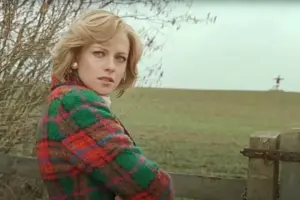
When recounting the experience to Tina Brown, Spencer admitted that his initial expectations were modest. However, as the film progressed, he found himself utterly transfixed by Kristen Stewart’s portrayal of Diana Spencer during a deeply unhappy Christmas holiday at the royal family’s Sandringham estate.
"I was on a plane and I saw a movie called Spencer," Spencer told the rapt audience at McNally Jackson Books. "I thought I’d better look at that. And there was Kristen Stewart, who doesn’t really look like Diana, but my goodness, she caught the spirit."
The juxtaposition of his critique was sharp. While he lauded Stewart’s ability to evoke his sister’s internal landscape, he did not mince words regarding the film’s overall artistic merit. "I thought it was an incredible performance. The film’s terrible. But I was really intrigued by how good she was at capturing Diana," he continued.
This public appraisal highlights the deep disconnect between how Hollywood interprets royal tragedy and how the living relatives of those figures experience it. While Larraín’s film was celebrated by critics for its expressionistic, gothic style, those closest to the real Diana often find the stylistic flourishes and fictionalized dialogue jarring, even when individual performances transcend the material.
Supporting Context & Metrics: The Anatomy of a Cinematic Portrait
To understand the weight of Charles Spencer’s endorsement, one must examine the critical and commercial footprint of Spencer. Directed by Chilean filmmaker Pablo Larraín—who previously helmed the critically lauded 2016 biographical drama Jackie—the film operates less as a traditional biopic and more as a "fable from a true tragedy."
Set over three harrowing days in December 1991, Spencer tracks Diana as she decides to finally sever ties with Prince Charles and distance herself from the suffocating traditions of the Windsor family. The film dives deep into psychological horror territory, depicting Diana’s struggles with severe anxiety, depression, and bulimia against the backdrop of pheasant hunting, rigid dress codes, and emotional isolation.
Critical Reception and Accolades
- Academy Award Recognition: Kristen Stewart’s harrowing and deeply internalized performance earned her a Best Actress nomination at the 94th Academy Awards, a major milestone in her transition from commercial franchise star to respected dramatic actor.
- Box Office and Streaming: Distributed by Neon in the United States, the film grossed over $7.1 million domestically and nearly $24 million worldwide, carving out a substantial arthouse following during a recovering post-pandemic theatrical marketplace.
- Critical Consensus: On Rotten Tomatoes, Spencer holds an 83% "Certified Fresh" rating, with critics praising its sensory cinematography by Claire Mathon and Jonny Greenwood’s discordant, anxiety-inducing jazz score. However, a vocal minority of reviewers—and now, notably, Charles Spencer himself—echoed the sentiment that the film’s heavy-handed psychological symbolism occasionally tipped over into melodrama.
Stewart’s Method: Becoming a "Friend" to Diana
The authenticity that so startled Charles Spencer was the result of exhaustive, almost obsessive preparation by Kristen Stewart. Speaking extensively with Variety during the film’s promotional campaign, Stewart revealed the emotional toll and intimate nature of her preparation.
"I needed to know her. It was just about loving her and absorbing her," Stewart explained. She drew a parallel to human psychology, noting, "You do the best impressions of people that you know, like you always do the best impression of your best friend."
Stewart worked for months with dialect coach Lizze Redwood to master Diana’s distinct vocal cadence—characterized by a soft, hesitant, yet remarkably precise British upper-class accent. Furthermore, the actress spent countless hours studying archival footage not for imitation, but to understand Diana’s physical language: the way she tilted her head downward to peer through her bangs, her defensive posture in public settings, and the nervous flutter of her hands.
Official Statements and Broader Family Tensions
Charles Spencer’s commentary on Spencer did not occur in a vacuum. It is part of a broader, ongoing dialogue—and often friction—concerning how the House of Windsor and the late princess’s family manage her enduring legacy.
During the same conversation with Tina Brown, the discussion naturally drifted toward other high-profile dramatizations of Diana’s life, most notably Netflix’s mega-hit series The Crown. Over its multi-season run, the prestige drama tackled the tumultuous marriage of Prince Charles and Princess Diana, with Emma Corrin portraying her in Season 4 and Elizabeth Debicki taking over the role for the final two seasons.
When asked about The Crown, Spencer revealed a surprising boundary: he has never watched a single episode of the global phenomenon.
"I know that the person who acted that part has received lots of awards, so I’m sure she did a good job. I’ve not seen it," Spencer admitted. This deliberate avoidance reflects a protective instinct common among families of public figures who choose to shield themselves from sanitized or sensationalized versions of their private grief.
The Memoir Storm: Swan Song
Spencer’s willingness to publicly critique pop-culture representations of his sister coincides with a deeply sensitive personal chapter. His explosive memoir, Swan Song: Diana, My Sister, has placed him squarely back in the global headlines.
The book, which details intimate family memories and the profound grief following Diana’s tragic 1997 death in Paris, has reportedly reignited severe tensions with King Charles III and the broader royal establishment. Furthermore, the promotional circuit and fallout from the book have entangled Spencer in high-profile legal disputes, notably with British broadcaster Piers Morgan.
By inserting himself back into the public narrative through both his literary work and candid public appearances, Spencer has demonstrated that he remains the chief custodian of his sister’s memory—willing to praise a stray piece of art like Stewart’s acting, while fiercely dismissing media portrayals that miss the mark.
Future Outlook: The Enduring Mythos of Diana
Nearly three decades after her tragic passing, the cultural appetite for all things Princess Diana shows no signs of abating. From blockbuster films like Spencer to prestige television series and tell-all memoirs, Diana Spencer remains one of the most heavily analyzed and mythologized figures of the twentieth century.
Charles Spencer’s verdict on Spencer—praising the vessel while condemning the vehicle—serves as a metaphor for the broader public engagement with Diana’s life. Audiences and critics remain endlessly captivated by the idea of Diana: the fairy-tale bride, the rebellious royal, the humanitarian, and the tragic victim of tabloid culture. Yet, as her brother’s critique reminds us, the gap between the complex human being who lived that reality and the cinematic spectacles produced in her honor remains vast.
As Hollywood continues to mine royal history for prestige content, and as members of Diana’s immediate family navigate the painful terrain of public remembrance, the guardrails around her legacy are shifting. Whether through Kristen Stewart’s Oscar-nominated performance, or Charles Spencer’s literary interventions, the story of Diana refuses to stay confined to the history books. It remains a living, breathing, and fiercely contested narrative—one that her brother will continue to monitor, judge, and protect on his own terms.