Executive Overview
In the volatile ecosystem of independent cinema, the margin between a triumphant theatrical release and total obscurity is razor-thin. For the creative team behind the eagerly anticipated British boxing biopic In the Shadows, that margin was tested to its absolute limit. In late September, just weeks before its high-profile world premiere at the BFI London Film Festival, the film’s U.K. distributor, True Brit Entertainment, abruptly filed for administration. This sudden corporate collapse left the production stranded without a release strategy, devoid of marketing funds, and facing the grim prospect of a shelved debut.
Yet, what could have been a fatal blow to a multi-year labor of love transformed into a masterclass in independent resilience. Through a last-minute financial rescue mission orchestrated by its producers and executive backers, In the Shadows was pulled back from the brink. Rather than succumbing to the distribution vacuum, the film’s team rallied a coalition of industry allies to self-release the picture across the United Kingdom.
Led by BAFTA winner and Oscar nominee Lee Magiday (The Favourite) and veteran producer Madeleine Sanderson (Being AP, Fighting for a City), the production team secured critical emergency funding, partnered with Metis Films for physical distribution, and retained Altitude Films for global sales.
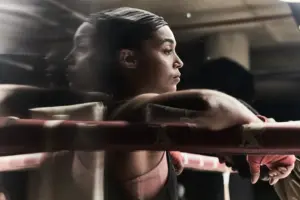
Based on the extraordinary, barrier-breaking life of British-Somali boxer, model, and UNICEF Ambassador Ramla Ali—and starring Top Boy breakout Jasmine Jobson under the direction of Anthony Wonke—the film’s off-screen battle mirrors the tenacity of its subject. As In the Shadows prepares for its nationwide U.K. rollout following its October 9 London premiere, this crisis-turned-triumph highlights the fragility of the independent distribution landscape and the sheer willpower required to bring authentic stories to the silver screen.
Detailed Chronology: From Distribution Disaster to 11th-Hour Rescue
The timeline of the crisis and its swift resolution underscores the frantic behind-the-scenes maneuvering required to protect independent cinema from corporate fallout.
- Mid-September: The production team receives the devastating news that True Brit Entertainment has hit severe financial turbulence, culminating in the distributor filing for administration. With no P&A (Prints and Advertising) budget forthcoming, the scheduled U.K. release plan for In the Shadows evaporates overnight. The film is left without marketing support, distribution infrastructure, or a path to cinemas just weeks before its scheduled premiere.
- Late September: Recognizing that traditional distribution routes are closed, producers Lee Magiday and Madeleine Sanderson initiate emergency consultations with the film’s financiers and executive producers. Pitching an aggressive self-release strategy, they appeal for supplementary capital to cover marketing and theatrical overhead.
- Days Prior to October 9: Executive producers Richard Fern, Anushka Shah, and Natasha Mudhar step up, committing critical additional funding to rescue the release. Simultaneously, Will Clarke of Altitude Films—handling global sales for the feature—steps in as an industry facilitator, connecting the producers with Ben Metcalf of Metis Films to physically manage the U.K. distribution rollout. Former True Brit executive Kate Neville-Towle is brought on board to steer the marketing campaign.
- October 9: In the Shadows achieves its scheduled world premiere at the BFI London Film Festival, greeted by strong buzz and critical appreciation.
- Late October / November 30 Onward: The self-distributed theatrical rollout kicks off, targeting over 30 screens nationwide. The campaign commences with a high-profile special screening and live Q&A session on October 30 at London’s Genesis Cinema, located just a stone’s throw from where the film was physically shot.
- November 8: Ramla Ali steps into the ring in the United States for a high-stakes world title fight. Upon her return, she integrates directly into the film’s promotional tour, partaking in further grassroots event screenings and audience Q&As to drive box office momentum.
Supporting Context & Metrics: The Real-Life Odyssey of Ramla Ali
To understand why the producers fought so tenaciously to save In the Shadows, one must examine the trailblazing life of Ramla Ali—a figure whose journey transcends traditional sports biographies.
Born in Somalia, Ali arrived in the United Kingdom as a refugee fleeing the ravages of the Somali Civil War. Settling in London, she navigated a complex cultural landscape. To appease her strictly observant Muslim parents, she secretly pursued boxing, keeping her rigorous training a complete family secret for years. This clandestine double life eventually culminated in athletic history: Ali carved out a path to become the first Somali-British professional boxing champion.
Her list of ground-breaking achievements continues to expand:
- Olympic Milestone: At the 2020 Tokyo Olympic Games (held in 2021), Ali made history by becoming the first-ever boxer to represent Somalia on the global Olympic stage.
- Breaking Middle Eastern Barriers: She participated in and won the first-ever professional female boxing match held in Saudi Arabia, serving as a beacon of progress for women in sport across the Middle East.
- Humanitarian Impact: Beyond the ring, Ali utilizes her platform as a UNICEF Ambassador, advocating tirelessly for refugees and displaced youth worldwide.
- Personal Resilience: It was at the very London boxing club where she trained that she met Richard Moore. Moore, deeply moved by her dedication and character, eventually converted to Islam—a profound gesture of love that anchors the film’s emotional core, exploring how the couple surmounted formidable cultural and racial barriers.
From a production standpoint, the film itself faced institutional hurdles long before True Brit’s administrative collapse. Magiday notes that the project struggled to secure conventional industry support during its financing phase, coming to fruition largely through sheer grit, independent financing, and private backers who recognized the cultural significance of Ali’s narrative.
Official Statements & Industry Perspectives
The resilience of the In the Shadows team has drawn widespread admiration within the British film community, highlighting the power of collaborative networks in times of crisis.
Producer Lee Magiday, whose pedigree includes a BAFTA win and an Academy Award nomination for Yorgos Lanthimos’s The Favourite, did not mince words regarding the severity of the crisis:

"We had to mobilize very quickly — it really was the 11th hour. We only found out in mid-September that there would be no money for the P&A spend. So we had to ask our backers — our exec producers — whether they could put even more money into the film, which, thank God, they did."
Reflecting on the thematic parallels between the movie’s production history and Ramla Ali’s actual life, Magiday added:
"This film has been a battle from day one, and Ramla’s story has been a battle from day one, so it’s kind of in keeping. We’ve had to kind of fight the odds the whole time because we didn’t get industry support for production. This was made by sheer will and determination, and some amazing backers who believed in the story. For us, it’s such an important film because it is about hope. It’s not just the normal boxing story — it’s about being accepted by your culture, by your family, by your community, and also finding love."
Co-producer Madeleine Sanderson echoed these sentiments, emphasizing the communal spirit that coalesced to salvage the release:
"It’s really nice because a lot of people really love the film, love Ramla, and love what we’re doing — so it’s a bit like a community. We’ve got our team."
Industry stakeholders such as Will Clarke of Altitude Films and Ben Metcalf of Metis Films played pivotal roles in establishing the emergency distribution pipeline, proving that solidarity within the independent sector can successfully counteract corporate failures.
Future Outlook: The Theatrical Rollout and Cultural Legacy
As In the Shadows transitions from a crisis management exercise to an active theatrical release, all eyes are on how audiences respond to this hybrid sports biopic and romantic drama.
Starring Jasmine Jobson—widely acclaimed for her gritty, powerful performances in Netflix’s Top Boy—under the steady direction of documentary and narrative filmmaker Anthony Wonke, the movie avoids the standard, formulaic tropes of the boxing genre. Instead, it offers a deeply intimate exploration of identity, familial duty, faith, and the ferocious courage required to claim one’s space in a world designed to exclude outsiders.
The immediate commercial strategy relies on a targeted, event-driven distribution model. Opening across more than 30 U.K. screens, the film leverages localized community engagement. The October 30 launch event at Genesis Cinema in East London establishes a direct link between the film’s gritty urban backdrop and its target audience. Furthermore, Ramla Ali’s concurrent athletic career provides a live, organic marketing engine; her high-profile U.S. world title fight on November 8 ensures international media spotlight, which she will immediately channel back into U.K. grassroots Q&A sessions upon her return.
Ultimately, the rescue of In the Shadows serves as a case study for the modern independent film industry. It demonstrates that while structural vulnerabilities—such as distributor insolvencies—will continue to threaten the pipeline of specialized cinema, the combination of passionate stewardship, flexible financial backers, and grassroots community networks can successfully punch above its weight class. For a film about a woman who refused to stay down on the canvas, it is a fittingly triumphant second act.