Executive Overview: The Rise of the Autonomous Merchant
The ecommerce landscape is undergoing a fundamental structural shift. The era of manual storefront management, static advertising, and disjointed logistics is rapidly yielding to "agentic commerce"—a paradigm where artificial intelligence doesn’t just assist with tasks but acts as an autonomous operator.
This week’s industry updates reflect this transformation, as major platforms like Shopify, Amazon, and TikTok lean into AI-powered agents capable of building websites, managing ad spend, and facilitating customer discovery in real-time. Beyond the AI boom, we are seeing a significant evolution in supply chain logistics, with partnerships like the USPS-Amazon pilot and UPS’s no-box return initiatives highlighting a relentless pursuit of friction-free retail. For the modern merchant, the message is clear: the integration of smart, automated tools is no longer a competitive advantage—it is the baseline requirement for survival in a volatile digital economy.

Detailed Chronology of Industry Developments
Shopify and the AI-First Storefront
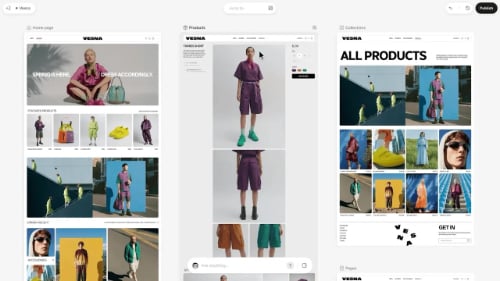
Shopify has fundamentally redefined store design with the launch of Canvas. Moving away from traditional, labor-intensive drag-and-drop builders, Canvas provides a high-level design surface where merchants collaborate with Sidekick, Shopify’s specialized AI agent. By allowing users to visualize page layouts and store "feel" before drilling down into granular detail, Shopify is effectively democratizing enterprise-grade UX design. Sidekick’s ability to validate design choices through real-time screenshot analysis marks a major leap in human-AI collaboration.
The Ad-Tech Intelligence Arms Race
- Amazon Ads Agent: Amazon has officially entered the agentic arena with its new platform. By consolidating sponsored ads, video, audio, and display campaigns into a single, cohesive interface, Amazon is empowering advertisers to choose between manual control and autonomous, AI-driven optimization.
- TikTok’s Agentic Commerce: TikTok is bridging the gap between social content and direct conversion. The introduction of "Buy Direct" and "Shopping Assistant"—a conversational AI that guides users through product details and shipping logistics—signals TikTok’s intent to become a primary shopping destination rather than just a discovery engine.
Logistics and Supply Chain Optimization
- USPS and Amazon’s Same-Day Pilot: In a move that challenges traditional logistics models, the USPS and Amazon are testing a same-day delivery window. By utilizing USPS mail carriers for afternoon deliveries (2 p.m. to 8 p.m.) for packages processed in the early afternoon, the partnership aims to stress-test high-efficiency, hyper-local fulfillment.
- ShipStation & Walmart Integration: Marketplace sellers can now leverage "Ship with Walmart" directly within ShipStation. This integration provides access to pre-negotiated shipping rates and crucial seller protections, centralizing the often-chaotic process of managing multi-marketplace inventory.
- UPS Secure Commerce: Addressing the increasing risk of fraud and revenue leakage, UPS has launched a suite of tools designed to provide end-to-end supply chain visibility. From high-value shipment protection to risk mitigation technology, UPS is positioning itself as a safeguard for the modern merchant.
Discovery and Marketplace Management
- Swap’s Acquisition of Vizby: The acquisition of Vizby by Swap is a strategic play to bolster AI-powered discovery. By integrating Vizby’s visibility tools, Swap is building a closed-loop system that carries a product from initial AI-driven discovery through to checkout.
- uParcel’s "Complete Marketplace Outsource Solutions": Aimed at simplifying the complexities of cross-platform selling, uParcel is offering an end-to-end managed service. This covers everything from store creation on Shopee and TikTok Shop to physical warehousing and last-mile delivery, effectively acting as an outsourced department for small-to-mid-sized brands.
Supporting Context & Metrics: The "Why" Behind the Moves
The industry’s pivot toward agentic AI and integrated logistics is fueled by a specific set of market pressures. According to recent data, merchants are struggling with "channel fatigue"—the exhaustion of managing disparate dashboards for advertising, inventory, and customer support.
- Efficiency Gains: Tools like Contentstack Canoe and Selro’s Claude integration are not merely novelties; they address the massive bottleneck of product information management. By automating the generation of product titles, metadata, and FAQs, these tools allow brands to scale their catalog size by an estimated 30-40% without increasing headcount.
- Conversion Optimization: The rise of conversational AI, as seen in Helppli’s new agent, addresses the high abandonment rates associated with static customer support pages. When an AI can handle complex inquiries across SMS, WhatsApp, and web chat, brands report a decrease in customer churn during the consideration phase of the sales funnel.
- The "No-Box" Economy: The partnership between UPS (Happy Returns) and TikTok Shop acknowledges that return friction is the number one deterrent for first-time shoppers. By removing the need for labels and packaging, merchants are lowering the barrier to entry, which directly correlates to higher conversion rates in the competitive fashion and beauty sectors.
Official Statements and Industry Perspective
"The goal of Shopify Canvas is to shift the merchant’s role from designer to director," noted a representative from the Shopify product team during the launch announcement. "By allowing Sidekick to handle the technical validation and layout assembly, the merchant is free to focus on brand identity and narrative—the elements that truly drive customer loyalty."
On the logistical front, the sentiment remains focused on resilience. Regarding the launch of UPS Secure Commerce, a company spokesperson emphasized: "As global supply chains become more complex, the risk of disruption is no longer just a physical challenge; it is a financial and operational one. Secure Commerce is designed to give the merchant foresight, not just oversight."
These sentiments mirror a broader industry consensus: the future of ecommerce is not about finding more tools, but about finding smarter, more connected ones that act in unison.
Future Outlook: The Road Ahead
As we look toward the remainder of the year and into 2027, three trends will likely dominate the conversation:
- Governance of AI Agents: With the introduction of miniOrange’s Secure MCP Server, we expect to see a surge in demand for AI "guardrails." As companies grant AI agents access to their back-end systems, security and role-based permissions will become the primary hurdle for enterprise adoption.
- Hyper-Local Fulfillment: The USPS-Amazon pilot is likely the first of many experiments in utilizing existing public infrastructure to solve the "last mile" problem. Expect to see further collaboration between private retail giants and national postal services.
- The Creator-to-Commerce Pipeline: With partnrUP’s expansion and Nexa’s new creator marketplace, the line between social media influencers and sales affiliates will continue to blur. Future platforms will prioritize automated commission payouts and real-time sales tracking, turning every creator into a fully integrated retail partner.
The "autonomous merchant" is no longer a hypothetical concept. It is the new reality. Merchants who fail to adopt these agentic, integrated workflows risk falling behind in a market that increasingly favors speed, accuracy, and hyper-personalized consumer experiences. The tools are here; the question now is how quickly the industry can master them.
Do you have an ecommerce product release or a breakthrough innovation to share? Contact our editorial team at [email protected].