Executive Overview
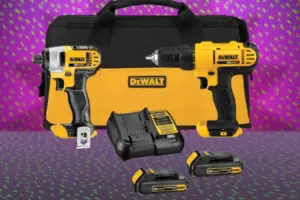
In the rapidly shifting landscape of home improvement technology, the traditional corded drill—once the undisputed workhorse of the residential workshop—is facing an existential crisis. As of October 2026, market data and consumer sentiment have reached a tipping point: the cordless revolution is no longer a luxury, but a standard. A prime example of this transition is the current promotional pricing on the DeWalt 20V MAX Cordless Drill and Impact Driver combo set, which is currently retailing for $149—a significant 38% discount.
This article explores the technical advancements that have rendered the heavy, tethered tools of the early 2000s obsolete. By analyzing the engineering behind modern lithium-ion battery integration and the ergonomic shift toward lightweight, high-torque power tools, we examine why this specific hardware bundle represents a necessary upgrade for both DIY enthusiasts and professional contractors.
Detailed Chronology: From Tethered Reliability to Wireless Freedom
To understand the significance of the current DeWalt sale, one must look back at the trajectory of power tool evolution. For decades, the "corded" design was preferred for its constant power delivery. However, the limitation was clear: proximity to an electrical outlet dictated the boundaries of one’s workspace.
The 15-Year Gap
Fifteen years ago, the average home user was restricted to AC-powered drills. These tools were heavy, cumbersome, and inherently limited by the reach of an extension cord. The transition began in the mid-2010s as battery density increased and production costs for lithium-ion cells dropped.
The October 2026 Shift
The October 2026 retail event—often referred to as "October Prime Day"—has acted as a catalyst for widespread consumer adoption of battery-powered systems. By offering high-performance, professional-grade kits at sub-$150 price points, manufacturers like DeWalt have effectively lowered the barrier to entry. This specific sale represents a closing of the "value gap," where the cost-to-performance ratio of cordless tools now decisively outweighs the longevity of older, corded alternatives.
Supporting Context & Metrics: The Engineering of Efficiency
The shift toward the DeWalt 20V MAX system is not merely a matter of convenience; it is a shift grounded in objective engineering metrics.
Battery Density and Weight Distribution
The primary criticism of early cordless tools was their weight—the battery packs were often heavier than the motor housings themselves. Today’s 20V Li-ion batteries, which weigh in at approximately 12 ounces and occupy roughly the footprint of a deck of playing cards, have achieved a density-to-power ratio that was physically impossible a decade ago.
- The Drill (3.6 lbs): Designed for precision, the reduced weight allows for extended operation without the onset of user fatigue.
- The Impact Driver (2.8 lbs): Engineered for high-torque fastening, the maneuverability afforded by the lack of a cord allows for work in tight, cramped quarters where traditional drills would struggle to fit.
Feature Parity and Modern Enhancements
Beyond the freedom of movement, the modern iteration of these tools includes features that were once reserved for top-tier industrial equipment:
- LED Worklight Integration: While seemingly minor, the inclusion of high-lumen LED arrays at the base of the tool has revolutionized work in low-light environments (e.g., under sinks or inside dark cabinetry).
- One-Handed Bit Loading: The efficiency of quick-change collets has reduced the time spent switching between drilling and driving tasks, increasing overall project velocity.
- Variable Speed Triggering: Sophisticated electronic controls allow for smoother starts and precise torque control, preventing the stripped screws often associated with older, "all-or-nothing" trigger mechanisms.
Official Statements and Market Analysis
Industry experts have noted that while the hardware is the focus, the ecosystem is the true value driver. When a consumer buys into the DeWalt 20V platform, they are not just buying a drill; they are entering a proprietary power environment.

"The strategic pricing we are seeing this October is a reflection of a mature market," says a spokesperson for home improvement retail analysis. "By incentivizing the purchase of a core drill/driver set, companies are securing brand loyalty for the long term. Once a user owns the batteries and the charger, they are statistically more likely to purchase additional bare-tool items from the same manufacturer."
The 38% discount offered on the DeWalt set is reflective of this "loss-leader" strategy, designed to displace aging inventory in home garages and replace it with modern, efficient hardware that sets a new baseline for residential work.
Future Outlook: The Death of the Cord
Looking ahead to the remainder of the decade, the outlook for corded power tools in the residential sector is bleak. As battery technology continues to evolve toward solid-state designs, we can expect:
1. Increased Power-to-Weight Ratios
The next iteration of these tools will likely focus on even greater torque density, potentially allowing 20V platforms to handle heavy-duty tasks currently reserved for 60V or corded industrial tools.
2. Intelligent Tooling
Future tools will integrate Bluetooth-enabled "smart" features, allowing users to track usage statistics, customize torque settings via mobile applications, and lock tools remotely if stolen—a development that is already being piloted in professional construction sectors.
3. Sustainability and Circularity
As the industry moves away from corded dependency, the focus will shift to battery recycling and the standardization of power packs. The goal is to move toward a "universal battery" standard, though proprietary ecosystems currently dominate the landscape.
Final Assessment
The $149 price point for the DeWalt 20V MAX system is more than just a deal; it is a signal. It signifies that the era of being tethered to a wall is officially over. For the average homeowner, the convenience, weight savings, and improved performance features make this transition not only advisable but necessary. If you are still relying on a corded drill from the early 2010s, you are working harder, not smarter.
The integration of advanced ergonomics and power management into a package that costs less than a single day of professional labor represents a rare moment where consumer value and technological progress align perfectly. As we move through the final quarter of 2026, upgrading to a cordless system is arguably the single most impactful investment one can make for their home toolkit.
Disclaimer: This analysis includes information regarding current market trends and pricing as of October 2026. Deal pricing and availability are subject to change. Lifehacker may earn a commission from affiliate links included in this report.