By Daniel Oropeza | August 5, 2026
Executive Overview
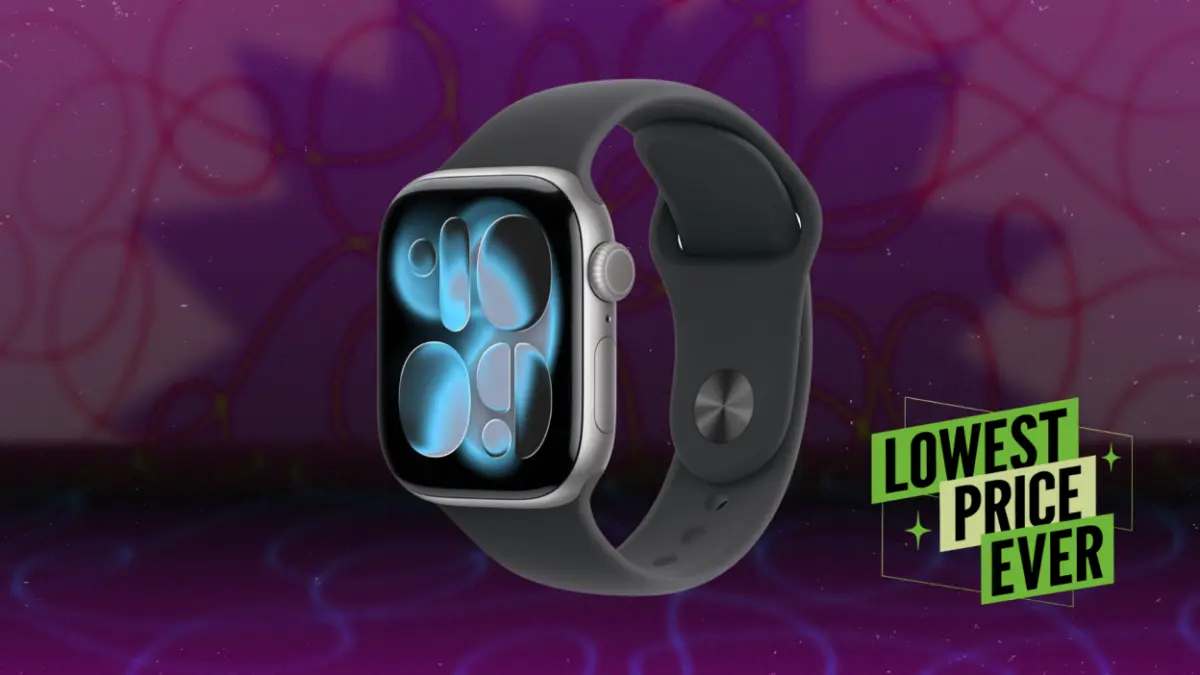
The wearable technology market has reached a critical inflection point, and Apple’s mid-tier smartwatch offering is leading the charge into a new era of personal health tracking and on-device artificial intelligence. Positioned strategically between the budget-friendly Apple Watch SE 3 and the rugged, heavy-duty Apple Watch Ultra 3, the Apple Watch Series 11 has established itself as the default powerhouse for everyday consumers and fitness enthusiasts alike.
In a surprising retail development, major pricing adjustments have brought both iterations of the Series 11—the GPS-only model and the GPS + Cellular variant—to historic lows. According to industry-standard price-tracking tools, shoppers can now secure the standard GPS version starting at $299, down from its initial $399 launch price. Meanwhile, the advanced GPS + Cellular model has plummeted by 30%, reaching a record-breaking $349.97 from its original $499 MSRP. For those eyeing the larger 46mm real estate, steep discounts exceeding $100 are currently active across both connectivity tiers.
Beyond the retail incentives, the timing of these price drops coincides with seismic software shifts. Following Apple’s Worldwide Developers Conference (WWDC 26) earlier this summer, the tech giant confirmed that the Series 11 is fully compatible with watchOS 27. This upcoming software ecosystem introduces deep Siri AI integrations directly to the wrist, a revamped app grid, dedicated productivity apps, and a revolutionary single-tap gesture system. Combined with hardware upgrades such as extended 43-hour battery life, 5G cellular connectivity, and FDA-approved hypertension notifications, the Apple Watch Series 11 represents a mature, feature-rich pinnacle of modern wearable technology.
Detailed Chronology: From Launch to Record-Breaking Discounts
To understand the current value proposition of the Apple Watch Series 11, it is essential to trace its trajectory from a high-end hardware release to its present status as a heavily discounted mainstream device.
The Hardware Debut
When Apple first introduced the Series 11 to global markets, it faced the difficult task of outshining its predecessor, the Series 10, while carving out a distinct identity away from the adventurous Ultra line and the accessible SE series. Apple engineers focused heavily on core pain points that had plagued smartwatches for years: battery longevity, data speeds, and clinical-grade health diagnostics.
By upgrading the internal architecture to support 5G cellular bands (a major leap over the LTE capabilities of the Series 10) and expanding power efficiency to yield an impressive 43-hour battery life with the always-on display active, the Series 11 immediately captured critical acclaim. Reviewers praised its refined aesthetics, thinner chassis, and the inclusion of groundbreaking biomedical sensors capable of tracking blood pressure trends.
The WWDC 26 Catalyst
The second major milestone in the Series 11 timeline occurred during the summer of 2026 at WWDC. Apple unveiled watchOS 27, a software overhaul specifically engineered to leverage on-device neural processing units found inside the latest generation of Apple silicon. While older legacy watches were left behind due to strict hardware processing requirements, the Series 11 was confirmed as a primary beneficiary of the new update.
This announcement triggered a transitional phase in the market. As developers and beta testers began exploring watchOS 27’s native Siri AI capabilities, a dedicated Siri app interface, and innovative single-tap navigation gestures, consumer demand shifted toward devices guaranteed to support these future-proofing features.
The August 2026 Price Correction
Reaching into August 2026, major retailers initiated aggressive markdown strategies to clear inventory ahead of late-year product cycles. This created an optimal window for budget-conscious tech buyers. The GPS-only model slipped to $299 (a 25% savings), while the GPS + Cellular option crossed a psychological threshold by dropping to $349.97—a full 30% reduction from its $499 baseline. Consumers seeking the larger 46mm casing have likewise benefited from these sweeping markdowns, consistently finding discounts of $100 or more across authorized storefronts.
Supporting Context & Metrics: Hardware Innovations and Software Synergy
The allure of the Apple Watch Series 11 extends far beyond attractive retail discounts. A granular examination of its internal specifications and software ecosystem reveals why it remains a benchmark device in the wearable industry.

1. Battery Performance and Power Management
Battery anxiety has historically been the primary deterrent for prospective smartwatch buyers. While competitors running alternative operating systems often boast multi-week battery life, they frequently sacrifice fluid animations, deep ecosystem integration, or continuous biomedical monitoring accuracy.
- Series 10 Baseline: Delivered up to 36 hours of battery life under optimal conditions with the always-on display enabled.
- Series 11 Leap: Pushes operational capacity to 43 hours, allowing users nearly two full days of continuous wear, sleep tracking, fitness logging, and notification management without requiring a mid-day top-up.
2. Connectivity: The Jump to 5G
For users who rely on their smartwatches independently of their iPhones—whether during outdoor runs, emergency situations, or minimalist digital detoxes—connectivity speed is paramount. The shift from LTE to 5G support in the Series 11 cellular model radically improves data throughput. Streaming lossless audio, receiving rapid notification syncs, and initiating crystal-clear VoIP calls directly from the wrist are now significantly more reliable and instantaneous.
3. Clinical-Grade Health Sensors: Hypertension Monitoring
Apple has steadily transformed its wrist-worn accessories from simple fitness trackers into proactive healthcare tools. Building upon legacy features like ECG, blood oxygen monitoring, and irregular rhythm notifications, the Series 11 introduces FDA-approved hypertension notifications.
- Using advanced optical sensors and pulse wave analysis algorithms, the watch continuously monitors vascular health patterns.
- If persistent indicators of high blood pressure are detected over a multi-week period, the system issues a contextual alert and generates a comprehensive PDF report that users can export and share directly with their primary care physicians.
4. watchOS 27: Bringing Intelligence to the Wrist
The upcoming public release of watchOS 27 introduces features that fundamentally change how humans interact with wearable devices. Key additions include:
- On-Wrist Siri AI: Powered by advanced language models optimized for low-power silicon, Siri can now perform complex, multi-step contextual tasks locally without needing to query a paired iPhone for basic computations.
- Dedicated Siri Application: A completely redesigned interface that surfaces proactive suggestions based on user routines, calendar events, and location data.
- Unified App Grid and Single-Tap Gestures: Enhancements designed for accessibility and one-handed operation, enabling users to dismiss calls, snooze alarms, or scroll through widgets using subtle finger pinches and taps.
Official Statements and Industry Reception
Industry analysts and technical reviewers have weighed in heavily on the convergence of deep discounts and cutting-edge software capabilities for the Series 11.
In a recent comprehensive hardware evaluation, leading tech publication PCMag highlighted the device’s balanced engineering, noting that "the Series 11 manages to refine almost every physical shortcoming of its predecessor while introducing genuinely useful clinical diagnostic tools that justify its place on the wrist."
Furthermore, tech editorial commentary from major consumer advice platforms has emphasized the unique timing of current market trends. Commerce analysts point out that finding a flagship-class wearable with 5G connectivity and advanced health diagnostics at a sub-$350 price point is an anomaly in today’s inflationary economic landscape.
Apple’s official communications surrounding watchOS 27 have likewise underscored the company’s commitment to ecosystem longevity. By ensuring that devices like the Series 11 receive advanced neural network capabilities, Apple is effectively signaling to consumers that hardware investments made today will remain relevant and deeply functional for years to come.
Future Outlook: What the Series 11 Signals for the Wearable Market
As the technology sector looks toward the horizon, the success and aggressive pricing of the Apple Watch Series 11 establish a new baseline expectation for what consumers should demand from a mid-tier wearable device.
- The Normalization of AI at the Edge: The successful implementation of localized machine learning models on a battery-constrained wrist device proves that powerful AI utilities do not require massive thermal envelopes or cloud-dependent architectures. Future generations of wearables will undoubtedly expand upon these foundations, moving toward predictive health diagnostics and autonomous assistant behaviors.
- Pressure on Competitors: With the GPS model dropping to $299 and cellular variants hitting historic lows, competing manufacturers in the Android and standalone fitness ecosystems face immense pressure to lower their price points while matching advanced biometric capabilities like FDA-cleared hypertension tracking.
- Ecosystem Lock-In and Longevity: For iPhone users, the combination of hardware discounts, 5G capabilities, and long-term software support via watchOS 27 cements the Apple Watch as an indispensable extension of the smartphone.
For prospective buyers sitting on the fence, current market conditions offer a rare convergence of maximum discount and maximum technological relevance. Whether upgrading from an aging Series 8 or 9, or transitioning from a basic fitness band, the Apple Watch Series 11 at its current reduced price represents one of the most prudent technology investments available today.