Executive Overview
In an era dominated by generative artificial intelligence, automated workflows, and the relentless digitization of human expression, a surprising rebellion is taking place in the physical world. Rather than resigning themselves to the obsolescence predicted by tech evangelists, consumers and creatives are rediscovering the profound cognitive and emotional value of handwriting. At the center of this analog resurgence is the iconic pen manufacturer Parker, a brand that recently turned a spontaneous, internet-driven creative challenge into a masterclass in modern marketing.
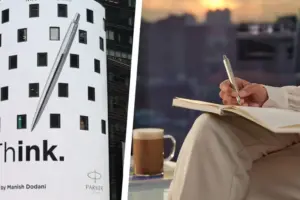
When independent designers began conceptualizing satirical yet brilliant spec ads rebranding classic writing instruments for the "AI age," Parker did not remain a passive spectator. Seizing a fleeting cultural moment, the heritage brand brought these unsolicited ideas to life, culminating in a high-profile digital billboard campaign in New York City’s Times Square. This convergence of viral internet culture, the cultural backlash against low-effort AI content, and a renewed appreciation for tactile focus has injected fresh relevance into a century-old industry.
Concurrently, market dynamics are reflecting this shift. Iconic writing instruments—such as the Parker Jotter, famously brandished by James Bond, and the prestigious Parker 51 fountain pen once favored by Queen Elizabeth II—are experiencing a surge in consumer demand. With select models currently heavily discounted on major retail platforms like Amazon, trading a monthly software subscription for a tangible instrument of human thought has never looked more appealing. This report investigates the chronology of the viral billboard campaign, the psychological and cultural counter-movement against digital saturation, the historical prestige of Parker’s product lineup, and what this unexpected renaissance means for the future of creativity.
Detailed Chronology: From Digital Spec Ads to Times Square
The remarkable trajectory of Parker’s recent marketing triumph did not begin within the corporate boardroom of a multinational advertising agency. Instead, it was born organically in the decentralized, fast-paced ecosystem of online creative communities.
Phase 1: The Viral Spec Ad Challenge
In the wake of widespread fatigue over procedurally generated digital imagery—often pejoratively termed "AI slop"—designers across platforms like Behance, X (formerly Twitter), and Instagram began conceptualizing speculative advertising campaigns. These creators sought to highlight the absurdity of replacing human thought with algorithms by humorously and brilliantly repositioning traditional products for the modern, AI-dominated landscape.
Among the primary subjects of this creative wave were analog tools, chief among them the classic ballpoint and fountain pen. Independent artists began publishing spec ads that framed writing instruments not as antiquated relics of the pre-digital era, but as sophisticated, offline power tools. The core premise of these speculative campaigns was sharp and provocative: in a world where anyone can prompt an AI to write an essay or draft an email in seconds, the act of putting ink to paper is the ultimate statement of authenticity, critical thinking, and unassisted human intellect.
Phase 2: Corporate Agility and the Pivot to Real-World Execution
Historically, legacy luxury and consumer goods brands have moved slowly when confronted with viral internet trends, often bogged down by bureaucratic legal departments and rigid brand guidelines. Parker, however, recognized the lightning-in-a-bottle nature of the creative challenge.
Rather than issuing copyright warnings or ignoring the independent creators, the brand’s marketing apparatus pivoted with unprecedented speed. Parker leadership identified the strongest speculative concepts from the digital challenge—designs that sharply contrasted the sterile, automated output of artificial intelligence with the visceral, friction-filled reality of ink soaking into paper.
Phase 3: The Times Square Takeover
The culmination of this agile pivot occurred in the heart of New York City. Parker took the unsolicited, fan-made and creator-driven spec ads and officially brought them into reality, anchoring the campaign with a massive, high-profile digital billboard in Times Square.
By validating the independent creative community and placing their speculative concepts on one of the most expensive and visible advertising stages in the world, Parker achieved a rare marketing coup. The move earned instant credibility within the global design community, transforming a grassroots internet meme into an authoritative brand statement. It signaled to the public that Parker was not merely a heritage brand selling nostalgia, but an active participant in the contemporary cultural conversation surrounding the value of human labor and thought.
Supporting Context & Metrics: The Psychology of the Anti-AI Rebellion
To fully understand why Parker’s campaign resonated so deeply, one must examine the broader socio-cultural shift currently underway. The rapid ascent of generative artificial intelligence has fundamentally altered how humans work, study, and communicate. Yet, this technological saturation has triggered an inevitable psychological backlash.
Handwriting as a Cognitive Anchor
Cognitive neuroscientists and educational psychologists have long championed the benefits of handwriting over digital typing. Physical writing engages multiple sensory pathways: the tactile feel of the paper’s texture, the resistance of the nib or ballpoint against the page, the auditory scratch of the stroke, and the complex motor skills required to form letters by hand.

Research consistently demonstrates that handwriting enhances information retention, deepens critical reflection, and fosters sustained focus in ways that tapping on a glass screen or a mechanical keyboard cannot. In an attention economy characterized by relentless notifications, infinite tabs, and algorithmic distractions, picking up a pen has transformed from a mundane daily chore into a deliberate act of mindfulness and cognitive preservation.
The Backlash Against "AI Slop"
The digital landscape is currently experiencing a crisis of authenticity. The proliferation of low-effort, AI-generated flyers on Instagram, automated corporate messaging on LinkedIn, and synthetically produced articles has led consumers to crave genuine human expression.
This counter-movement has manifested in surprising ways. Across social media, small businesses and independent creators have begun publishing intentionally handwritten posts, notes, and graphics to prove to their audiences that a human being is behind the screen. Handwriting has emerged as the ultimate badge of authenticity—a verifiable proof-of-work that cannot be synthesized by a large language model with a single prompt.
Market Accessibility: Pens vs. Digital Subscriptions
Compounding this cultural shift is the economic reality of modern digital life. Consumers are increasingly burdened by subscription fatigue—monthly recurring fees for AI writing assistants, cloud storage, productivity suites, and design tools that quietly drain bank accounts over time.
In contrast, a high-quality writing instrument represents a one-time investment with generational durability. As market data indicates, owning a legendary writing tool has never been more economically viable compared to the escalating costs of digital software ecosystems.
Official Statements and Industry Impact
While specific internal sales metrics directly tied to the Times Square campaign remain proprietary, industry analysts and design commentators have been vocal about the implications of Parker’s strategic agility.
Design critics have lauded the campaign as a masterclass in modern brand stewardship. By ceding creative control to the internet and amplifying grassroots concepts, Parker avoided the sanitized, out-of-touch corporate tone that so often plagues legacy brands attempting to engage with Gen Z and millennial audiences.
Industry observers note that the campaign successfully bridged two seemingly disparate demographics: older consumers who harbor nostalgic loyalty for mid-century design icons, and younger digital natives who are actively seeking offline sanctuaries away from algorithmic overload. By framing the pen as an "anti-AI rebellion tool," Parker repositioned its catalogue from static stationery to active lifestyle accessories for mindful productivity.
Product Showcase & Current Market Value
For those inspired by the digital uprising to return to analog fundamentals, several iconic Parker models are currently available at remarkable price points—costing significantly less than a standard monthly subscription to premium AI platforms.
1. The Parker Jotter Originals & Monochrome Steel (Ballpoint)
- The Legacy: Originally introduced in 1954, the Parker Jotter is a definitive mid-century design triumph. Famed for its distinctive click sound, streamlined silhouette, and arrowhead clip, it has remained a staple of desks worldwide for seventy years. Pop culture aficionados will note its cinematic pedigree as the ballpoint of choice for James Bond in films like GoldenEye.
- The Deals:
- The classic black-and-steel Parker Jotter Original model has seen a 30% price reduction, dropping to $8.34 on Amazon.
- For those desiring a more substantial, modern aesthetic, the larger Parker Jotter XL Monochrome Stainless Steel edition is discounted by 18%, bringing its price down to $32.79.
2. The Parker 51 (Fountain Pen)
- The Legacy: Hailed upon its 1941 debut as "the world’s most wanted pen," the Parker 51 is an engineering marvel. Characterized by its streamlined, hooded nib and aerodynamic profile, it was famously favored by heads of state, artists, and royalty alike—including the late Queen Elizabeth II. It also holds a place in literary and cinematic history as a companion to James Bond in Ian Fleming’s Moonraker novel.
- The Deal:
- The modern iteration of the prestigious Parker 51 fountain pen is currently available with a nearly $25 discount, priced at $101.25 on Amazon.
Future Outlook: The Coexistence of Analog and Artificial Intelligence
As generative artificial intelligence continues to mature and integrate deeper into professional workflows, prognosticators who once predicted the total eradication of physical media are being forced to recalibrate.
The future will not be exclusively digital, nor will it experience a complete reversion to pre-industrial methods. Instead, a hybrid paradigm is taking shape. Artificial intelligence will undoubtedly continue to dominate tasks requiring rapid data processing, scale, and algorithmic generation. However, the human need for tactile engagement, emotional resonance, and unassisted cognitive reflection will secure an enduring, vital space for analog tools.
Parker’s triumphant embrace of the viral billboard challenge proves that heritage brands do not need to abandon their roots to stay relevant in a tech-first world. By leaning into the cultural friction of the digital age, Parker has successfully framed its writing instruments not as relics of the past, but as essential modern instruments for anyone seeking to reclaim their focus, protect their creativity, and assert their humanity in an increasingly automated universe.