Executive Overview
In the rapidly evolving landscape of digital marketing, a seismic shift is occurring in how users discover content. While search engine optimization (SEO) has long been the primary driver of web traffic, a new, highly qualified channel has emerged: Generative AI (GenAI). Specifically, traffic originating from ChatGPT is proving to be not just a novelty, but a high-intent, highly engaged source of visitors that often outperforms traditional organic search in critical engagement metrics.
Despite its potential, many marketers are blind to this trend. Due to technical limitations in Google Analytics 4 (GA4) and the way AI platforms handle referral data, much of this high-value traffic is being miscategorized as "Direct" or "Unassigned." As AI adoption becomes mainstream, ignoring these referral patterns is no longer an option. This report explores why AI-driven traffic is qualitatively different from traditional search traffic, how to unmask it within your analytics, and why it represents the future of user acquisition.
Detailed Chronology: The Rise of AI Referrals
The transition from passive search to active AI engagement represents a fundamental change in consumer behavior. Historically, users typed keywords into a search engine, scanned a list of blue links, and made a choice. Today, they pose complex, context-heavy questions to LLMs (Large Language Models). When ChatGPT provides an answer, it acts as a curator, often citing specific articles, whitepapers, or product pages as authoritative sources.

For site owners, this creates a "knowledge-based referral" loop. Early adopters in the SEO and content strategy space began noticing an anomaly in their metrics: lower overall volume, but significantly higher time-on-page and lower bounce rates compared to organic search cohorts.
The chronology of this shift follows a clear trajectory:
- The Discovery Phase (2023): Marketers began noticing sporadic "chatgpt.com" referral strings. These were dismissed as statistical noise.
- The Optimization Phase (2024): Savvy SEOs began treating AI answers as a new pillar of content strategy, optimizing for "GenAI answers" rather than just traditional keyword rankings.
- The Recognition Phase (2025): We are currently here. Analytics professionals are now identifying that "Unassigned" traffic spikes often correlate with the deployment of new AI features or shifts in how LLMs aggregate information.
Supporting Context & Metrics: Why AI Traffic Performs Better
Why does a user clicking a link from a ChatGPT response demonstrate higher engagement than one coming from a standard Google search? While formal academic studies are currently scarce, industry practitioners point to two primary theories:
1. The Contextual Pre-Qualification Theory
When a user asks ChatGPT a question, they have already engaged in a conversational dialogue. The AI has narrowed down the user’s intent, providing a highly specific solution. By the time the user clicks a link, they are not "browsing"; they are "verifying." They arrive at the website already primed with the necessary context, meaning they are far more likely to find the information they need immediately upon arrival.
2. The Authority Transfer Phenomenon
ChatGPT functions as a trusted intermediary. When an LLM cites a specific URL, it is essentially providing a "recommendation" based on the patterns in its training data or real-time search capabilities. Users perceive this as a vetted source, which builds instant trust. This reduces the psychological friction between landing on a page and taking a desired action, such as signing up for a newsletter or making a purchase.
Technical Analysis: Tracking the "Ghost" Traffic
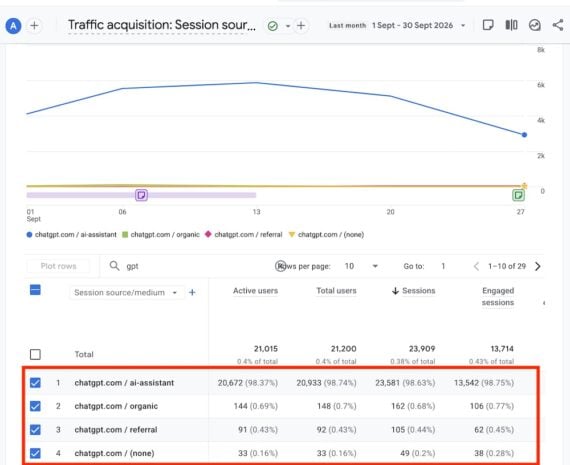
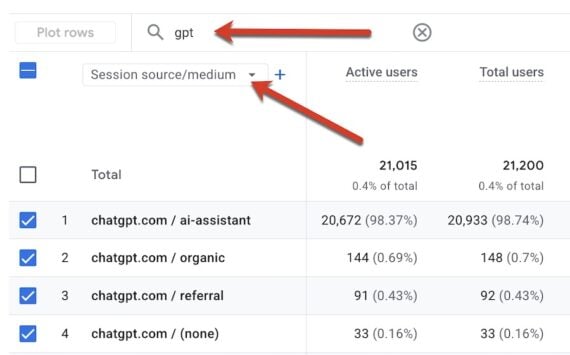
One of the most significant challenges in modern analytics is the "dark" nature of AI referrals. ChatGPT, prioritizing user privacy, often attaches a noreferrer attribute to its outgoing links. This stripped-down header prevents the destination website from seeing exactly where the visitor originated. Consequently, GA4 defaults to tagging this traffic as "Unassigned" or "Direct."
Unmasking the Data in GA4
To move beyond the default dashboard and gain visibility into your AI performance, you must employ custom filtering.
- Accessing Acquisition Reports: Navigate to the Acquisition > Traffic acquisition section in your GA4 dashboard.
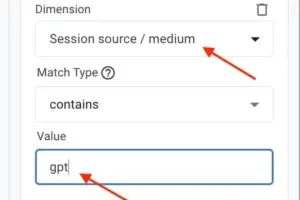
- Building the Filter: Do not rely on standard session source/medium views. Create a custom exploration report. Apply a filter that includes "Session source" containing "gpt."
- Analyzing Landing Pages: By identifying the specific landing pages that generate "gpt" traffic, you can reverse-engineer the prompts that led users there. If a specific technical guide is receiving consistent traffic from ChatGPT, it is highly likely that users are asking the AI for troubleshooting steps related to that exact topic.
Reverse-Engineering the User Prompt
Once you have identified the pages receiving the most AI-driven traffic, use the following framework to understand the "why":
- The Query Test: Take your URL and ask ChatGPT: "I am a user looking for [X]. What prompts would I use to find a resource like this website?"
- The Gap Analysis: Use tools like Search Console to see what organic queries are associated with these pages, then compare them to the AI-driven traffic. Are the AI users looking for more granular, "how-to" information than your organic searchers?
Official Statements & Industry Observations
"Monitoring AI traffic is no longer a niche activity; it is a foundational requirement for any digital marketer," notes expert Ann Smarty. The consensus among technical SEOs is that we are in a transition period. As GenAI tools become more mainstream, the volume of traffic will grow, but so will the competition.

Brands that are currently identifying their "AI-cited" content are at a massive advantage. By understanding which of your pages serve as "ground truth" for AI models, you can double down on that content. If ChatGPT cites your page to answer a complex question, that page is likely your strongest piece of brand collateral.
Future Outlook: The Maturation of the AI Channel
Looking forward, we can expect the following developments in the digital acquisition landscape:
- Attribution Resolution: As the industry matures, we anticipate that AI platforms will eventually move toward more standardized referral headers, making it easier for GA4 to attribute traffic correctly. Until that happens, the "Unassigned" category will remain a goldmine of hidden data for those willing to look closer.
- The Death of Generic SEO: Traditional, keyword-stuffed content will become less effective as AI continues to prioritize authoritative, problem-solving, and conversational content. The "ChatGPT-optimized" page of 2026 will look very different from the SEO-optimized page of 2020.
- Proactive AI Relations: Just as we built PR relationships with journalists and bloggers in the past, brands will need to develop "AI relations." This involves ensuring that your data is structured, your facts are verifiable, and your content is easily crawlable by the LLMs that act as the gatekeepers of modern information.
Strategic Recommendations
- Audit Your "Unassigned" Traffic: Conduct a deep dive into your GA4 "Unassigned" channel. Look for spikes that correlate with AI model updates.
- Optimize for Answers: Shift your content strategy from "keywords" to "queries." Build content that directly answers the complex, multi-layered questions that users are currently asking ChatGPT.
- Leverage Secondary Tools: Use tools like Ahrefs, Semrush, and specialized AI-crawling monitors to keep tabs on how your domain is being referenced across different LLM environments.
In conclusion, while the volume of traffic from ChatGPT may currently seem small compared to the ocean of Google organic search, the quality and intent of that traffic represent a new frontier. By mastering the art of tracking and optimizing for these AI referrals today, organizations can secure a dominant position in the next era of the internet. The data is there; you just need to know how to look for it.