Executive Overview
As the web development ecosystem accelerates, the pace of CSS evolution has moved from a steady hum to a resonant roar. In this edition of What’s !important (#18), we navigate the most significant technical shifts to emerge over the past fortnight. From the introduction of high-performance syntax highlighting powered by the browser’s native Custom Highlight API to the proposed syntax for class prefix selectors, the industry is witnessing a fundamental shift in how we structure, style, and optimize the modern web.
This report synthesizes the latest breakthroughs in user interaction, layout management, and feature detection, providing developers with a roadmap to implement these cutting-edge capabilities through progressive enhancement. As we transition into the new season, these updates represent more than just incremental changes; they signify a maturing web platform capable of handling complex application-level requirements with native browser primitives.
Detailed Chronology: Innovations in Interaction and Layout
The Evolution of Tooltip UX: Delay and Instancy
Interaction design remains a pillar of user experience, and the humble tooltip is at the center of a new performance discourse. Abhishek Jakhar recently ignited a conversation on the necessity of "delayed-then-instant" tooltips. The logic is elegant: a slight initial delay prevents accidental triggers during rapid cursor movement, while the "instant" follow-up ensures the UI feels responsive and eliminates "ghost" tooltips that linger after the user has moved on.
While manual implementation is standard, Chris Coyier has pushed the envelope by leveraging "interest invokers"—a burgeoning Chrome-led initiative. By utilizing the interest-delay-start and interest-delay-end CSS properties, developers can offload the logic of tooltip management to the browser engine. Although current support is limited to Chromium-based browsers, this is a textbook example of progressive enhancement: provide the native experience where available, and rely on standard JavaScript fallbacks for broader compatibility.
Bridging the Gap with the <geolocation> Element
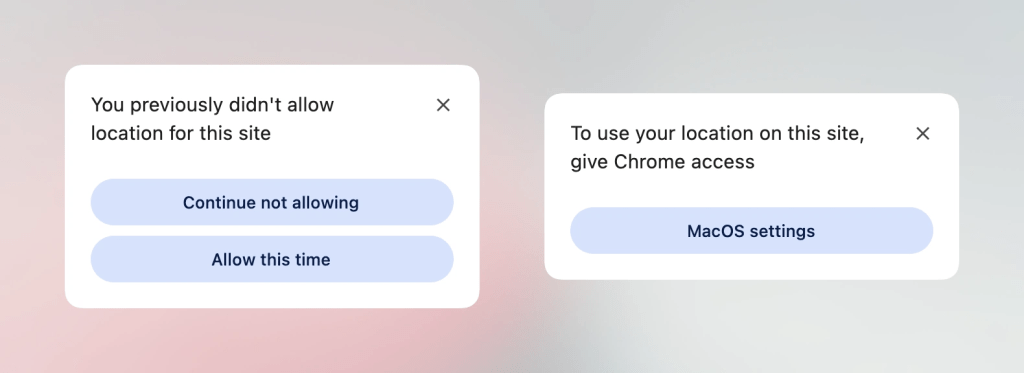
The Geolocation API has historically been a source of frustration for developers, plagued by dependency on external hardware states and volatile permission prompts. The emergence of the <geolocation> HTML element is an attempt to standardize this experience. However, the element introduces new constraints, particularly regarding styling limitations, which require careful architectural planning. By pairing this new element with legacy Geolocation API patterns, developers can now deliver a more robust location-awareness experience that gracefully degrades across browsers.
MicroLighter and the Custom Highlight API
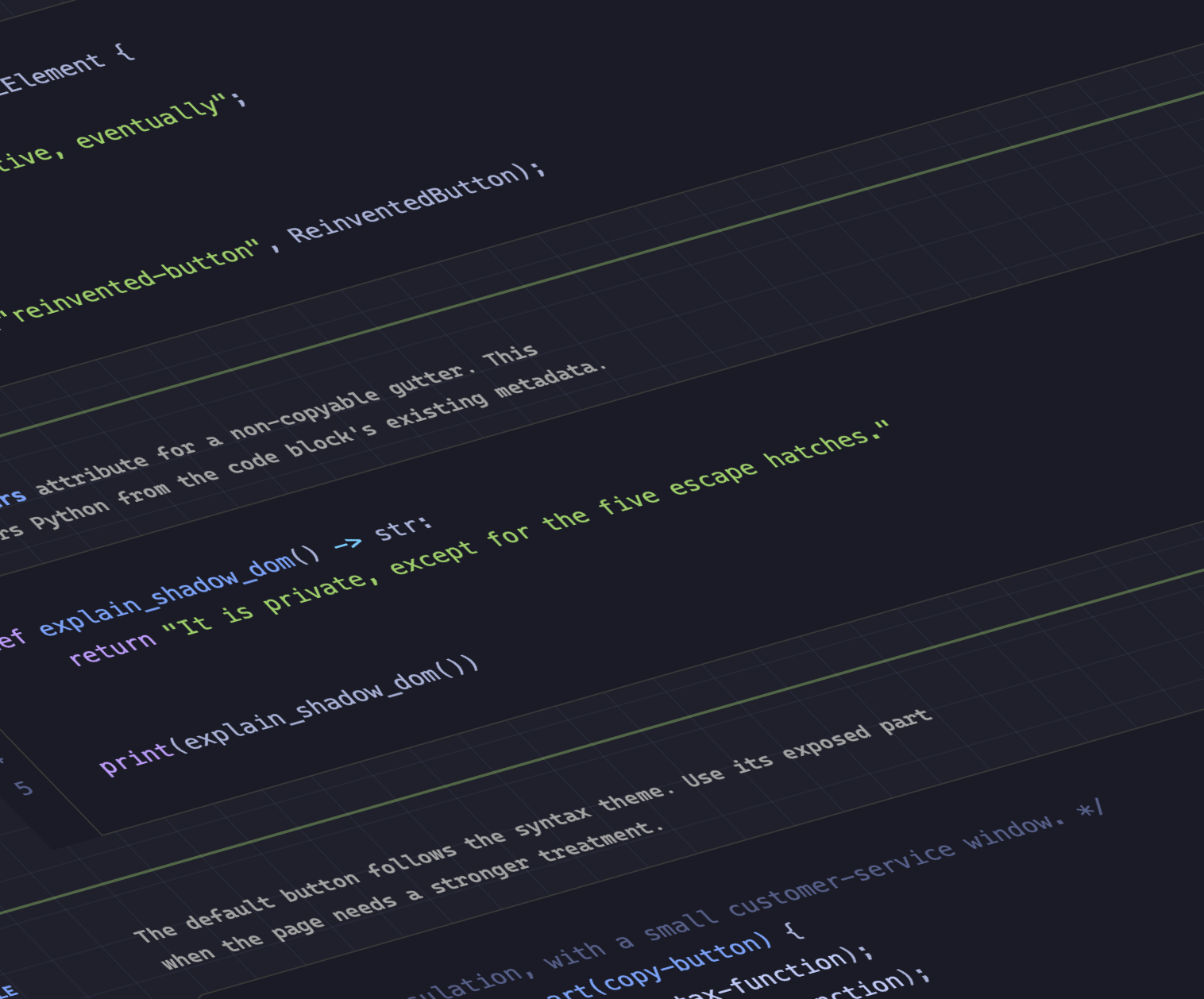
Syntax highlighting has traditionally been a resource-heavy task, often requiring large, client-side JavaScript libraries to parse and colorize code blocks. Dave Rupert’s MicroLighter marks a paradigm shift by utilizing the native ::highlight() pseudo-element and the Custom Highlight API. By offloading the visual representation of syntax to the browser’s rendering engine, MicroLighter achieves a level of performance that was previously unattainable. This transition toward browser-native highlighting is a bellwether for the future of web-based code editors and documentation platforms.
Supporting Context & Metrics: Grid Data and Hover Proximity
One of the most persistent challenges in CSS-driven layout is the lack of "introspection"—the ability for CSS to know its own state. Temani Afif has recently demonstrated a breakthrough technique for injecting CSS Grid metadata into custom properties. By calculating row/column counts and individual cell coordinates, developers can now build dynamic layouts that react to their own geometry.
The practical application of this data is profound. Afif’s exploration of "hover proximity" allows for UI elements to change state based on the distance between the cursor and a grid cell. This level of spatial awareness creates a tactile, highly responsive user interface that feels organic rather than programmatic. While current implementations require uniform column widths, the rapid evolution of the CSS spec suggests that flexible, non-uniform grid introspection is firmly on the horizon.
Official Statements and Industry Debates
The Dark Mode Dilemma: Two-State vs. Tri-State
A spirited debate has emerged regarding the ideal implementation of dark mode toggles. Lea Verou advocates for a clean, two-state (Light/Dark) approach, while Bramus makes a compelling case for a tri-state model (Light/Dark/System-Default). The technical community remains divided, with many adopting the "auto-until-overridden" approach—a hybrid model that respects system settings by default but offers a permanent override once the user expresses a preference. This shift highlights the growing importance of user agency in modern design systems.
The Class Prefix Selector: A New Syntax for Scalability
Bramus has also introduced the concept of a "class prefix selector" (.something-*), which aims to simplify the selection of elements sharing a common namespace. In current CSS, selecting elements like [class^="something-"] is not only verbose but carries a performance cost during style recalculation. A native .* syntax would be a massive boon for utility-first frameworks and component-based architectures. While this is currently a conceptual proposal, its simplicity and potential for performance optimization make it a high-probability candidate for future specification.
Expanding the @supports Arsenal
Bramus’s work extends to the @supports named-feature() function, a critical update to our feature-detection capabilities. Historically, @supports has been limited to testing property-value pairs. named-feature() allows for the detection of complex, browser-specific behaviors that were previously "black boxes," such as how browsers handle transforms in conjunction with anchor positioning. This is a massive step forward for the "Develop Once, Deploy Anywhere" philosophy, as it allows developers to write precise CSS that adapts to the specific capabilities of the underlying engine.
Future Outlook: Flex-Wrap Balance and Beyond
The introduction of flex-wrap: balance in Chrome marks a significant victory for typographic and layout control. Much like the text-wrap: balance property that optimized paragraph flows, flex-wrap: balance allows developers to ensure that wrapped flex items are distributed evenly across rows or columns. As Ahmad Shadeed has documented, this property eliminates the "orphaned item" syndrome, where a single flex item sits awkwardly on a new line, disrupting the visual rhythm of the layout.
Toward a More Semantic Web
As we look toward the remainder of the year, several trends are becoming clear:
- Native Offloading: Developers are increasingly shifting from JavaScript-heavy logic to browser-native features like the Custom Highlight API and interest invokers.
- Increased Introspection: Techniques for exposing layout state (like grid coordinates) to CSS custom properties will become standard practice, enabling more sophisticated animations and interactions.
- Declarative Control: Proposals like the class prefix selector indicate a desire to return to more declarative, readable CSS, reducing the reliance on complex attribute selectors.
The web platform is entering an era of "high-fidelity" CSS. We are moving beyond simple layout and color, and into an era where browsers provide the primitives for complex interaction, semantic data handling, and intelligent layout management. For the professional developer, the mandate is clear: the pace of change is high, but the potential for creating performant, accessible, and beautiful experiences has never been greater.
The transition from the heat of summer into the crisp air of autumn brings with it a renewed focus on building sustainable, forward-thinking web architectures. By embracing these native features—and utilizing progressive enhancement to ensure no user is left behind—we can ensure that the next generation of web applications is not only more powerful but more resilient than ever before.