Executive Overview
Modern broadcast journalism has perfected the architecture of conflict. When political figures step onto television sets like BBC Question Time, they enter an arena engineered not for mutual understanding, but for combat. Under the glare of studio lights, flanked by rival politicians and constrained by relentless, unforgiving countdown clocks, complex human experiences are systematically flattened into weaponized soundbites.
Nowhere is this structural failure more acute than in the coverage of identity and immigration—issues that touch upon the deepest anxieties, hopes, and lived realities of citizens across the globe. When high-stakes social questions are treated as Friday-night entertainment, the resulting public discourse is rarely illuminating; instead, it is polarized, tribal, and deeply exhausting. Audiences leave the broadcast feeling more alienated, more defensive, and fundamentally less informed than when they tuned in.
This status quo, however, is not inevitable. A groundbreaking new wave of media research is challenging the foundational assumptions of traditional news production, arguing that the toxicity of our public conversations is a direct product of the conditions under which we force them to happen.
At the forefront of this paradigm shift is the News For All project, spearheaded by journalist, researcher, and community organizer Shirish Kulkarni. Working as a news innovation research fellow at Media Cymru and founder of Inclusive Journalism Cymru—in partnership with key bodies including the Welsh government and public broadcaster S4C—Kulkarni spent a year testing a radically different premise.
Rather than parachuting reporters into communities to extract predictable quotes about polarizing national flashpoints, Kulkarni and a team of 14 community co-researchers in the post-industrial Welsh-speaking town of Blaenau Ffestiniog asked a profoundly different question: What conditions does a community actually need to make sense of its own life together?
This investigative report examines the systemic flaws of adversarial broadcast journalism, details the methodology and execution of the News For All initiative, contextualizes the broader metrics of public trust in media, and outlines a future outlook for a more empathetic, constructive fourth estate.
Detailed Chronology: From Television Studios to Welsh Mountain Communities
To understand the necessity of Kulkarni’s intervention, one must first trace the anatomy of modern political broadcast media and the slow, systemic breakdown of trust between newsrooms and the publics they purport to serve.
The Anatomy of a Breakdown: The Broadcast Arena
The mid-20th-century model of broadcast news was built on the premise of the public square—a trusted town crier delivering the day’s facts to a relatively homogenous audience. By the late 20th and early 21st centuries, this model evolved into a ratings-driven combat sport.
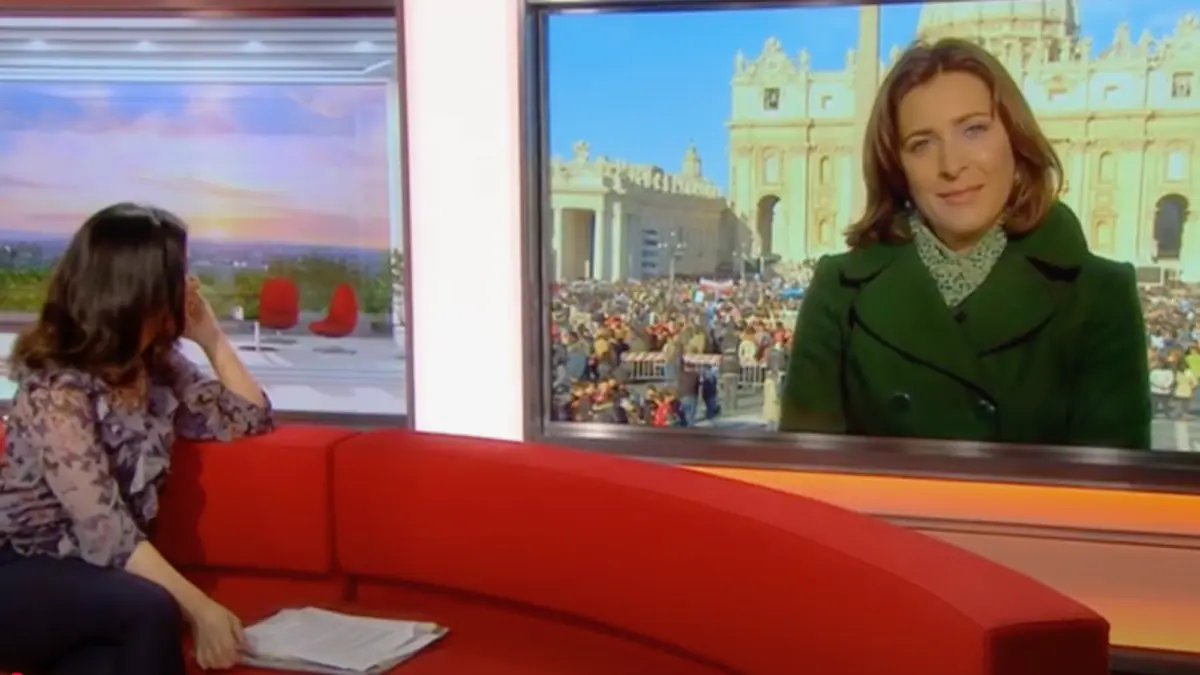
Consider the mechanics of a contemporary program like BBC Question Time, a prime example of the prevailing format. When a high-profile political figure—such as former Home Secretary Suella Braverman—appears on the panel to discuss matters of immigration, national identity, and social cohesion, the structural ingredients are predetermined:
- The Adversarial Panel: A selection of tribal political representatives whose primary professional objective is to defend party lines and score rhetorical points against opponents.
- The Time Crunch: Strict broadcast constraints that reduce multi-faceted socio-economic trends into 45-second soundbites.
- The Confrontational Framing: Pointed, binary questioning designed to provoke immediate emotional reactions rather than deep, sustained reflection.
This environment renders nuanced dialogue practically impossible. Nuance requires safety, time, and active listening—three commodities that television studios consistently sacrifice in the pursuit of dramatic tension. The result is a cycle of news production that alienates viewers, exacerbates culture-war divisions, and leaves communities feeling misrepresented or entirely ignored.
The Genesis of ‘News For All’
Recognizing that tinkering with editorial guidelines or hiring more diverse pundits within the existing commercial framework would yield diminishing returns, Shirish Kulkarni set out to redesign the journalistic process from the ground up.
Beginning in late 2022 and extending through 2023, the News For All project was developed under the auspices of Media Cymru—an innovation engine backed by the Arts and Humanities Research Council (AHRC)—alongside Welsh public broadcaster S4C and the Welsh government. The core thesis was simple yet revolutionary: if news is to serve democracy, it must be co-created with the people it impacts, rather than imposed upon them by metropolitan elites.
The Blaenau Ffestiniog Experiment
To test this hypothesis, the project team selected Blaenau Ffestiniog, a former slate-mining town nestled in the mountains of north Wales. Blaenau Ffestiniog presented a fascinating micro-cosm of modern socio-cultural pressures: a proud, tightly knit Welsh-speaking community grappling with economic transition, shifting demographics, and the challenges of rural revitalization.
Over the course of a year, Kulkarni partnered with 14 local residents who acted as community co-researchers. Rather than operating as subjects of an outside journalistic investigation, these residents became the architects of the inquiry.
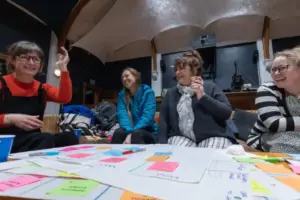
The project discarded standard journalistic practices—such as the "vox pop," where a reporter spends five minutes thrusting a microphone into a stranger’s face on a high street—in favor of slow, deliberative dialogue circles. The co-researchers engaged their neighbors in unstructured, deeply personal conversations about what mattered to them, how they perceived their town’s identity, and why mainstream news outlets so frequently failed to reflect their daily realities.
The findings from Blaenau Ffestiniog revealed a profound hunger for media that reflects the complex, overlapping textures of local life, moving far beyond the simplistic narratives of decline or cultural friction that typically dominate national reporting on post-industrial towns.
Supporting Context & Metrics: The Crisis of Media Trust
The urgency of experiments like News For All is underscored by a wealth of empirical data illustrating a global crisis of confidence in journalism.
The Trust Deficit
According to the Reuters Institute Digital News Report, public trust in news across major democracies has hovered near historic lows for several consecutive years. In the United Kingdom, trust in the news generally sits below 35%, with broadcast and tabloid journalism taking particularly sharp hits among younger demographics and working-class communities outside major metropolitan hubs.
| Metric / Indicator | Traditional Broadcast Model | News For All / Participatory Model |
|---|---|---|
| Primary Objective | Audience capture, conflict-driven engagement | Social cohesion, shared community understanding |
| Pace & Format | Rapid-fire, 45-second soundbites, adversarial panels | Deliberative circles, extended listening, co-creation |
| Community Agency | Passive consumers / subjects of external reporting | Active co-researchers and agenda-setters |
| Impact on Polarization | High (amplifies division and defensive posturing) | Low (fosters empathy and localized consensus) |
The Cost of Sensationalism
When media organizations rely on adversarial formats to discuss identity and immigration, they trigger well-documented psychological mechanisms. Research in political communication demonstrates that threat-based framing—frequently deployed in discussions surrounding demographic shifts—activates out-group hostility and hardens ideological silos.
Audiences do not consume this news neutrally; they internalize the friction. A study by the Center for Media Engagement found that 68% of news consumers feel exhausted by the tone of contemporary political coverage, while over 50% actively avoid news altogether to protect their mental health. This "news avoidance" poses an existential threat to democratic societies, creating information vacuums that are rapidly filled by unchecked social media algorithms and misinformation.
The Economic Case for Reform
Beyond the civic imperative, there is a growing economic argument for participatory journalism. Legacy media organizations are struggling to retain subscribers because their product is increasingly seen as disconnected from daily life. By embedding journalists within communities as facilitators rather than gatekeepers, newsrooms can rebuild authentic value propositions that command long-term loyalty and financial support.
Official Statements and Expert Perspectives
The methodology pioneered by Shirish Kulkarni has drawn widespread praise from media scholars, policy makers, and broadcasting innovators who recognize that the current architecture of news is unsustainable.
Shirish Kulkarni, founder of Inclusive Journalism Cymru and author of the project, articulated the core philosophy behind the research:
"We cannot expect to build a healthy, cohesive society using tools that are explicitly designed to generate heat rather than light. When we talk about delicate issues like identity, immigration, and community change, the conditions under which we speak matter just as much as the words we use. By handing the research tools back to the community in Blaenau Ffestiniog, we proved that people do not want shouting matches—they want spaces where they can listen, be heard, and make sense of their changing world together."
Reflecting on the partnership between public broadcasters and grassroots innovators, a spokesperson for Media Cymru emphasized the necessity of structural experimentation:
"Innovation in media cannot just be about new apps or delivery platforms; it must be structural and cultural. The News For All project demonstrates that public service broadcasting must evolve beyond the Westminster-centric studio model. To truly serve the public, we must invest in local listening infrastructure that honors the dignity and complexity of regional communities."
Media ethics scholar Dr. Elena Vance noted the broader implications for political discourse:
"For decades, journalism has operated under a mistaken belief that conflict equals engagement. What Kulkarni and his team have shown is that while conflict might drive short-term clicks, it destroys the social fabric over the long term. Participatory journalism is not a utopian daydream; it is an urgent structural necessity if we are to heal the fractures in our public sphere."
Future Outlook: Rebuilding the Fourth Estate from the Ground Up
As the media industry navigates the disruptive onslaught of generative artificial intelligence, shifting audience habits, and deepening political polarization, the lessons of the News For All project offer a vital roadmap for the future.
1. Decentralizing the Newsroom
The traditional hierarchy—where a centralized newsroom in a capital city decides what matters to a remote town—is increasingly obsolete. Future-facing media organizations must adopt decentralized, participatory models that treat community members not as sources to be mined, but as intellectual partners in the journalistic process. This requires reallocating resources away from expensive, London-centric television studios and into regional listening posts and community newsrooms.
2. Redefining Journalistic Success Metrics
Newsrooms must move away from short-term engagement metrics—such as outrage-driven clicks, comment section wars, and viral video shares—and begin measuring success through qualitative indices of social cohesion, civic participation, and audience trust. If a broadcast leaves a community more divided and angry than before, it should be evaluated as an editorial failure, regardless of its ratings.
3. Training a New Generation of Facilitator-Journalists
Journalism schools must fundamentally update their curricula. Aspiring reporters are still predominantly trained in the arts of the adversarial interview, the aggressive door-step ambush, and the rapid extraction of quotes. Modern journalism education must incorporate rigorous training in conflict resolution, deliberative dialogue facilitation, trauma-informed reporting, and ethnography. A journalist of the future must be as skilled at holding a room together in constructive dialogue as they are at holding power to account.
4. A Policy Framework for Public Service Media
Governments and regulatory bodies—such as Ofcom in the UK—must begin tying public funding and broadcasting licenses to qualitative commitments in community representation and deliberative engagement. Public service broadcasters should be mandated to pilot participatory frameworks modeled on Kulkarni’s work, ensuring that regional voices are heard on their own terms, free from the distorting pressures of studio-manufactured combat.
Conclusion
The images of polarized politicians shouting across a BBC Question Time stage will likely remain a fixture of our television screens for some time. But they no longer represent the only possible future for public discourse.
Through the quiet, methodical work carried out in the slate-mining valleys of north Wales, the News For All project has demonstrated that another way is possible. By replacing the adversarial arena with the deliberative circle, journalism can reclaim its highest calling: not to divide and conquer, but to help communities make sense of their lives together.