Executive Overview: A Foundation Shifting
For decades, the bedrock of the venture capital industry was a simple, unwritten covenant: a firm does not back two companies fighting in the same trench. This rule of "exclusivity" served as the moral insurance policy for founders, ensuring that their investors’ loyalties, strategic guidance, and sensitive information were not being weaponized against them.
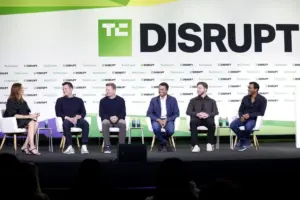
However, the rapid ascent of Generative AI has turned this foundational pillar into a liability. As AI startups race to claim massive, undefined "surface areas" of the market, the traditional boundaries of competition have blurred into a chaotic landscape of pivot-heavy business models. At the recent TechCrunch Disrupt conference, the partners of Benchmark—a firm historically synonymous with founder-first loyalty and long-term partnership—admitted that the industry’s historic ban on competing portfolio companies is under unprecedented strain. The era of the "clean" portfolio is rapidly giving way to a new, messy reality where venture firms are increasingly forced to navigate conflicts of interest as a matter of standard operating procedure.
The Fracture: A Case Study in Corporate Conflict
The tension inherent in this new era reached a fever pitch in late September when Factory, a startup specializing in AI-driven software development agents, leveled explosive allegations against one of its own board observers and advisers, Chris Degnan.
Factory’s leadership accused Degnan of unethical conduct related to his involvement with Cognition, the maker of the viral "Devin" coding agent and a direct competitor to Factory. The central allegation was that Degnan had engaged in discussions regarding a potential leadership role at Cognition while simultaneously participating in sensitive, board-level strategic sessions at Factory. While Degnan denied any breach of confidentiality and maintained he had resigned from his advisory role prior to the official announcement of his new position as Chief Revenue Officer at Cognition, the incident sent shockwaves through the Valley.
The fallout intensified when powerhouse investor Vinod Khosla took to X (formerly Twitter) to publicly defend Degnan. Khosla, whose firm, Khosla Ventures, holds stakes in both Factory and Cognition, dismissed Factory’s complaints, disparaging the company as a "struggling second-tier competitor."
This public clash represents the worst-case scenario for the venture capital industry: an investor effectively picking a side in an open conflict between two companies in their own portfolio, accompanied by a public dismissal of one founder’s grievances. It is precisely this "insane direct conflict" that Benchmark partners are now struggling to reconcile with their own institutional mandate of confidentiality and trust.
The Anatomy of the AI Pivot
Why is this happening now? The answer lies in the unique economic and structural characteristics of the AI boom.
1. The Cost of Development
Chetan Puttagunta, a partner at Benchmark, points to a structural shift in the software industry: the cost of building complex software is effectively trending toward zero. As AI lowers the barrier to entry, it invites an influx of founders who are, as Puttagunta describes, "incredibly ambitious."
2. The Expanding "Surface Area"
Because these startups are built on top of large language models, they are rarely static. A company that begins by building a niche tool for software testing might quickly pivot to full-scale autonomous coding, or vice-versa. As firms scramble to capture as much of the market as possible, their "surface area" expands, inevitably encroaching on the territory of other startups already residing within the same venture firm’s portfolio.
3. The "Portfolio Bloat"
Large venture firms, eager to capture the next OpenAI, have invested in dozens of companies that, by necessity, share similar technological foundations and market aspirations. When firms act as "capital allocators" rather than "founding partners," the risk of overlap becomes a mathematical certainty rather than a strategic outlier.
The Benchmark Dilemma: Maintaining the "Golden Rule"
Benchmark, which built its reputation on 10-to-15-year commitments to early-stage founders, is grappling with how to reconcile these new pressures with its own identity.
During their discussion at Disrupt, the partners—Eric Vishria, Chetan Puttagunta, and Peter Fenton—offered a candid look at how the firm views these emerging risks. Vishria emphasized that while the firm remains committed to protecting the confidential information of its founders, the reality of modern business is that pivots are constant. "The harsh reality of this world is that every company is evolving very quickly," Vishria noted. He argued that if a company shifts its strategy, a conflict might emerge that was entirely nonexistent at the time of the initial investment.
However, the firm remains wary of the "Kryptonite" of conflict. Peter Fenton, in particular, highlighted the spectrum of investor involvement. At one end of the spectrum is the "co-founder" model—the approach Benchmark historically favors—where the investor is deeply embedded in the company’s DNA. At the other end is the "public-market stock picker" model, where an investor holds a diversified basket of competing assets. Benchmark, Fenton argued, remains closer to the former, treating transparency as a "golden rule."
"There shouldn’t be a surprise after the fact," Fenton stated. The firm’s strategy for mitigating these risks involves aggressive communication and a promise that if a conflict arises, no founder will be left feeling "shortchanged." Yet, the very admission that these conflicts are "a matter of necessity, not preference" signals that the firm is moving toward a more pragmatic, and potentially more volatile, operational model.
Supporting Context: Metrics and Market Realities
The shift in venture capital is not occurring in a vacuum. Industry data suggests that the "multi-bet" strategy is becoming the standard for top-tier firms.
- The OpenAI-Anthropic Parallel: The most prominent example of this shift is the massive overlap in cap tables for AI giants. Both OpenAI and Anthropic share a staggering number of the same venture backers. When the stakes are in the billions, firms have decided that the risk of a "conflict of interest" is outweighed by the risk of missing out on the dominant player in the industry.
- The Shift from "Adviser" to "Capital Provider": As the number of startups in a firm’s portfolio grows, the ability of a partner to provide meaningful, unbiased, and confidential advisory services decreases. We are seeing a move toward "portfolio management" rather than "founder partnership," a shift that prioritizes firm-wide returns over the individual interests of specific startups.
Future Outlook: The New Normal
As the industry matures into this "AI-heavy" cycle, several trends are likely to emerge:
- More Rigorous Side-Letters: Founders will increasingly demand "exclusivity clauses" in their investment agreements, specifically prohibiting VCs from investing in direct competitors for a set period.
- The Rise of "Conflict-Free" Funds: A new wave of boutique, conflict-averse venture firms may rise, marketing themselves specifically to founders who fear that their board members might be sharing secrets with rivals.
- Increased Litigiousness: As seen in the Factory vs. Cognition dispute, the breakdown of trust is no longer being handled behind closed doors. Founders are increasingly willing to go public with accusations of "spying" or "unethical conduct," leading to a more toxic and litigious venture environment.
Conclusion: A Loss of Innocence
Benchmark is not declaring the "no-compete" pact dead, but they are certainly preparing the eulogy. When a firm known for its loyalty and long-term commitment starts characterizing conflicts as "the reality of the current dynamic," it is a signal to the entire ecosystem that the old rules no longer apply.
For the modern entrepreneur, the message is clear: the venture capital landscape has become a high-stakes, hyper-competitive arena where the lines between partner and rival are thinner than ever. As founders navigate this era, they must be more vigilant than ever regarding who they invite onto their board and what information they share. The days of trusting an investor simply because they have a "no-compete" reputation are officially over. In the world of AI, the only certainty is that the competition—both in the market and in the boardroom—will only grow more intense.