Executive Overview
The intersection of politics and media has long been a subject of intense debate, but a groundbreaking new report by the influential think tank Demos reveals that the United Kingdom occupies a lonely and anomalous position within the European media landscape. Authored by Dr James Painter of the Reuters Institute for the Study of Journalism, the study exposes a striking regulatory and cultural divergence: while the vast majority of European nations strictly prohibit or heavily restrict serving politicians from stepping behind the anchor desk, the UK actively accommodates the practice.
Based on an exhaustive survey of 37 media regulators across Europe, conducted via the European Platform of Regulatory Authorities (EPRA), the findings show that in 35 of those 37 jurisdictions, the idea of a sitting Member of Parliament or government official hosting a national television news or current affairs programme is completely unheard of. Only Iceland and Malta presented isolated, highly circumscribed, and short-lived exceptions to the rule. By contrast, the British broadcasting ecosystem has increasingly normalized the phenomenon of elected representatives moonlighting as broadcasters, interviewers, and political commentators.
This investigative report delves deep into the implications of the Demos findings, examining the regulatory frameworks that govern European media, the historical trajectory of broadcasting standards in the UK, the ethical dilemmas facing modern newsrooms, and the long-term democratic consequences of blurring the lines between the legislature and the Fourth Estate. As public trust in both politics and the media faces unprecedented strain, the question of who gets to shape the national conversation has never been more urgent.
Detailed Chronology: The Evolution of Broadcast Regulation in the UK and Europe
To understand how the United Kingdom became an outlier, it is necessary to examine the historical evolution of broadcast regulation both domestically and across the wider European continent.
Post-War Foundations and the Birth of Impartiality
Following the Second World War, European democracies recognized the immense power of the emerging medium of television. Most continental nations established state-funded public service broadcasters modeled on strict autonomy, viewing information as a public good that required insulation from partisan capture. In countries emerging from totalitarian regimes—such as post-war Germany, Italy, and later Spain and Portugal—rigorous constitutional and statutory firewalls were erected to keep political actors out of newsrooms. The objective was clear: prevent the ruling party from utilizing public airwaves as a megaphone.
In the UK, the BBC operated under a constitutional royal charter requiring strict political impartiality, a principle later codified for commercial broadcasting with the creation of the Independent Broadcasting Authority (IBA) and eventually overseen by Ofcom. For decades, the convention was sacrosanct: politicians could be interviewed and scrutinized, but they could not be the interviewer or the scrutinizer.
The Regulatory Drift of the 21st Century
The turning point in the UK did not happen overnight; it was the result of a gradual deregulation and commercial pressure cooker. As multi-channel digital television expanded in the late 1990s and 2000s, regulators faced the challenge of policing niche satellite and cable channels.
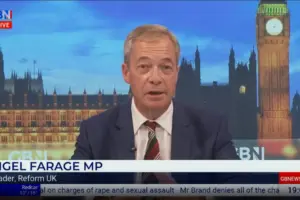
While core public service broadcasters (PSBs) like the BBC, ITV, and Channel 4 maintained stringent internal rules against serving politicians hosting news, the advent of new commercial news channels—most notably GB News, launched in 2021, and later TalkTV—tested the boundaries of the Ofcom Broadcasting Code. These networks discovered that high-profile politicians serving as presenters could drive viewer engagement, generate social media viral moments, and boost ratings.
Although Ofcom rules stipulate that politicians can present programmes provided they are not news programmes, and that alternative viewpoints must be adequately represented, the distinction between "news" and "current affairs" has proven increasingly porous to viewers. Consequently, a practice once deemed a clear conflict of interest has steadily crept into the mainstream British media diet.
Supporting Context & Metrics: What the Demos Report Reveals
The empirical data compiled by Dr James Painter for Demos provides an unvarnished look at just how isolated the UK’s regulatory approach is when viewed through a pan-European lens.
The Pan-European Landscape
The research surveyed 37 national media regulators belonging to the EPRA network. The results paint a picture of near-universal consensus across the continent regarding the separation of political power and broadcasting platforms:
- 35 out of 37 Countries: In 94.5% of surveyed European nations, there are zero recorded examples of a serving politician presenting a news or current affairs programme on a national television channel.
- Explicit Bans and Heavy Restrictions: Across 34 European countries, national broadcasting laws or regulatory codes either explicitly ban the practice or impose such severe restrictions that it is functionally impossible for a sitting parliamentarian to host a broadcast show.
- The Rare Exceptions: Only Iceland and Malta registered any historical or limited exceptions to the rule. In both cases, these instances were marginal, strictly time-limited, and did not form part of a sustained commercial business model as seen in the UK.
The UK Exception: Structural Drivers
Why does the UK stand apart? The Demos report points to a combination of regulatory interpretation, commercial media incentives, and a uniquely British reliance on self-regulation and "due impartiality" guidelines rather than outright statutory prohibitions.
Unlike many continental European nations that rely on rigid, bright-line legal bans rooted in constitutional law, the UK framework administered by Ofcom relies on principles-based regulation. Ofcom’s rules permit politicians to act as presenters—subject to specific caveats regarding major news stories, elections, and the representation of alternative views. This regulatory flexibility has allowed commercial entities to exploit a loophole, turning political partisanship into a core broadcasting commodity.
Official Statements and Industry Reactions
The publication of the Demos report has ignited a fierce debate among media ethicists, politicians, regulators, and newsroom leaders across the United Kingdom.
Dr James Painter, author of the report, emphasized the stark nature of the findings during the release:
"Our research demonstrates unequivocally that the UK is swimming against the European tide. While our continental neighbors view the separation of politicians and the presenter’s chair as a fundamental safeguard for democratic integrity, the UK has drifted into a unique territory where this boundary has been eroded. It raises profound questions about public trust, editorial independence, and the health of our political discourse."
Media reform advocates have seized upon the data to call for an urgent overhaul of Ofcom’s broadcasting code. A spokesperson for the Media Reform Coalition noted:
"When elected officials—who are supposed to be holding power to account or answering to the public—are instead handed a microphone and editorial control to frame the news of the day, the fundamental compact of democratic journalism is broken. The Demos report proves that the rest of Europe recognizes this danger. It is time for the UK to catch up and implement a complete ban on serving politicians acting as news and current affairs presenters."
Conversely, defenders of the current regulatory model argue that the UK’s approach champions freedom of expression and viewer choice. Representatives from commercial broadcasting networks have previously argued that having politicians on air provides unprecedented transparency, allowing audiences to see how politicians think, communicate, and debate outside the formal constraints of the House of Commons. They contend that Ofcom’s existing rules on "due impartiality" are sufficient to catch and penalize breaches, rendering blanket bans unnecessary and heavy-handed.
Future Outlook: Implications for UK Newsrooms and Democracy
As the media landscape continues to evolve in the digital age, the presence of politician-presenters poses complex challenges for traditional newsrooms, regulatory bodies, and the viewing public.
The Erosion of Editorial Independence
For legacy newsrooms at the BBC, ITN, and Sky News, the normalization of politician-presenters creates a challenging competitive and cultural environment. When audiences become accustomed to partisan figures driving nightly discourse with unvarnished personal viewpoints, objective journalism can unfairly be branded as "biased" by comparison. This dynamic risks dragging all of broadcast media into a polarized ecosystem where nuance is sacrificed for outrage and engagement metrics.
The Regulatory Road Ahead
Pressure is mounting on Ofcom to reassess whether its current guidelines are fit for purpose. Critics argue that the distinction between "news" and "current affairs" is a legal fiction that no longer resonates with modern audiences, who consume information fluidly across platforms. If public confidence in broadcasting impartiality continues to erode, parliament may eventually be forced to intervene with primary legislation, bringing the UK into alignment with its European peers.
Conclusion
The Demos report serves as a wake-up call for the British media establishment. By highlighting that the UK stands almost entirely alone in Europe on this issue, the research strips away the assumption that our regulatory framework is merely "different." Instead, it reveals a profound vulnerability. As newsrooms navigate an increasingly polarized future, the fundamental question remains: can a healthy democracy maintain faith in its public information ecosystem when the people holding power are the ones anchoring the broadcast? The answer will define the next era of British journalism.