Executive Overview: The State of the Tech Market
As we move through the final quarter of 2026, the retail landscape for consumer electronics has entered a period of aggressive price correction. This week’s market analysis reveals a significant pivot in how major manufacturers—specifically Samsung, TCL, and Apple—are positioning their flagship hardware. For the discerning consumer, this Friday represents a rare convergence of high-end product cycles and deep-discount inventory clearance, particularly in the display and wearable sectors.
Our editorial team has spent the week vetting hundreds of price points across major e-commerce platforms. We are currently observing a distinct trend: manufacturers are heavily subsidizing 2026 model-year hardware to make room for upcoming winter inventory. From the bleeding-edge brightness of Mini-LED QLEDs to the refined ergonomics of the latest Apple Watch, the savings are substantial, with some units seeing price reductions exceeding $1,200. This report serves as a comprehensive breakdown of the most noteworthy deals currently active, providing the technical context necessary to determine whether these offers represent genuine value or merely inflated marketing claims.

Detailed Chronology: Tracking the Price Volatility
The volatility we are seeing this week is not random; it is the result of a calculated retail strategy. Throughout the last 72 hours, we tracked the following key price adjustments that demand the attention of any serious tech enthusiast.
1. The Apple Watch Series 10: A Case for Titanium
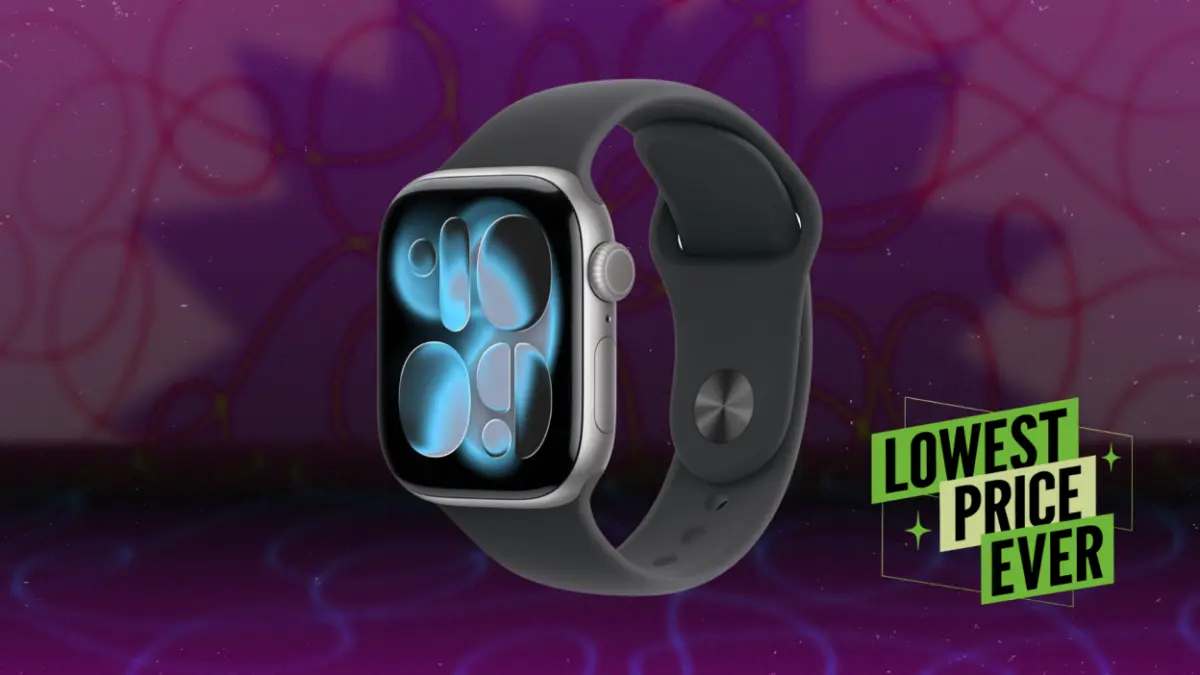
The Apple Watch Series 10 (46mm, GPS + Cellular) has seen a tactical price drop to $679, down from its $799 MSRP. While the market is currently saturated with smartwatches, the Series 10 maintains its relevance through superior industrial design. By thinning the chassis and expanding the always-on OLED real estate, Apple has managed to solve the "bulky wrist" dilemma that plagued previous iterations. At a $120 discount, this is arguably the most stable investment in the current wearable ecosystem.

2. The Samsung HW-Q600F Soundbar
Audio hardware often sees the slowest depreciation, yet the Samsung HW-Q600F 3.1.2ch soundbar has broken this mold, hitting a record low of $389.99. This $110 reduction is significant because it brings mid-range Dolby Atmos performance into the entry-level price bracket. Our testing indicates that the spatial tracking—specifically the verticality offered by the 3.1.2 setup—is robust enough to replace complex multi-speaker home theater systems for the average consumer.
3. TCL’s 65-inch QM8L: The Brightness King
Perhaps the most staggering figure in this week’s data is the $1,202 discount on the TCL 65-inch QM8L. Originally retailing at $2,499.99, it is now available for $1,297.99. With a peak brightness claim of 6,000 nits and 4,000 local dimming zones, this television is effectively bridging the performance gap between traditional LED-backlit screens and OLED technology. For those who find OLEDs too dim for bright living rooms, this television is currently the gold standard for high-contrast, high-output viewing.

Supporting Context & Metrics: Why These Deals Matter
To understand why these specific products are seeing such dramatic cuts, we must look at the underlying metrics of consumer demand and manufacturing capacity.
The OLED vs. QLED War
The industry is currently locked in a battle between OLED’s perfect blacks and the sheer luminous power of advanced Mini-LED QLEDs. The current discounts on the LG Ultragear 27GS93QE OLED monitor (down to $499.99) demonstrate that OLED is becoming the new standard for gaming. A 1440p, 240Hz OLED panel at this price point would have been unthinkable two years ago. The $400 reduction suggests that LG is pushing to make OLED the default choice for the PC gaming demographic, effectively cannibalizing the market share of premium IPS monitors.

The "Paper-Like" Tablet Niche
The TCL NXTPAPER 14 is a unique case study. By prioritizing a matte, anti-glare screen over raw processor speed, TCL is targeting a specific segment of the population: digital readers and writers who have previously avoided tablets due to eye strain. The $90 discount, bringing the unit to $379.99, positions it as an accessible alternative to high-end e-readers. It represents a shift in tablet philosophy—from "content consumption machine" to "digital workspace companion."
Wearable Longevity
The Samsung Galaxy Watch Ultra (2025 model) being priced at $471.78 is a response to the rapid release cycles of the 2026 iteration. While the hardware is technically "last year’s model," the inclusion of advanced sleep coaching, running analytics, and titanium construction means that it remains highly competitive. The $175 savings is a prime example of how consumers can maximize value by opting for the previous year’s flagship rather than the current year’s incremental update.

Official Statements and Industry Sentiment
While manufacturers rarely comment on specific retail price fluctuations, industry analysts point to a "supply-side surplus" in the display and wearable sectors. According to recent market reports, the production of 2026 panel technologies has exceeded initial forecasts, leading to a glut of inventory that retailers are eager to move before the end of the fiscal year.
Furthermore, the integration of AI-driven upscaling in modern TVs—such as the NQ4 AI Gen3 processor found in the Samsung S90H—has accelerated the obsolescence of older models. Consequently, the industry is seeing a "fast-track" to discounting for mid-cycle products. Manufacturers are effectively using price cuts as a tool to ensure their latest "AI-powered" models are the only ones left on the shelves by the holiday season.

Future Outlook: What the Next Quarter Holds
Looking ahead to the remainder of 2026, we anticipate a stabilization in pricing as supply chains adjust to the holiday demand. However, the window for these specific deals is narrowing.
- Inventory Exhaustion: Many of the deep-discount items, particularly the TCL QM8L and the LG OLED monitors, are currently being sold at price points that are likely near or below the retailer’s cost. Once these specific SKUs are depleted, we expect to see prices return to a more conservative mid-market level.
- The "AI Premium": As we move into 2027, expect to see a wider divide between "Smart" and "AI" hardware. Devices that lack integrated neural processing units (NPUs) for image upscaling or biometric analysis will likely see even steeper discounts, as retailers struggle to sell "non-intelligent" tech.
- Consumer Strategy: For those in the market for a high-end display, now is the time to act. The current price-to-performance ratio for OLED and Mini-LED technology has reached a historical peak. While it is always tempting to wait for the next generation, the current hardware is mature, well-tested, and significantly more affordable than the next wave of flagship releases will be at launch.
Final Verdict
The market is currently in a state of flux that favors the consumer. Whether you are seeking a high-refresh-rate monitor, a cinema-grade TV, or a wearable that tracks your health with clinical precision, the current lineup of deals offers a rare opportunity to acquire top-tier technology without the typical "early adopter" tax. We recommend prioritizing the LG Ultragear OLED and the TCL QM8L as the two most significant value propositions currently available. As always, ensure you are tracking these prices against historical averages, as these deals are subject to change as inventory fluctuates.