
Executive Overview
In an era where convenience is increasingly synonymous with connectivity, the smart home has evolved from a futuristic novelty into the operational backbone of millions of households. From adjusting lighting and climate control to monitoring security and managing home health devices, these ecosystems promise a frictionless daily existence. However, this profound reliance on continuous internet connectivity introduces a critical vulnerability: the dreaded internet outage.
When your Wi-Fi drops or your Internet Service Provider (ISP) goes dark, a surprising number of smart devices instantly transform into expensive, inert plastic. Accessories designed to simplify your life can suddenly lock you out of your own home, plunge rooms into darkness, or—in more extreme misconfigurations—cause heating and cooling systems to run unchecked.
While custom-built, hardwired automation systems found in luxury mansions have long solved these reliability issues, everyday consumers are often left stranded by standard cloud-dependent gear. Fortunately, building a resilient, offline-capable smart home does not require an enterprise-grade budget. By strategically anchoring your hardware around local communication protocols, intelligent hub ecosystems, and redundant power solutions, you can ensure your smart home remains genuinely smart—even when the rest of the digital world goes offline.
Detailed Chronology: The Evolution of Smart Home Fragility
To understand why modern smart homes are so susceptible to internet outages, it is necessary to examine how consumer home automation developed over the past two decades.
Phase 1: The Cloud-Dependent Genesis (Early 2010s)
When consumer IoT (Internet of Things) first gained mainstream traction, manufacturers faced a significant design challenge: how to make devices easy for non-technical users to set up. The industry-wide solution was to bypass complex local networking configurations entirely and route everything through the cloud.

Under this architecture, when a user toggles a light switch in an app, the signal travels from the smartphone via Wi-Fi to the home router, out to the ISP, up to a remote vendor server (such as Amazon AWS or Google Cloud), back down through the router, and finally to the light bulb. This dependency created the "dumb device" phenomenon: if any link in that long chain breaks—most notably the internet connection—the device loses its ability to function intelligently.
Phase 2: The Rise of Platform Ecosystems (Mid-to-Late 2010s)
Recognizing the frustrating limitations of single-app, cloud-tethered devices, tech giants stepped in to aggregate hardware under unified platforms like Apple Home, Google Home, and Amazon Alexa. While these ecosystems made control much more convenient by consolidating disparate brands into single interfaces, they initially doubled down on cloud processing. Automations, schedules, and triggers were largely executed on remote servers, meaning local routines would stall if bandwidth dipped or service outages struck.
Phase 3: The Pivot to Local Processing and Mesh Protocols (Present Day)
In recent years, mounting consumer frustration and privacy concerns have forced the industry to pivot toward local resilience. The introduction of unified interoperability standards like Matter, alongside the broader adoption of low-power mesh radios like Thread, Zigbee, and Z-Wave, has shifted the paradigm. Modern smart home architecture is increasingly returning to local hubs capable of processing commands within the four walls of the house, insulating users from external network failures.
Supporting Context & Metrics: Why Offline Resilience Matters
While a frozen smart speaker or an unresponsive living room light panel is usually nothing more than a minor annoyance, the stakes rise dramatically when internet outages intersect with home security and health monitoring.
Industry data highlights the growing necessity of robust smart home infrastructure:

- Market Penetration: Over 40% of households in developed nations now utilize at least one smart home device, with the average connected home housing between 10 to 25 active IoT products.
- Outage Frequency: According to telecommunications telemetry, the average residential internet subscriber experiences between 3 to 6 significant ISP interruptions per year, lasting anywhere from 30 minutes to several hours.
- The Security Paradox: Smart security cameras, automated door locks, and alarm sensors are among the most heavily utilized home automation products. Ironically, many budget-friendly security options rely exclusively on cloud connectivity to trigger alerts or record footage, meaning an internet drop can temporarily compromise a home’s physical defense mechanisms.
The Wi-Fi Bottleneck vs. Local Mesh Networks
The core architectural battle in smart home reliability boils down to how devices communicate:
| Communication Layer | Primary Mechanism | Offline Functionality | Pros & Cons |
|---|---|---|---|
| Direct Wi-Fi | Connects straight to the home router and cloud servers. | Poor: Devices often become entirely unresponsive without internet access. | Pros: Easy setup, no extra hardware required. Cons: High power consumption, vulnerable to ISP outages. |
| Platform Hubs (Apple/Google/Amazon) | Relies on local smart speakers/displays to bridge devices. | Moderate to Good: Can execute local routines if the hub supports it. | Pros: Unified control, strong ecosystems. Cons: Implementation varies wildly by manufacturer. |
| Mesh Protocols (Thread, Zigbee, Z-Wave) | Communicates via a dedicated low-power local hub utilizing mesh topology. | Excellent: Operates entirely within the local network without internet. | Pros: Highly reliable, extends range via connected nodes, secure. Cons: Limited bandwidth (best for sensors, lights, locks). |
Strategic Solutions: How to Keep Your Ecosystem Running
Achieving an internet-resilient smart home requires deliberate planning during the purchasing and installation phases. By focusing on three key strategies, you can eliminate single points of failure.
1. Let the Hubs Do the Talking
The single most effective way to protect your smart home against outages is to minimize your reliance on direct-to-Wi-Fi cloud accessories. Instead, anchor your hardware ecosystem around dedicated local hubs.
- Ecosystem Hubs: If you utilize Apple Home, devices like the Apple TV and HomePods act as robust home hubs. They maintain local control over connected accessories, enabling automations to fire even if your internet connection is severed. Similarly, platforms like Home Assistant provide total offline sovereignty for advanced users.
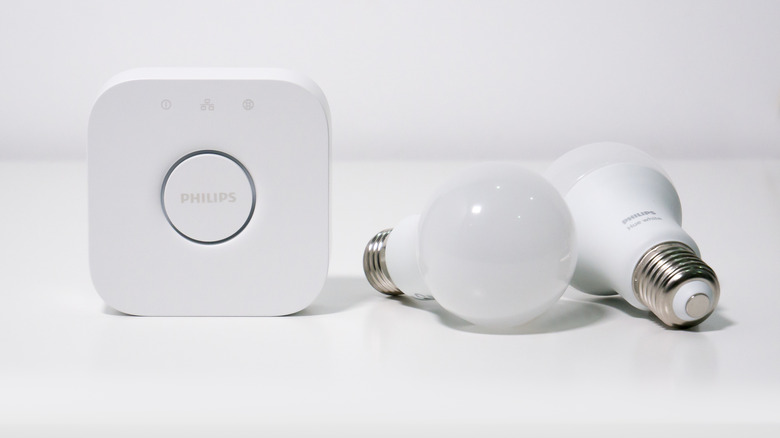
- Dedicated Mesh Bridges: Protocols like Zigbee and Z-Wave rely on centralized bridges (such as the Philips Hue Bridge) that connect local hardware without chewing up Wi-Fi bandwidth. Because these networks form a mesh—where devices relay signals to one another—accessories located far from the primary hub remain connected and responsive.
- The Promise of Thread: Among modern protocols, Thread stands out as the gold standard. Utilizing low-power mesh technology, Thread allows compatible devices to talk directly to one another locally. Crucially, certain high-end Wi-Fi accessories can act as Thread "border routers," bridging the gap between local mesh networks and wider platforms without demanding continuous internet access.
2. Factoring in the Power Problem
Internet outages are frequently accompanied by—or directly caused by—power outages due to severe weather or grid failures. While building an entirely self-sustaining smart home featuring whole-home battery backup systems (such as Tesla Powerwalls or similar setups) is ideal, the financial reality puts this out of reach for most consumers, with costs running well into the tens of thousands of dollars.
Instead, look for smart accessories with built-in redundancy:
- Onboard Battery Backups: Products like the Philips Hue Go portable smart lamp connect to a bridge for advanced automation but feature internal batteries that keep them illuminating spaces during unexpected power cuts.
- Fail-Safe Thermostats: Most smart thermostats are engineered to retain their last programmed schedule locally on the device’s onboard memory, ensuring your HVAC system continues to function even if communication with the mobile app is temporarily lost.
- Manual Overrides: Never completely abandon physical controls. Smart switches and bulbs should always maintain intuitive manual functionality so family members or guests can operate them normally during technical glitches.
Future Outlook
As the smart home market matures, industry standardization is steadily driving out the chaotic, walled-garden approach that defined the previous decade. The widespread adoption of the Matter standard—backed by Apple, Google, Amazon, and hundreds of smaller manufacturers—explicitly prioritizes local, offline communication over cloud-dependent execution.
In the coming years, we can expect hardware manufacturers to place a much heavier emphasis on "local-first" design principles. Consumers will increasingly demand transparency regarding how devices behave when disconnected from the wider web. Furthermore, as edge computing advances, local smart home hubs will become more powerful, capable of running complex AI-driven automations, local facial recognition for security cameras, and voice processing entirely on-premise.
By shifting your purchasing mindset away from the cheapest, most superficially convenient Wi-Fi gadgets and toward robust, hub-based, and mesh-enabled ecosystems, you can future-proof your living space. A truly smart home shouldn’t leave you in the dark just because your internet service provider dropped the ball.