Executive Overview
As artificial intelligence and machine learning sweep through digital advertising, Google Ads has steadily automated the complex machinery that once required constant, manual tinkering by human practitioners. From smart bidding and automated asset combinations to dynamic keyword matching and cross-network budget allocations, the platform’s algorithms now govern the lion’s share of day-to-day campaign execution.
Yet, this shift has precipitated a silent crisis in digital measurement.
Advertisers who rely on traditional, platform-native metrics—such as cost-per-click (CPC), headline conversion rates, and surface-level return on ad spend (ROAS)—are increasingly finding a dangerous disconnect between their Google Ads dashboards and their actual bottom-line revenues. When algorithms are trained on low-intent signals like button clicks, form interactions, and abandoned checkouts, Smart Bidding efficiently scales the wrong behavior.
This comprehensive analysis explores the architectural flaws of modern conversion setups, the critical migration of Local Services Ads (LSAs) into Performance Max, and the rigorous strategic frameworks required to bridge the gap between ad platform reports and executive financial realities.

Detailed Chronology: The Shift Toward Automated Infrastructure
The evolution of Google Ads over the past decade can be defined by a single trajectory: the progressive removal of manual controls in favor of machine-driven optimization.
- The Manual Era (Pre-2018): Advertisers directly dictated keyword matches, exact bid adjustments by device or geography, and granular ad scheduling. Success relied heavily on meticulous spreadsheet management and tactical adjustments to individual keywords.
- The Rise of Smart Bidding (2018–2022): Google introduced advanced machine learning models (Target CPA, Target ROAS, Maximize Conversions) that weighed billions of contextual signals in real time during every single auction. While liberating marketers from tedious manual bid shifts, this era introduced the first wave of "black-box" optimization challenges.
- The Performance Max Dominance (2023–2025): Google consolidated disparate campaign types into unified, cross-network environments like Performance Max. Algorithms gained heavy influence over creative assets, channel placement (Search, Display, YouTube, Gmail), and query matching, reducing human intervention primarily to input configuration.
- The Structural Convergence (2026 and Beyond): Google’s recent initiative to sunset standalone platforms—most notably migrating Local Services Ads (LSAs) directly into the Performance Max ecosystem—signals the final frontier of platform automation. Marketers are no longer just managing ad groups; they are managing data feeds that dictate algorithmic behavior across entire business verticals.
Supporting Context & Metrics: The Danger of the 9:1 Signal-to-Noise Ratio
To understand why automated campaigns often fail to deliver tangible business growth despite glowing platform reports, one must examine the mechanics of signal engineering.
Smart Bidding is fundamentally a pattern-matching engine. It evaluates user queries, historical search intent, device signatures, and behavioral clusters to identify users who resemble past "converters." However, the algorithm does not inherently know the difference between a high-value customer and an idle browser; it relies entirely on the conversion architecture fed to it by the human advertiser.
Consider a classic structural failure often uncovered during account audits:

- A Performance Max campaign generates thousands of clicks and reports a stellar conversion rate.
- Beneath the surface, the primary conversion column lumps actual purchases together with micro-conversions: basic button clicks, newsletter sign-ups, PDF downloads, and abandoned checkouts.
- The algorithm registers these micro-actions as successful outcomes with equal weight.
In many severely misconfigured accounts, the signal-to-noise ratio tilts heavily—sometimes reaching 9:1 against the algorithm. Because button clicks and form interactions are vastly easier to generate than completed transactions, Smart Bidding aggressively hunts down users who perform these low-friction tasks. The campaign appears hyper-efficient inside the dashboard, yet bank accounts remain stagnant because the algorithm is expertly optimizing for the wrong consumer behavior.
The Primary vs. Secondary Conversion Framework
Fixing this crisis requires treating conversion tracking as an architectural discipline rather than a basic tag-management chore. Advertisers must strictly separate goals using Google’s Primary vs. Secondary framework:

- Primary Conversions: These are strictly reserved for true macro-outcomes—completed ecommerce transactions, verified sales-qualified leads (SQLs), and booked appointments. Every primary action directly trains the machine learning model. If a conversion cannot be tied directly to a dollar of revenue or a verified pipeline, it does not belong here.
- Secondary Conversions: These operate in observation mode, populating reporting columns without contaminating the training data. Micro-conversions (cart adds, pricing page views, video watches) live here, providing deep diagnostic insight into funnel bottlenecks without tricking the bidding algorithm into chasing low-intent traffic.
Official Statements and Industry Insights: Navigating the LSA-to-PMax Migration
The urgency of upgrading measurement infrastructure is underscored by platform migrations, such as Google’s transition of Local Services Ads (LSAs) into Performance Max campaign types with pay-per-lead goals.
Industry experts and specialized tracking providers, such as CallRail, have highlighted the hidden friction points of this transition:

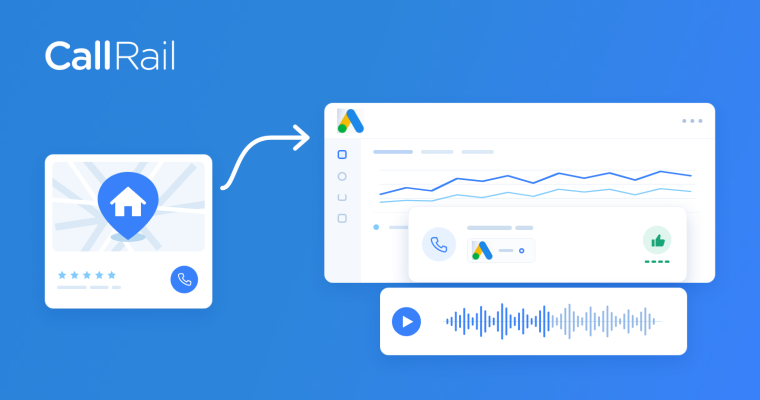
"If you run Local Services Ads, you’re about to log in one morning and land somewhere different… Your campaigns come along automatically, your ads keep showing in the same places, and you keep paying per lead. But the place you go to manage all of it is changing; your performance history doesn’t come with you."
When Google migrates LSA accounts into Performance Max, historical performance reports—including impressions, historical spend, weekly lead counts, and ad-level data—do not transfer. They are permanently deleted after the migration date.

For advertisers, this introduces a severe blind spot. Without a pre-migration baseline, marketing teams lose their historical cost-per-lead (CPL) benchmarks. Furthermore, if businesses rely on a single main phone line rather than dedicated dynamic tracking numbers, inbound leads from paid search, organic maps, and repeat customers blur into an indistinguishable stream. Once platform dashboards reset, auditing lead quality becomes nearly impossible without robust external CRM and call-tracking data.
Future Outlook: Translating PPC Metrics into CFO-Level Language
As artificial intelligence tightens its grip on auction execution, the role of the modern PPC strategist is shifting away from mechanical optimization and toward data architecture and financial attribution.
Future-proofed marketing teams must look far beyond standard platform metrics and align their reporting with the indicators that matter most to Chief Financial Officers and executive boards:
- Customer Acquisition Cost (CAC): Moving past immediate CPL figures to measure the total combined sales and marketing expenses required to acquire a paying customer over a complete sales lifecycle.
- Customer Lifetime Value (LTV): Evaluating which campaigns and channels drive transactional buyers versus high-value, repeat customers or long-term subscription renewals.
- Incremental Growth and Media Mix Modeling (MMM): Utilizing advanced attribution approaches to prove that ad spend generates net-new revenue that would not have occurred organically, insulating marketing budgets from arbitrary cuts.
- Rigorous Pre-Change Baselines: Documenting downstream performance metrics (qualified lead rates, close rates, booked jobs, and profitability margins) weeks before major platform updates or automated migrations take effect.
Conclusion
Google Ads automation is not a temporary trend; it is the permanent baseline of digital advertising. Advertisers cannot outsmart sophisticated machine learning algorithms by wrestling for control of individual bids or keyword match types.

Instead, control in the age of AI belongs to those who master input engineering. By establishing pristine conversion architectures, separating primary business outcomes from secondary noise, and tying platform execution directly to real-world financial results, marketers can ensure that automation works for the business—rather than blindly optimizing for the wrong targets.