Executive Overview
In the rapidly evolving landscape of contemporary American media, the boundaries separating political satire, high-stakes access journalism, and personal diplomacy have grown increasingly porous. Few figures illustrate this paradigm shift quite as vividly as HBO’s veteran late-night host, Bill Maher. Long celebrated by liberal audiences for his blistering critiques of conservative orthodoxy, religious dogma, and populist politics, the 70-year-old provocateur has recently charted a distinctly contrarian course.
This ideological recalibration was thrown into sharp relief earlier this month when Maher—alongside conservative musician Kid Rock and sports commentator Stephen A. Smith—attended a high-profile, four-hour dinner at the White House as a guest of President Donald Trump. Far from remaining a private affair, the gathering triggered a wave of public fascination and political commentary. Following the dinner, President Trump signaled to reporters that Maher’s sharp on-air criticisms are largely performative, asserting that the comedian "likes me a lot more than people understand."
Rather than shying away from the ensuing controversy, Maher leaned into it with characteristic defiance. During the opening monologue of Real Time with Bill Maher, he addressed his critics directly, framing his embrace of bipartisan dining with the blunt declaration: "Yeah, I did it again, bitches… You know what? Fuck you. I like these dinners."
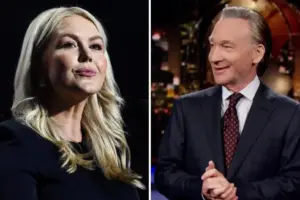
This escalating rapport with Trumpworld moved from the social realm to the television studio during a recent Friday night broadcast, when Maher welcomed former White House Press Secretary Karoline Leavitt as his primary interview guest. The booking itself was a striking exercise in rehabilitation. Only months prior, Maher had relentlessly mocked Leavitt on air following her controversial defense of President Trump’s abrasive treatment of Bloomberg News reporter Catherine Lucey aboard Air Force One.
Yet, rather than subjecting his guest to a rigorous journalistic interrogation, Maher adopted an uncharacteristically gentle approach. The interview avoided tough follow-up questions on critical foreign policy matters and the well-trodden "White House-to-Fox News" career pipeline, instead focusing on lighthearted banter, compliments toward the administration, and shared gripes about political correctness.
This pivotal moment underscores a broader, ongoing debate within the media ecosystem: As political tribalism deepens, is late-night television evolving into an arena for genuine cross-aisle engagement, or is it succumbing to the allure of elite access at the expense of journalistic accountability? This report offers an in-depth examination of Maher’s evolving relationship with the administration, the mechanics of his recent interview with Leavitt, and the broader implications for political discourse in America.
Detailed Chronology: From Air Force One Outrage to White House Banquets
To fully appreciate the significance of Maher’s recent pivot, one must trace the winding and often contradictory trajectory of his interactions with Trumpworld over the past year. The ideological friction between Maher and the Trump administration has historically been sharp, characterized by uncompromising monologues and scathing characterizations. However, the dynamics of political access have gradually transformed these adversarial positions into a complex, symbiotic relationship.
The Catalyst: The "Quiet, Piggy!" Controversy
The tension between Maher and Karoline Leavitt—who stepped down from her high-profile role as White House Press Secretary in August—originated from a flashpoint earlier this year. Aboard Air Force One, President Trump drew widespread criticism when he aggressively shouted, "Quiet, piggy!" at Bloomberg News reporter Catherine Lucey after she pressed him regarding his historical association with Jeffrey Epstein.
When the incident sparked national outrage, Leavitt stepped up to defend the president’s conduct during a press briefing. In a statement that stunned many media observers, she spun the aggressive outburst as a virtue, claiming:
"It’s actually admirable. It’s the president being frank, open, and honest. It’s actually good."
The defense did not sit well with Maher. On a subsequent episode of Real Time, he targeted Leavitt’s spin directly, delivering a sharp and crude jab where he joked back at her: "Well, in that case: Shut up, bitch." The remark encapsulated Maher’s signature brand of edgy, combative late-night humor—one that frequently flirts with controversy and draws fierce pushback from progressive critics who argue it crosses the line into misogyny and gratuitous insult.
The Four-Hour White House Summit
Despite the hostile rhetoric traded on cable television, the realities of political access often transcend public feuds. Earlier this month, Maher found himself on the guest list for an exclusive White House dinner hosted by President Trump. The guest list itself was an eclectic mix of cultural and political heavyweights, featuring conservative rocker Kid Rock, sports media fixture Stephen A. Smith, and the veteran HBO host.
According to reports, the dinner stretched across four hours, moving far beyond standard photo-op pleasantries into substantive, extended conversation. The encounter clearly left an impression on the commander-in-chief. Speaking to reporters in the aftermath of the event, Trump demystified Maher’s critical television persona, suggesting that the host’s televised barbs are largely theater and that Maher "likes me a lot more than people understand."
The Monologue Defiance
Rather than attempting to downplay the summit to appease his predominantly liberal core audience, Maher embraced the controversy head-on during his Friday night monologue. Stepping up to the podium, he confronted his critics with characteristic irreverence:
"Yeah, I did it again, bitches. You know what? Fuck you. I like these dinners."
The defiant admission set the tone for an episode that would challenge conventional wisdom regarding how political satirists ought to engage with figures they routinely skewer. Maher’s position was clear: He refuses to let partisan purity tests dictate his social calendar, even if it alienates viewers who expect late-night hosts to act as unyielding foot soldiers for the political resistance.
Supporting Context & Metrics: The Anatomy of a Soft-Ball Interview
When Karoline Leavitt walked onto the Real Time set following her departure from the White House, the stage was set for what many media analysts anticipated would be a fierce reckoning. After all, Leavitt had spent months serving as the chief defender of an administration that Maher frequently critiques, and the two had previously traded public insults over the Air Force One controversy.
Instead, viewers witnessed an interview characterized by softball questions, mutual flattery, and a notable absence of rigorous cross-examination.
Navigating the Trump-Fox News Pipeline
The conversation touched briefly upon Leavitt’s career trajectory. When Maher asked her about her decision to leave the high-stress post of press secretary, Leavitt explained that she wanted to dedicate more time to raising her two young children, aged two and six months.
However, Maher failed to explore the broader systemic questions surrounding the revolving door between government service and conservative media infrastructure. He did not press her on the ethics of the modern political-media pipeline, given that Leavitt was immediately transitioning into a prominent role as a Fox News pundit, effective November 1.
Instead, the dialogue veered away from institutional critique and toward lighthearted architectural banter. Maher shifted the conversation to Trump’s proposed renovations, playfully defending the president’s desire to construct a new White House ballroom—and even joking about turning the press pool into a literal swimming pool.
"You know what? This is the one thing that people get mad at me [about]… I don’t give a shit about any of this," Maher confessed to the audience. "I like the ballroom! America does need a ballroom. It’s the United States of America."
Avoiding Foreign Policy Accountability
The lack of journalistic rigor extended beyond media critique into matters of grave geopolitical consequence. During the segment, Leavitt enthusiastically touted the administration’s aggressive foreign policy posture, specifically defending Trump’s ongoing military and economic confrontation with Iran.
Despite the high stakes of international conflict and the profound implications of the administration’s Middle East strategy, Maher offered zero follow-up questions. He did not challenge her assertions, nor did he ask for empirical substantiation of the administration’s claims regarding Iran’s nuclear ambitions or regional proxies.
Instead, the conversation drifted toward personal observations about political style. Maher offered a litany of compliments, remarking that Trump ultimately "gets it." When Leavitt attempted to draw a favorable comparison between Trump and his predecessor, claiming that Trump was "far more sane than the last [president]," whom she characterized as "a mental patient," Maher intervened not to defend the institution of the presidency or challenge the inflammatory rhetoric, but rather to offer a modest endorsement of Trump’s vitality: "He’s far more energetic."
Official Statements and Public Reactions
The cozy nature of the Maher-Leavitt exchange—and the broader rehabilitation of Maher’s relationship with Trumpworld—sparked immediate reactions across the political and media spectrum.
The White House Perspective
Speaking to reporters on background following the White House dinner, administration officials underscored the president’s ability to forge personal rapport with cultural figures across ideological lines. The message from the inner circle was unmistakable: President Trump views personal charm and direct engagement as powerful tools to disarm ideological opponents.
Leavitt herself brought this sentiment directly onto the airwaves during her Real Time appearance, relaying a direct message from the Oval Office to the host:
"The president sends his regards. I told him I was coming on the show and he said, ‘Tell him he loved that dinner and he knows it.’"
Maher’s candid response—"I do like it"—served as an official acknowledgement that the mutual hostility often projected on cable television screens frequently yields to pragmatic charm in private settings.
Media Critics and Progressive Pushback
The reaction from progressive media critics and regular viewers was swift and pointed. Across social media platforms and television commentary panels, critics argued that Maher’s approach represented a dangerous capitulation. By trading tough investigative journalism for access and entertainment value, critics contend, late-night hosts risk normalizing controversial administration policies and shielding officials from accountability.
Media analysts pointed out that Maher’s refusal to challenge Leavitt on substantive policy issues—ranging from executive overreach to foreign interventions—transformed what should have been a high-stakes journalistic accountability check into an unearned public relations platform.
Future Outlook: The Evolution of Late-Night Discourse
As the American political landscape braces for future electoral cycles and intensifying polarization, the role of comedians and commentators like Bill Maher remains a subject of intense debate.
Maher has never claimed to be a journalist, a distinction he frequently deploys as a shield against critics who demand objective journalistic standards from his HBO platform. He is, first and foremost, a political satirist, provocateur, and commentator. However, as late-night hosts increasingly occupy the space once reserved for hard-hitting journalists and political interviewers, the ethical obligations of their platforms face unprecedented scrutiny.
What Lies Ahead for Real Time?
- Normalization vs. Access: Maher’s willingness to sup with political adversaries demonstrates that he values conversational access and contrarian independence over ideological conformity. Whether this approach bridges cultural divides or merely normalizes controversial political figures remains the central question for his audience.
- The Ratings and Relevance Game: In an era of fragmented media consumption, controversy drives engagement. Maher’s willingness to break bread with Trumpworld ensures that Real Time remains a must-watch cultural touchstone, even as it alienates progressive purists.
- The Death of Traditional Accountability: As politicians increasingly bypass hostile mainstream media outlets in favor of friendly podcasts, alternative platforms, and comedians willing to offer softball interviews, the traditional watchdog role of the press faces an existential crisis.
Ultimately, Bill Maher’s dinner at the White House and his amiable interview with Karoline Leavitt serve as a mirror reflecting the state of modern American discourse. In a world where political tribalism often demands absolute enmity, Maher’s refusal to play by the traditional rules of partisan warfare highlights both the potential for cross-aisle dialogue and the perilous trade-offs of prioritizing charm over accountability.