Executive Overview: The Rebellion Against the "Tiny Tablet"
For the better part of a decade, the smartphone industry has been trapped in a singular, relentless pursuit: bigger is better. As displays have expanded into the six-inch-plus territory, the smartphone has evolved from a handheld communication device into a pocket-sized tablet. While this trend has been welcomed by power users, video consumers, and mobile gamers, it has left a significant demographic behind: those who prioritize ergonomics, one-handed usability, and a device that feels like a tool rather than a billboard.
Enter the "Enough Phone," a disruptive new project currently in its prototype phase that aims to reclaim the lost territory of the compact smartphone. With dimensions echoing the beloved, discontinued iPhone 13 mini, the Enough Phone is positioning itself not just as a gadget, but as a philosophy. It promises a "small, modern, and enough" experience, catering to users who are tired of reaching for the top corners of gargantuan screens. As the tech industry obsesses over foldable screens and AI-integrated behemoths, the Enough Phone is betting that there is a quiet, yet passionate, market for simplicity and compact design.
The Chronology of the Small-Phone Exodus
To understand why the Enough Phone is such a polarizing and necessary experiment, one must look at the historical trajectory of smartphone form factors.
The Peak of Compact Design (2018–2021)
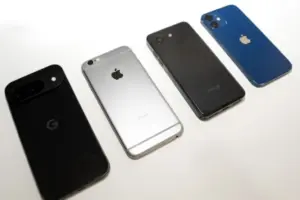
The industry once understood the value of the "mini" form factor. Apple’s iPhone 12 and 13 mini were testaments to the fact that high-end performance could exist in a chassis that fit comfortably in a palm. Users praised these devices for their weight-to-performance ratio and the ability to navigate apps with a single thumb—a feature now considered a luxury.
The Great Upsizing (2022–2026)
As consumers flocked toward streaming services and TikTok, the market demand shifted. Manufacturers responded by phasing out smaller models. The iPhone mini line was unceremoniously axed, replaced by the "Plus" and "Pro Max" variants that now dominate shelf space. By late 2026, the industry standard has largely settled into a landscape where anything under 6.1 inches is considered a niche, budget-oriented afterthought, rather than a flagship-tier option.
The Genesis of "Enough" (2026)
The Enough Phone project emerged as a direct response to this void. Born from a desire to solve the "ergonomic crisis," the team behind the device spent the better part of this year refining a prototype that bridges the gap between retro-compact design and modern internal specifications. Launched via Kickstarter in November 2026, the project is currently in its critical feedback phase, collecting capital and community input to finalize its production run.

Supporting Context: Metrics and Technical Reality
The Enough Phone’s design language is rooted in precise, intentional measurements. Measuring approximately 133mm by 64mm and staying under 12mm in thickness, it mirrors the physical footprint of the legendary iPhone 13 mini.
Display and Visual Fidelity
The display is a focal point of debate. With a resolution of 1520 x 720, the 5.3-inch screen is admittedly not the sharpest on the market. In an era where 2K OLED panels are the norm, this lower resolution is a calculated compromise. The manufacturers argue that at this screen size, the difference is negligible for the average user, and the tradeoff in power efficiency is a worthwhile sacrifice.
Internal Architecture
The phone is built around a 2.4GHz MediaTek Dimensity 7500 chipset, paired with 8GB of RAM. These specs are firmly mid-range, but they are more than adequate for the "intentional" user experience the brand promotes.
- Storage: 128GB of internal storage, supplemented by a rare, user-accessible microSD card slot.
- Optics: A high-resolution 50MP Sony IMX766 rear sensor and a 32MP selfie camera, challenging the notion that "small" must mean "compromised camera."
- Connectivity: Full 5G support, Wi-Fi 6, and a dual-SIM setup (eSIM and physical SIM).
The Repairability Manifesto
Perhaps the most radical departure from modern trends is the Enough Phone’s stance on longevity. While major OEMs continue to use proprietary adhesive and locked-down components to discourage DIY repairs, the Enough Phone is designed for longevity.
The device features a user-replaceable 3,500 mAh battery—a feature that was once standard but has become nearly extinct. By utilizing standard, accessible screws, the company is positioning the phone as a device intended to last into the next decade. The company has publicly committed to software support through 2032, a massive statement of intent in an industry that frequently abandons devices after four or five years.
Official Statements and Operating System Philosophy
One of the most intriguing aspects of the Enough Phone is its "operating system neutrality." Recognizing that many users who want a small phone also want a distraction-free experience, the company is offering a dual-path software strategy:

- Android 17: For those who want the full ecosystem of the Google Play Store and modern app support.
- OdysseyOS: A minimalist, "de-Googled" operating system developed by SLEKE. OdysseyOS is marketed toward users who are looking to move away from the "attention economy" of modern smartphone usage. It is, for lack of a better term, a modern "dumb phone" interface that keeps the hardware capable but the software quiet.
In a recent press statement, the design team noted: "We didn’t want to build a phone that demands your attention; we wanted to build a phone that serves your needs. If you want a digital powerhouse, you can have it. If you want a tool that gets out of your way, you can have that, too."
Future Outlook: Can the Mini Make a Comeback?
The success of the Enough Phone is far from guaranteed. With a projected retail price of $599 and a launch date slated for May 2027, the company faces a steep climb. It is competing against the secondary market of refurbished iPhone 13 minis, which are still highly sought after and competitively priced.
However, the Enough Phone has a unique advantage: it is the only manufacturer actively marketing to the "compact-enthusiast" demographic. If the Kickstarter campaign reaches its goals and the final production units meet the prototype’s specifications, the Enough Phone could trigger a shift in the market. It doesn’t need to topple the iPhone or the Galaxy; it only needs to prove that a dedicated, loyal, and profitable user base exists for the small-form-factor device.
The Road to 2027
As we look toward the May 2027 launch, the industry will be watching closely. The "Founders’ Edition" incentives—including pre-installed screen protectors, specialized toolkits for repairs, and exclusive backplate screws—suggest a brand that understands its audience intimately.
If the Enough Phone succeeds, it will force a conversation among the tech giants. It will raise the question: if a startup can build a repairable, compact, and high-quality phone, why can’t the industry leaders? For now, the Enough Phone stands as a beacon for the minority who still believe that a phone should fit in the pocket, not take it over. Whether it remains a boutique curiosity or becomes the vanguard of a new hardware movement remains to be seen, but for the first time in years, the horizon for the small-phone fan looks significantly brighter.