Executive Overview
The landscape of digital commerce is undergoing a structural shift, moving from passive, search-driven browsing to a proactive, "agentic" paradigm. This week, the ecommerce industry witnessed a flurry of high-stakes investments and technological deployments that underscore a singular trend: the integration of Artificial Intelligence as an active participant in the consumer purchase journey.
From the skies above to the backend of global supply chains, the tools introduced this week—ranging from AI-driven tax classification to autonomous shopping agents—are designed to minimize friction. While giants like Amazon and Walmart solidify their dominance through rapid logistics and conversational AI, mid-market retailers are gaining access to sophisticated tools that allow them to compete on a level playing field. As we move deeper into Q4 2026, the mandate for merchants is clear: automate the routine, personalize the experience, and ensure compliance in an increasingly complex digital regulatory environment.
Detailed Chronology: Innovations Shaping the Week
Logistics and Fulfillment at the Speed of Flight
The week began with a significant scaling of drone delivery as Walmart announced a nationwide expansion of its partnership with Zipline. With Zipline securing $1.5 billion in fresh capital, the focus has shifted toward building the necessary infrastructure for "ultra-fast" air delivery. By activating 300 additional stores, Walmart is not merely testing a novelty; it is building a localized fulfillment mesh that promises to make same-day, air-dropped goods a standard consumer expectation.

The Rise of the "Agentic" Web
The most disruptive announcements this week centered on AI agents capable of making decisions on behalf of consumers.
- Microsoft Clarity: By integrating Brand Agents into Copilot and Bing, Microsoft is essentially turning its search ecosystem into a shopping mall. Shopify and WooCommerce merchants can now have their products surfaced directly in AI-generated recommendations, bypassing the traditional "ten blue links" of search.
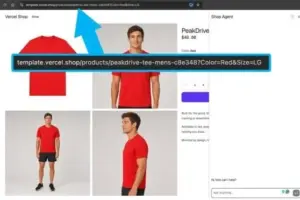
- Firmly’s Series A: The $15 million funding round for Firmly marks a milestone in "Agentic Commerce." Their "Ask Agent" tool is designed to live on merchant websites, handling complex queries and in-chat checkouts, bridging the gap between a chatbot and a full-scale digital sales associate.
- Cashfree’s WebMCP Integration: Perhaps the most technical but significant update, Cashfree’s support for the WebMCP standard allows AI agents to interact with websites as humanly as possible. By labeling agent-assisted payments, the industry is creating a new audit trail for automated commerce.
Global Market Movements
In Asia, TikTok has launched a standalone Shop app in Singapore, Malaysia, Thailand, and the Philippines. This move indicates a strategy to decouple the social discovery experience from the transactional reality of the TikTok Shop, providing a dedicated space for livestream shopping, exclusive deals, and native order tracking.
Meanwhile, Amazon is diversifying its conversational interface by launching text-based shopping via Alexa. By allowing users to text requests to an AI, Amazon is meeting customers in the messaging apps they already use, further cementing its role as the default utility for household replenishment.

Supporting Context & Metrics: The State of AI Reliability
While innovation is rampant, performance remains a concern. A landmark study released this week by Visa—the "Agentic Commerce Benchmark"—serves as a necessary reality check for the industry.
Visa’s testing of 22 leading AI models on realistic shopping tasks yielded sobering results: 42.8% of test runs failed. The models were evaluated on their ability to interpret shopper intent, curate selections, and gracefully decline purchases when no suitable product was available. This failure rate highlights the "uncanny valley" of AI commerce, where an agent might sound persuasive but lacks the logical rigor to execute a transaction correctly.
This metric serves as a critical warning for merchants: the "agentic" revolution is still in its infancy. For those integrating these tools, the risk of "hallucinated" orders or erroneous product recommendations remains a tangible threat to customer retention and brand equity.

Official Statements and Strategic Shifts
Enterprise-Grade Automation
Blue Yonder has launched an AI-native order management solution that aims to address the complexity of modern fulfillment. By orchestrating the journey from the initial delivery promise to returns, Blue Yonder is targeting the "post-purchase anxiety" that plagues ecommerce brands. "The shift is toward global intelligence," noted a spokesperson, reflecting the industry’s move away from reactive spreadsheets toward predictive, automated supply chain orchestration.
Compliance as a Competitive Edge
The integration of Listrak with Dataships highlights the growing pressure on retailers to navigate global data privacy laws. By automating consent management at the point of entry, merchants can ensure that their marketing databases are "clean" from the moment of acquisition. Similarly, Avalara’s new "Intelligent Tax Classification" tool, trained on a massive dataset of 3 billion items, underscores the necessity of AI in back-office operations. By providing confidence-scored tax codes, Avalara is removing the human-error factor from a process that has historically been a legal minefield for scaling brands.
Future Outlook: The Convergence of Human and Machine
As we look toward the remainder of the decade, three distinct pillars of the ecommerce experience are emerging:

- The "Invisible" Supply Chain: Logistics will increasingly become automated, with drones and AI-optimized fulfillment nodes reducing the time between "click" and "doorstep" to minutes rather than days. The success of Zipline suggests that the future of last-mile delivery is literally in the air.
- The Conversational Storefront: The traditional grid-layout ecommerce site will face competition from agentic interfaces. Whether through text-based shopping (Amazon) or conversational AI (Firmly, Microsoft), the storefront of the future may well be a dialogue rather than a gallery.
- The Professionalization of Support: The acquisition of Aventus by SupportNinja signals that the "human-in-the-loop" model is the gold standard for the near future. While AI agents will handle the bulk of inquiries, the premium experience will still rely on human-supervised operations to resolve the edge cases that machines cannot yet navigate.
Final Synthesis
The current week has confirmed that the "ecommerce era" is evolving into the "agentic era." Merchants who prioritize the integration of AI—not just in their marketing, but in their tax compliance, supply chain management, and checkout flows—will likely capture the next wave of consumer loyalty.
However, the cautionary data provided by the Visa benchmark should not be ignored. The bridge between a "functional" AI and a "profitable" AI is built on rigorous testing, clear compliance, and a commitment to maintaining the human touch where it matters most. As these tools continue to mature, the retailers who will succeed are those who view AI as a force multiplier for their human teams, rather than a total replacement for the nuances of retail commerce.
For those developing or launching new tools in this space, remember that the goal of technology is not to replace the customer experience, but to make it so seamless that it becomes entirely intuitive.