Executive Overview: Beyond the Silo
For decades, the marketing industry operated under a clear, albeit artificial, division of labor. Media buying was a discrete function, a siloed pillar of the marketing machine that sat neatly alongside creative development, CRM, and technology stacks. However, that era of departmental isolation is not just fading—it is effectively extinct.
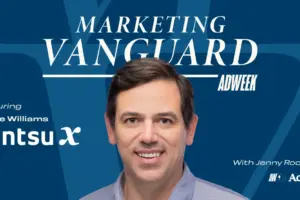
In the latest installment of Marketing Vanguard, host Jenny Rooney sits down with Bruce Williams, CEO of dentsu X North America, to dissect the profound structural shifts currently redefining the agency-client relationship. The core thesis of their conversation is as provocative as it is practical: Media is no longer a peripheral marketing tactic. Instead, it has become the connective tissue that binds creative, commerce, data, and technology into a singular, cohesive operating system.
As brands grapple with an increasingly fragmented consumer journey, the traditional Request for Proposal (RFP) process for media is rapidly becoming an artifact of the past. Clients are no longer asking for media buyers; they are demanding business architects capable of orchestrating integrated, outcome-based experiences. This article explores the implications of this shift, the death of the standalone media RFP, and how agencies must pivot to survive in an era defined by interoperability and AI-driven intelligence.
Detailed Chronology: The Evolution of the Media RFP
The transition from "media-as-a-service" to "media-as-an-operating-system" did not happen overnight, but the acceleration of this trend in the last 24 months has been seismic.
The Decline of the Isolated Brief
Historically, the procurement process for agencies followed a rigid path: a brand would issue an RFP for a media agency to handle planning and buying, while separate briefs would go to creative shops and CRM consultancies. Williams notes that these standalone asks are disappearing.
"Brands are increasingly looking for integrated briefs," Williams explains. "They aren’t asking, ‘Can you buy media well?’ anymore. They are asking, ‘Can you help us operate better?’"
This change represents a fundamental shift in the definition of value. When a brand asks an agency to solve a "bigger transformation problem," they are essentially outsourcing the integration of their fragmented internal departments. The media agency is no longer a vendor; it is becoming the central nervous system for the brand’s entire go-to-market strategy.
The Friction of Fragmented Structures
The persistence of internal marketing silos is perhaps the greatest barrier to modern brand growth. While corporations remain organized into distinct departments—often divided by channel or platform—the end consumer operates in a seamless, holistic reality.
"Your customer doesn’t experience your brand in silos," Williams warns. "Fragmentation remains one of the industry’s longest-running problems because disconnected internal structures eventually show up as disconnected consumer experiences." When a brand’s CRM data isn’t talking to its media spend, or when its creative messaging is misaligned with its commerce capabilities, the consumer feels the "seams." This friction is a direct cause of customer churn and diminishing returns on marketing investment (ROMI).
Supporting Context & Metrics: The Reality of the Modern Ecosystem
To understand the necessity of this shift, one must look at the technical debt that many global brands have accumulated. Over the last decade, the "MarTech stack" grew exponentially, often without a unifying strategy.
The Data Interoperability Imperative
Williams argues that the future of agency relationships depends on "interoperability and optionality." For too long, agencies operated on an "our way or nothing" model, forcing clients into proprietary, closed-loop systems. This approach created significant friction, locking brands into restrictive tech stacks that hindered agility.
The modern mandate is different. Agencies must now demonstrate an ability to work within the client’s existing data and technology ecosystems. If an agency cannot play well with a client’s current cloud provider or CRM suite, they become a liability rather than an asset. Openness is no longer a "nice to have"; it is a non-negotiable value proposition.
AI as the Glue, Not the Gimmick
A recurring theme in the discourse around digital transformation is the tension between massive, multi-year infrastructure projects and the need for immediate, "scrappy" tactical wins. Williams points to the work dentsu X has conducted with brands like Heineken as a case study for the middle path.
Rather than choosing between top-down infrastructure overhaul and bottom-up agility, the strategy focuses on combining the two. By integrating long-term data systems with local intelligence agents, brands can move competitive and market data directly into the hands of local decision-makers. This enables a brand to maintain global consistency while allowing for the hyper-local speed that modern commerce requires.
Official Statements: Insights from Bruce Williams
As CEO of dentsu X North America, Bruce Williams brings two decades of experience at the intersection of media strategy and organizational change. His perspective on the future of the agency-client dynamic is rooted in a philosophy of "connected operating models."
On the Role of the Modern Agency:
"The agency conversation has to shift. We are moving away from being tactical executors toward being partners in organizational transformation. If you aren’t helping your client integrate their creative, their data, and their commerce, you are essentially just a commoditized media buyer. That is a dangerous place to be in an automated, AI-driven world."
On the Myth of "The Perfect Channel":
"Brands need to move from channel-first planning toward operating systems built around outcomes. When you plan by channel—say, ‘we need to be on TikTok’—you’re thinking about the medium before the objective. When you build an operating system, you start with the business outcome, and the media becomes the variable that flows through that system to achieve it."
On AI Implementation:
"Don’t get paralyzed by the scale of AI. The winners in the next five years will be the ones who build the foundation, but remain scrappy enough to deploy AI agents that solve specific, localized problems for their teams on the ground."
Future Outlook: The Rise of the Outcome-Based Operating System
Looking toward the future, the integration of media into the broader business fabric is expected to accelerate. We are moving toward a reality where "media spend" and "business operation" become indistinguishable.
From Media Planning to Business Orchestration
The next phase of this evolution will likely see the rise of "Outcome-as-a-Service" models. Agencies will increasingly be compensated not for media volume or reach, but for their ability to move the needle on specific business outcomes—be it customer acquisition costs, lifetime value, or inventory turnover.
The Interoperable Future
As AI continues to mature, the agency that can orchestrate a client’s data across multiple, disparate systems will become the most valuable partner in the boardroom. The agencies that insist on proprietary, closed-loop ecosystems will find themselves sidelined by competitors who prioritize the client’s need for flexibility and interoperability.
Conclusion: The End of the "Media" Label
Ultimately, the term "media agency" may soon become a misnomer. As Williams suggests, the boundaries are dissolving. The most successful brands of the next decade will be those that view their marketing activities not as a series of disparate channels, but as a singular, living, breathing operating system.
For leaders and marketers, the message is clear: stop hiring for silos. Stop building for channels. Start building for connectivity. The brands that win will be those that treat their media strategy as the connective tissue for their entire business, transforming the way they operate, engage, and ultimately, grow.
To dive deeper into these insights and hear the full interview with Bruce Williams, watch the full episode of Marketing Vanguard on YouTube.