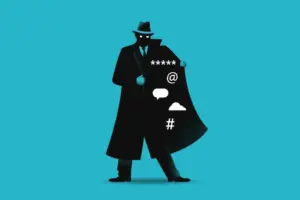
Executive Overview: A New Threat Paradigm
For decades, Silicon Valley operated under the assumption that its greatest security threats were digital—firewalls, encrypted backdoors, and sophisticated malware. However, the unfolding scandal involving Nvidia CEO Jensen Huang and his alleged involvement with a foreign intelligence asset has shattered this illusion. As the fallout from the "Alice Huang" honey-trap incident continues to dominate headlines, the tech industry is forced to confront a sobering reality: the most sophisticated AI models and chip architectures in the world are currently being guarded by individuals who have no training in counterintelligence.
The vulnerability is not in the code; it is in the boardroom. As companies move to the center of global geopolitical power, their leadership has become the primary target for foreign espionage. This article explores how modern intelligence operations are bypassing high-tech defenses by exploiting the most fundamental of human traits: the need for connection, validation, and intimacy.
Detailed Chronology: The Nvidia Scandal and Its Ripples
The narrative began with explosive allegations involving Nvidia CEO Jensen Huang. Reports surfaced linking Huang to Alice Huang, a former executive at a Singapore-based neocloud provider. Intelligence officials allege that Alice Huang acted as a conduit for foreign state interests, specifically focused on circumventing U.S. export controls. The accusations are staggering: the illicit smuggling of billions of dollars’ worth of restricted, high-performance Nvidia chips into China.
The Anatomy of the Compromise
The scandal suggests a classic "honey-trap" operation, yet it deviates from the Hollywood trope of clandestine midnight meetings. Instead, the relationship reportedly leveraged the professional and personal access afforded to an executive of her standing. By integrating herself into the inner circle of one of the world’s most powerful tech leaders, the alleged operative gained a vantage point on roadmap strategies, supply chain bottlenecks, and, most critically, the decision-making processes that dictate the flow of global technology.
Since the allegations broke, the tech industry has transitioned from memes and mockery to a state of heightened alert. While the internet initially treated the news with the typical irreverence of Silicon Valley culture, major players like OpenAI have begun shifting their internal policies, actively warning employees about "social engineering" and "affinity-based" threats.
Supporting Context: The Evolution of the Honey Trap
To understand why Silicon Valley is failing to defend itself, one must look at how the nature of the "honey trap" has evolved. Historically, these operations were the domain of diplomats and military officers—individuals who were screened, briefed, and trained to expect solicitation.
Beyond Romance: The "Friendship" Offensive
Aaron Brown, a former senior CIA officer and current founder of the software firm Lumbra, argues that the most effective honey traps today rarely involve romantic entanglement. "Friendship is actually the oldest honey-trap scheme around," Brown notes.
In the modern context, spies are masquerading as venture capitalists, potential customers, elite recruiters, or strategic consultants. By assuming these roles, they create a facade of legitimacy that does not require the target to fall in love—it only requires the target to feel comfortable enough to "open up."
The AI Multiplier Effect
Perhaps the most ironic aspect of this security crisis is the role of Artificial Intelligence in facilitating it. AI has drastically reduced the cost and time required to execute a sophisticated espionage campaign.
- Persona Crafting: AI tools can generate deepfake voices, synthetic social media histories, and perfectly curated professional backgrounds that stand up to casual scrutiny.
- Targeting: Large language models can scrape years of public data to identify the psychological triggers of a specific founder, enabling attackers to tailor their "pitch" with unnerving precision.
- Persistence: Where human handlers once had to manually manage a target, AI-driven automation can maintain multiple, long-term conversations across various platforms simultaneously, creating a web of influence that is difficult to untangle.
"The technology helps set the stage," says Perry Carpenter, a criminologist and chief deception strategist at KnowBe4, "but the deception ultimately plays out through human relationships."
The Economics of Influence
Why would a foreign power spend years cultivating a friendship with an executive assistant or a board member? The answer lies in the concept of the "shortest path."
In an era of robust cybersecurity, hacking into a server farm is an expensive, high-risk endeavor that often triggers automated defense systems. Conversely, a human target is an open door. By compromising a person who has access to export decisions, sensitive customer lists, or proprietary roadmaps, an attacker gains access to the "crown jewels" without ever triggering a firewall alarm.
This creates a dangerous dynamic of "Executive Exceptionalism." Within many tech firms, the CEO or founder is viewed as an untouchable entity—the visionary who is above the rules. This culture makes it nearly impossible for subordinates to report suspicious behavior. When no one feels comfortable questioning the CEO, the security perimeter effectively disappears.
Official Perspectives and Strategic Recommendations
Security experts emphasize that the solution is not to turn tech campuses into military-grade fortresses, but to cultivate a culture of "informed awareness."
Recognizing the Patterns
The first step in mitigation is identifying the signs of a "long game" operation:
- The Coincidence Trap: Encountering a new "friend" in social, professional, and industry settings with unusual frequency.
- The Boundary Creep: Initial interactions focus on professional topics, but slowly shift toward personal vulnerabilities or sensitive, non-public corporate data.
- The Urgency of Secrecy: An insistence on keeping certain meetings, introductions, or requests "off the record" or away from the standard corporate communication channels.
The "Gut Check" Methodology
Aaron Brown suggests a simple, brutal heuristic for founders and employees alike: "Would this person still be here if I lost my job tomorrow?" If the answer is no, the relationship may be transactional—and if it is transactional, it is potentially a security liability.
Eliminating Executive Exceptionalism
Criminologist Perry Carpenter argues that companies must standardize their security protocols across the board. "The idea that the rules don’t apply to people in power is a structural vulnerability," he says. Companies must foster an environment where employees at every level—from the intern to the CEO—feel empowered to raise flags about unusual requests, even when those requests come from the top.
Future Outlook: The New Security Reality
The AI industry has matured into a national security powerhouse faster than its corporate culture has been able to adapt. The irony remains stark: the very people who are building the most advanced tools for transparency and automation are the most vulnerable to the primitive, analog art of human manipulation.
As geopolitical tensions rise, the "soft" intelligence gathering currently targeting Silicon Valley is likely to increase in sophistication. We are entering an era where human intelligence (HUMINT) is the most valuable currency in the tech sector.
The Path Forward
Founders must accept that their role is no longer just to innovate, but to act as a primary security asset. Paranoia is not the goal; recognizing one’s status as a high-value target is. The companies that will thrive in this environment are those that prioritize "human firewalling"—teaching their employees to value skepticism as much as they value connection.
The Nvidia incident should serve as a wake-up call. The tech industry has spent decades focused on the bits and bytes of the digital world, but the next decade will be defined by its ability to protect the most unpredictable, complex, and vulnerable component of all: the human being. As the digital and physical worlds continue to blur, the most critical security patch of 2026 will not be a software update—it will be a shift in the collective consciousness of the Valley’s elite.