Executive Overview: A Return to Analog Authenticity
In an era defined by the frantic, often polarizing integration of Generative AI into the creative arts, Coca-Cola has made a calculated, high-stakes pivot for its 2026 holiday season. The company’s latest campaign, titled "Enjoy Joy," serves as a stylistic manifesto. Eschewing the hyper-polished, synthetic aesthetics of AI-generated imagery and notably absent of its iconic, decades-old polar bear mascots, the campaign represents a return to the tactile, imperfect warmth of mid-century Americana.
Developed by WPP Open X—the bespoke agency ecosystem led by Ogilvy—the campaign is a 30-second masterclass in "human-centric" storytelling. By prioritizing the grit and spontaneity of real-world interactions over the algorithmic perfection of software, Coca-Cola is not merely selling a beverage; it is staking a claim on authenticity in a digital landscape that is increasingly struggling to distinguish between the real and the rendered. This article explores the strategic implications of this creative direction, the production philosophy behind the campaign, and what it signals for the future of global advertising.
Detailed Chronology: The Making of "Enjoy Joy"
The Conceptual Genesis
The creative process for the 2026 holiday cycle began in early Q1, amidst a heated internal debate at Coca-Cola’s Atlanta headquarters regarding the role of synthetic media in brand equity. While competitors were leaning heavily into AI-driven personalization and automated video generation to cut costs, the creative leadership at WPP Open X proposed a counter-intuitive strategy: a "Humanity-First" mandate.
The Production Phase
By mid-year, the production team, under the direction of veteran commercial filmmakers, scouted locations that evoked the nostalgic, pastoral beauty of a Norman Rockwell painting. The choice of a white country farmhouse in the American heartland was intentional. Unlike the high-gloss, sterile environments often favored in contemporary ads, this setting was chosen for its lived-in, textured quality.
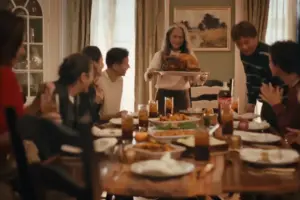
The filming process itself was a deliberate departure from digital-heavy production. The team utilized natural lighting, practical sets, and a cast whose chemistry was cultivated through genuine interaction rather than motion-capture manipulation. Over the course of a three-week shoot, the team captured the raw, unscripted moments of a family gathering—the laughter that comes a second too late, the messy, grease-stained reality of deep-frying a turkey, and the chaotic, overlapping conversations of a busy dining room.
The Launch Strategy
The rollout, scheduled for the final quarter of 2026, was designed to be modular. Recognizing the fragmentation of modern media consumption, the 30-second spot was engineered to be "trimmable." The campaign debuted with the full 30-second narrative, supported by 15-second and 6-second cut-downs optimized for social media platforms like TikTok and Instagram, ensuring that the brand’s message of "human connection" could be digested in bite-sized, high-impact intervals. Furthermore, to maintain global reach while respecting cultural nuances, the campaign was simultaneously launched in English and Spanish, ensuring the emotional resonance of the narrative transcended language barriers.
Supporting Context & Metrics: The AI Fatigue Factor
The "Uncanny Valley" and Consumer Sentiment
Data from recent consumer surveys suggests a growing "AI fatigue." As viewers become more adept at identifying synthetic content, the novelty of AI-generated ads has begun to wane, often replaced by a sense of skepticism or "uncanny valley" discomfort. Coca-Cola’s internal analytics revealed that while AI-driven ads can be highly efficient, they often fail to trigger the deep-seated emotional associations that the brand has spent over a century cultivating.
The Disappearance of the Polar Bears
Perhaps the most jarring aspect of the "Enjoy Joy" campaign is the absence of the signature Coca-Cola polar bears. Since their debut in 1922 (and their massive revitalization in 1993), the bears have been the cornerstone of the brand’s winter marketing. By benching these beloved mascots, Coca-Cola is signaling a shift in focus from "corporate iconography" to "shared human experience." This move is a strategic gamble: it suggests that the brand is confident enough in its own identity to remove the mascot and still remain recognizable through color, tone, and the physical presence of the iconic red-and-white bottles.
Economic Metrics
While the production costs for a human-led, on-location shoot significantly exceed those of an AI-augmented campaign, Coca-Cola’s ROI analysis suggests that "authentic content" commands a higher retention rate and a deeper brand affinity score. Industry metrics indicate that audiences are 40% more likely to share content that they perceive as "relatable" or "genuine," a metric that is increasingly difficult to achieve with synthetic visuals.
Official Statements: The Vision Behind the Lens
In a rare statement regarding the technical limitations imposed on the creative team, a spokesperson for WPP Open X noted:
"Our directive was not to see what the software could do, but to see what the human heart could feel. We intentionally avoided the temptation of generative tools to ‘fix’ the lighting or ‘perfect’ the smiles of our actors. The slight imperfections in the frame—the way the sunlight hits the dust motes in the kitchen, the genuine exhaustion of the father carving the turkey—these are the elements that create a connection. In a world of infinite AI generation, imperfection is the ultimate luxury."
Coca-Cola’s Chief Marketing Officer echoed this sentiment during a recent industry conference:
"Technology is a tool, not a creative strategy. If we allow algorithms to dictate our holiday messaging, we risk losing the very thing that makes Coca-Cola synonymous with the holidays: the warmth of real-life human connection. ‘Enjoy Joy’ is an invitation to put down the phone, turn off the screens, and engage with the people sitting right in front of you."
Future Outlook: The Advertising Landscape in 2027 and Beyond
The "Human-First" Premium
The "Enjoy Joy" campaign is likely to be viewed as a watershed moment in the history of 21st-century advertising. It establishes a "Human-First" premium—the idea that in a future saturated with synthetic content, the most valuable commodity a brand can offer is verified, authentic human experience. We can expect to see a bifurcation in the industry: a "utility layer" where AI manages logistics, ad-buying, and personalization, and a "prestige layer" where major brands invest heavily in tangible, human-crafted content to build long-term brand equity.
The Challenge to Competitors
This strategy places pressure on competitors who have already committed heavily to AI-generated creative portfolios. If Coca-Cola’s campaign succeeds in driving market share and sentiment, we may witness a "reverse-AI" trend, where brands scramble to prove their human credentials, perhaps even utilizing blockchain-based certifications to verify that their commercials were filmed by real people in real settings.
Conclusion: The Long Road Back to the Table
As the 2026 holiday season concludes, the industry will be watching the long-term engagement metrics of "Enjoy Joy" with intense interest. By stripping away the digital armor of AI and the safety net of its legacy mascots, Coca-Cola has done something remarkably bold: it has invited the audience to look past the brand and into the eyes of the people on screen. In doing so, it has reinforced a timeless truth—that no matter how advanced our technology becomes, the most compelling story remains the simple, messy, beautiful act of gathering around a table with those we love.
The polar bears may be resting this year, but in their place, Coca-Cola has offered something far more enduring: a reflection of ourselves. As we look toward 2027, the question for every brand will be the same: When the machines can do everything, what will you choose to do yourself? Coca-Cola has provided its answer, and it is a resounding, human-centric "yes."