Executive Overview: The Paradox of the Agency Model
In the modern marketing landscape, the "independent agency" badge has lost its inherent competitive edge. As the market becomes saturated with boutique firms and global conglomerates alike, the promise of differentiation through mere capabilities—strategy, creative, media, production, and increasingly, AI—has become a commodity. If you aren’t offering these services, you are building an ecosystem to scale them; if you are, you are simply one of many.
For agency founders and leaders who have spent decades perfecting the craft of building other people’s brands, there is a recurring, often dangerous, blind spot: the neglect of their own. After 22 years of navigating the shifting tides of the industry, the leadership behind the Rochester-based agency formerly known as Partners + Napier has arrived at a hard-won realization: if an agency’s brand does not actively evolve to reflect its current reality, it will eventually be defined by outdated perceptions.
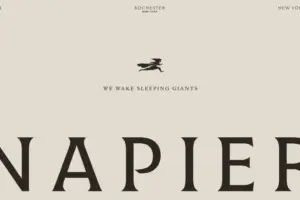
On October 22, the agency officially transitioned into a new era, rebranding as NAPIER. This wasn’t merely a cosmetic change; it was a strategic pivot designed to capture the essence of a legacy that began in 2004, while sharpening its focus on a specific, high-potential client base: the "sleeping giants." This transition serves as a blueprint for agency leaders who must grapple with the tension between honoring their history and ensuring their future relevance.
A Detailed Chronology: From the "Brave 40" to NAPIER
To understand the necessity of this rebrand, one must look at the trajectory of the firm. The story began in 2004, a pivotal year defined by a management buyout that saved the agency from the brink of dissolution.
The Foundation of Grit
The agency’s culture was forged in the fires of survival. The original 40 employees—a group now affectionately dubbed the "Brave 40"—did not just believe in the agency’s mission; they invested in it. In a move rarely seen in the corporate world, these employees pooled their own capital to purchase the signage that would hang above the door, a physical manifestation of their commitment. They were a scrappy, rascally outfit from Rochester, New York, with a singular chip on their shoulder: to prove that world-class ideas are not the exclusive domain of New York City or London.
Scaling Without Selling the Soul
By 2012, the agency reached an inflection point. To maintain competitiveness and scale, the leadership opted to sell to Project Worldwide. This partnership was strategic; the Detroit-based organization shared a common DNA of "grit." Crucially, the move to an employee-owned, independent model allowed the agency to maintain its soul while benefiting from the infrastructure of a larger network. Over the next decade, the firm steadily elevated its output, attracting elite talent and high-profile global brands.
The Catalyst for Change
As the agency grew, a subtle disconnect emerged. The brand, still operating under the legacy "Partners + Napier" moniker, no longer accurately communicated the firm’s sophisticated, agile, and modern capabilities. The name felt like a relic of a previous version of the company. It was time to reconcile the agency’s reputation with its reality.
In a surprising display of leadership, the founder stepped back from the creative direction of the rebrand. By empowering the leadership team to challenge every aspect of the agency—including the very name on the door—the firm ensured that the new identity was a collective vision rather than a top-down mandate. The result was a pivot toward "NAPIER," a name that distills 22 years of history into a single, punchy, and authoritative word.
Supporting Context: The Industry Landscape
The agency world is currently facing a "differentiation crisis." According to recent industry surveys, nearly 85% of mid-sized agencies struggle to articulate a value proposition that distinguishes them from their peers.
The "Sleeping Giant" Strategy
NAPIER’s new positioning is not a broad-market play. Instead, it targets what they classify as "sleeping giants"—established brands with significant market equity and scale that have, for one reason or another, hit a plateau. These are companies that possess the assets to dominate their categories but have fallen into "familiar patterns."
By narrowing their focus to these specific organizations, NAPIER is signaling a transition from a generalist service provider to a strategic growth partner. This is a deliberate departure from the common agency trend of "everything to everyone," favoring a high-conviction approach that requires the agency to be as provocative as the brands they represent.
The Role of Outside Perspective
During the rebranding process, the team utilized external consultants to audit their brand equity and test their new positioning with industry search consultants. The feedback was unanimous and served as a wake-up call: Be more provocative. The industry is crowded with "safe" messaging. To stand out, agencies must be willing to lean into their specific, unique "why."
Official Statements: A Philosophy of Abundance
"I’ve always believed in leading from a place of abundance," says the founder. "Making room for more people and ideas means trusting the people around you to see things you might not. I let go, and the rest of the leadership team led the rebrand with the freedom to challenge everything."
This philosophy of leadership—the act of relinquishing control to foster growth—is a rare trait in an industry often defined by founder-centric egos. The decision to move away from "Partners +" and toward the singular, powerful "NAPIER" represents a shift from a partnership-based narrative to an identity-based one. It is a bold move that acknowledges the agency has matured beyond the individuals who started it, into a legacy-building machine.
Future Outlook: The Imperative for Agency Leaders
The transformation of Partners + Napier into NAPIER is more than a rebrand; it is a warning to the industry. Agencies that rely on their historical reputation without auditing their brand’s alignment with their current output are effectively choosing to stagnate.
Three Lessons for Modern Agencies:
- Stop Resting on Laurels: Your brand is not a static asset. If you are busy building other brands, you are likely ignoring your own. When you finally stop to look, you may find that the market perception is years behind your actual capabilities.
- Lead with Abundance: The best ideas often come from the talent you’ve hired to grow the agency. By giving your team the freedom to challenge the status quo, you invite innovation that you couldn’t have achieved in isolation.
- Find Your "Sleeping Giant": Don’t try to capture every lead. Determine the exact profile of the client you are best equipped to transform, and craft your brand story to resonate specifically with them.
As NAPIER moves forward, the firm is betting that its history of outworking, outthinking, and outshining larger competitors will serve as the foundation for its next two decades. For other agency leaders, the takeaway is clear: if you are in the business of building brands, you must be willing to apply the same level of rigorous, honest, and creative scrutiny to your own.
The industry is evolving. The question for every founder remains: Are you evolving with it, or are you simply waiting for the next disruption to force your hand? The legacy of NAPIER suggests that the most effective strategy is to define your own future before the market defines it for you.