Executive Overview: A Calculated Return to the Gridiron
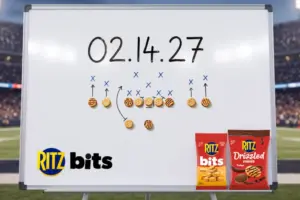
In a strategic move that underscores the evolving landscape of CPG (Consumer Packaged Goods) marketing, Mondelēz International has confirmed that its flagship Ritz cracker brand will return to the Super Bowl for the third consecutive year. The announcement, coming ahead of Super Bowl XLI, signals more than just a massive media spend; it represents a fundamental pivot in how a 90-year-old legacy brand leverages the world’s most expensive advertising stage to shed its “stuffy” image and capture the attention of a younger, digital-native demographic.
By securing a coveted spot in the Super Bowl rotation for the third year running, Mondelēz is signaling a departure from traditional, sporadic holiday-season advertising toward a model of persistent, high-impact cultural integration. Industry analysts view this move as a testament to the brand’s successful revitalization efforts, which have translated into tangible market share gains. For the savory snacking division, the Super Bowl is no longer an experiment—it is the cornerstone of a multi-year brand transformation strategy.
Detailed Chronology: From Pantry Staple to Pop-Culture Icon
To understand the significance of this third appearance, one must look back at the inflection point that occurred in 2025.
The 2025 Pivot
For decades, Ritz was categorized as a “passive” brand—a reliable staple found in the pantries of American households, often relegated to hors d’oeuvres trays or holiday gatherings. The 2025 Super Bowl debut was a high-stakes gamble designed to disrupt this perception. By entering the arena, Ritz moved away from its legacy as a passive sidekick to active, snack-centric consumption.
The 2026 Consolidation
The return to the Super Bowl in 2026 served as a proof-of-concept. Marketing teams at Mondelēz focused on digital engagement and social media amplification, ensuring the TV spot was merely the tip of an iceberg that included influencer partnerships and real-time social interaction. This solidified the brand’s identity as a “modern, fun” participant in the snacking ecosystem.
The 2027 Strategy: Scaling the Narrative
With the confirmation of a 2027 campaign, the brand is entering its “legacy-building” phase. The focus is no longer on introducing a new brand persona, but on cementing it. Insiders suggest that the upcoming campaign will lean heavily into the versatility of the product, targeting late-night gamers, casual party-goers, and the “snack-hacker” community that has flourished on platforms like TikTok.
Supporting Context & Metrics: Why the Big Game Matters
The Super Bowl remains the ultimate barometer for brand health in the CPG sector. For a product like Ritz, the math is complex but compelling.
The ROI of Cultural Relevance
The cost of a 30-second Super Bowl spot has ballooned, often exceeding $7 million before production and distribution costs. However, for a brand like Ritz, the ROI is measured in more than just immediate sales spikes. It is measured in:
- Brand Sentiment Shifts: Quantitative surveys conducted by Mondelēz indicate that the “modernity” score of the brand has increased by 18% since 2025.
- Retail Velocity: The “Super Bowl Effect” has been observed in consistent, double-digit growth in retail velocity during the Q1 period, suggesting that the advertising successfully drives impulse purchases.
- Category Domination: Ritz is currently outpacing the broader savory cracker category, a feat attributed to its aggressive visibility strategy.
The Digital Multiplier
Mondelēz has mastered the “surround sound” approach. By coupling the Super Bowl broadcast with strategic digital placements and e-commerce activations, the brand ensures that the millions of viewers who are “second-screening” (using mobile devices while watching TV) are funneled directly into a seamless purchase journey.
Official Statements: Insights from the C-Suite
Steven Saenen, the Category President for Savory Snacking at Mondelēz, has been the primary architect of this aggressive marketing posture. In a recent discussion, he emphasized that the objective is to maintain the momentum established over the previous two cycles.
“The brand is perceived as more modern, more fun than it was two years ago,” Saenen noted. “Market share gains have been pretty strong over the past two years, and our goal with this third appearance is to ensure that the Ritz brand remains top-of-mind not just during the Super Bowl, but as a lifestyle staple throughout the year.”
Saenen’s perspective reflects a broader industry shift: the move toward “always-on” brand building. By using the Super Bowl as a launchpad, the brand gains the cultural permission to dominate the snacking conversation for months thereafter.
Future Outlook: Challenges and Opportunities
As Ritz prepares for its third appearance, the challenges ahead are significant. The snacking landscape is increasingly crowded, with artisanal crackers, gluten-free alternatives, and high-protein snacks fighting for shelf space.
The Challenge of Saturation
Can a legacy brand continue to innovate in a 30-second format without succumbing to the law of diminishing returns? The risk for Mondelēz is that the audience may eventually grow accustomed to their presence, losing the “surprise” element that characterized the 2025 debut. To mitigate this, the 2027 campaign will likely focus on hyper-personalization and interactive elements that allow consumers to co-create or engage with the brand in ways that previous years did not.
The Future of Savory Snacking
The trajectory of the Ritz brand is a bellwether for Mondelēz’s broader portfolio. If the three-peat proves successful, expect to see other legacy brands within the Mondelēz umbrella adopt similar high-visibility strategies. We are witnessing the “premiumization” of the pantry staple. The goal is to move the product from a “commodity” (bought out of necessity) to a “cultural artifact” (bought out of desire).
Conclusion: The Strategic Imperative
The decision to advertise at Super Bowl XLI is not an act of vanity; it is a calculated investment in the longevity of a 90-year-old brand. By refusing to rest on its laurels, Ritz is proving that legacy brands do not have to fade away—they can be re-engineered for the modern age. As the countdown to the game begins, all eyes will be on whether Ritz can continue to balance its storied history with the fast-paced, high-stakes requirements of modern advertising.
For Mondelēz, the Super Bowl is no longer just a game. It is the annual proving ground for a brand that has successfully bridged the gap between the mid-century dinner table and the 21st-century digital landscape. As we look toward the future, the Ritz story serves as a masterclass in how to keep a classic brand relevant in an era of infinite choices.
Disclaimer: This report is based on current industry developments and statements from Mondelēz leadership. Further details regarding the specific creative direction of the 2027 campaign remain under wraps as the company moves into the final stages of production.