Executive Overview
The landscape of obesity treatment and public health policy in the United States reached a watershed moment last week with the official debut of “A Life Covered,” a poignant, cinematic advertising campaign created by pharmaceutical giant Eli Lilly in collaboration with renowned creative agency Wieden+Kennedy Portland. Timed precisely to a monumental shift in federal healthcare policy—the July 1 launch of the Centers for Medicare & Medicaid Services (CMS) Medicare GLP-1 Bridge demonstration—the campaign aims to educate eligible seniors on newly secured access to transformative weight-management therapeutics at a capped cost of $50 per month.
The campaign spotlights two pivotal Eli Lilly products now included on the covered list for qualifying Medicare Part D enrollees: Zepbound (tirzepatide) KwikPen and orforglipron (marketed as Foundayo). For millions of older Americans historically locked out of weight-management pharmaceutical interventions due to prohibitive out-of-pocket expenses and strict statutory exclusions in Medicare Part D, this policy evolution and its accompanying awareness campaign represent a profound paradigm shift.
To bring this message to the screen, Eli Lilly and Wieden+Kennedy eschewed traditional, transactional pharmaceutical marketing tropes in favor of high art. They enlisted a powerhouse creative crew, including Academy Award-winning directors Sian Heder and/or collaborators (notably referenced through cinematic heavyweights Kwedar and Bentley), Academy Award-winning cinematographer Linus Sandgren, and Pulitzer Prize-winning composer Caroline Shaw, whose composition “Plan & Elevation” anchors the emotional core of the film.
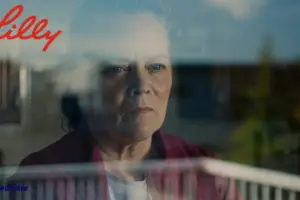
Far from a standard product commercial, “A Life Covered” utilizes an impressionistic pastiche of memories, family photographs, and everyday household artifacts to chronicle the long, often silent emotional and physical toll of living with obesity across a lifetime. It bridges the gap between chronic disease management and human dignity, signaling to a historically underserved demographic that modern medical breakthroughs are finally within their financial and practical reach.
Detailed Chronology: From Policy Pivot to Cinematic Debut
The CMS Demonstration and the July 1 Milestone
The genesis of "A Life Covered" is inextricably linked to regulatory changes enacted by the federal government to address the soaring burden of obesity among older demographics. Historically, Medicare Part D statutes—dating back to the Medicare Prescription Drug, Improvement, and Modernization Act of 2003—explicitly excluded medications prescribed strictly for weight loss, categorizing them as lifestyle interventions rather than essential medical treatments.
However, as decades of clinical data piled up linking obesity directly to cardiovascular disease, type 2 diabetes, osteoarthritis, and numerous forms of cancer, pressure mounted on federal regulators to reconsider. The CMS Medicare GLP-1 Bridge demonstration program was established to test the viability, cost-effectiveness, and health outcomes of expanding coverage for specific glucagon-like peptide-1 (GLP-1) receptor agonists and dual GIP/GLP-1 receptor agonists used for chronic weight management.
Effective July 1, this demonstration project allowed eligible Medicare Part D enrollees meeting specific clinical criteria to access qualifying anti-obesity medications for a flat copayment of $50 per month. Recognizing that policy changes alone do not guarantee patient utilization—especially among elderly populations navigating complex formulary tiers—Eli Lilly mobilized its marketing apparatus to ensure that those eligible were immediately aware of their newfound benefits.
Production and Creative Execution
Realizing the sensitivity and emotional weight required to address weight stigma and chronic disease among seniors, Wieden+Kennedy Portland approached the project with immense cinematic rigor. The agency’s leadership tapped top-tier creative talent to ensure the execution matched the gravity of the moment.
The production journey involved meticulous planning:
- Directorial Vision: Academy Award-winning filmmakers were brought on board to steer the narrative, ensuring the portrayal of aging bodies, personal struggles, and lifestyle limitations avoided clichés and honored the lived experiences of patients.
- Cinematography: Linus Sandgren, celebrated for his visually arresting work on major feature films, utilized natural lighting, intimate framing, and tactile textures to evoke a sense of nostalgia and lived-in authenticity.
- Musical Score: Pulitzer Prize-winning composer Caroline Shaw’s composition “Plan & Elevation” was selected to score the piece. The intricate, undulating string arrangements provide an emotional undercurrent that elevates the commercial from a corporate spot to a piece of visual poetry.
- Narrative Arc: The film weaves together vintage photographs, home movies, and domestic artifacts. Rather than focusing solely on numerical weight loss on a scale, the narrative tracks how regaining physical mobility and metabolic health unlocks lost moments: kneeling in a garden, keeping pace with grandchildren, and moving through the world without chronic physical pain.
The Evolution of the Lilly-W+K Partnership
"A Life Covered" marks the fourth major obesity-focused campaign born from the strategic alliance between Eli Lilly and Wieden+Kennedy Portland. This ongoing collaboration has steadily pushed the boundaries of how pharmaceutical companies discuss weight management in the public sphere.
Earlier collaborative milestones include the acclaimed campaigns “Never Over” and “Good Days,” both of which earned significant industry accolades, including two prestigious Bronze Lions in Film at the Cannes Lions International Festival of Creativity earlier this year. These campaigns systematically dismantled the cultural narrative that obesity is merely a failure of willpower, reframing it instead as a chronic, biologically driven condition treatable with modern science.
Supporting Context & Metrics: The Intersection of Policy, Health, and Economics
The Burden of Obesity in Older Americans
The rollout of the CMS demonstration and Lilly’s accompanying campaign arrive at a critical juncture in American public health. According to data from the Centers for Disease Control and Prevention (CDC), more than 40% of American adults aged 60 and older live with obesity. This demographic is disproportionately affected by obesity-related comorbidities, which drive up Medicare spending, strain hospital systems, and severely diminish patients’ health-related quality of life.
For decades, older adults who suffered from obesity were advised to manage their condition solely through diet and exercise—interventions that, while foundational, often prove insufficient for individuals with entrenched metabolic dysregulation. When GLP-1 and dual-agonist medications demonstrated profound efficacy not only in lowering body weight but also in reducing major adverse cardiovascular events (MACE) in landmark clinical trials (such as the SELECT trial for semaglutide and ongoing cardiovascular outcomes trials for tirzepatide), the argument for coverage shifted from aesthetic enhancement to preventative life-prolonging care.
Financial Accessibility and the $50 Copay Model
The financial barrier to entry for modern weight-loss medications has been a central flashpoint in contemporary healthcare debates. Without insurance coverage, list prices for GLP-1 medications frequently exceed $1,000 per month, putting them entirely out of reach for fixed-income seniors relying on Social Security and Medicare.
By establishing the $50-per-month cap under the CMS demonstration, the federal government and participating manufacturers like Eli Lilly have created a vital financial bridge. This pricing structure removes the paralyzing economic calculation that forces patients to choose between essential household expenses and life-changing medical treatments.
Market analysts project that as awareness spreads via campaigns like "A Life Covered," demand within the Medicare Part D demographic will surge. This dynamic positions Eli Lilly’s Zepbound KwikPen and oral option Foundayo to capture substantial market share within the newly opened senior segment, fundamentally altering the revenue trajectories of these flagship assets.
Official Statements and Industry Perspectives
Navigating the delicate intersection of pharmaceutical promotion, federal policy, and public health sensitivity requires a precise communication strategy. Leadership from both Eli Lilly and Wieden+Kennedy provided deep insights into the motivations and methodologies steering "A Life Covered."
Eli Lilly’s Vision: Consumer Awareness and Empowerment
Lina Polimeni, Eli Lilly’s Senior Vice President and Chief Marketing Officer for Consumers, emphasized that the primary mandate of the campaign is educational and empowering rather than purely promotional.
"This is really a consumer awareness effort focused on patients and specifically, helping seniors understand what may now be available to them," Polimeni stated in interviews discussing the rollout.
Polimeni underscored that for many older adults, the labyrinthine rules of Medicare Part D formularies, coupled with historical exclusions on weight-loss drugs, have created a pervasive sense of resignation. Patients simply assumed that modern medical breakthroughs were not meant for them. "A Life Covered" aims to shatter that assumption by directly informing beneficiaries that the policy landscape has changed and that relief may now be accessible for a predictable $50 monthly copay.
The Creative Perspective: Authenticity Rooted in Lived Experience
Translating complex pharmacological policy into resonant human art required an acute understanding of the stigma associated with weight management. Pierre Jouffray and Derek Szynal, Executive Creative Directors at Wieden+Kennedy Portland, highlighted the rigorous research and personal introspection that went into shaping the narrative.
"The thing we knew we had to get right was depicting a shared experience millions of us have lived through," Jouffray and Szynal shared in a joint statement to ADWEEK. "To do that, we drew on experiences from friends, family, and even personal experiences from people on our team."
By grounding the commercial in universal, tactile moments of everyday life—tying shoes without discomfort, walking up a flight of stairs without breathlessness, engaging actively in family gatherings—the creative team successfully bypassed clinical abstraction. They positioned the medication not as a miracle cure, but as a restorer of agency and human connection.
Future Outlook: What "A Life Covered" Signals for Healthcare and Marketing
The debut of "A Life Covered" and the concurrent rollout of the CMS Medicare GLP-1 Bridge demonstration portend sweeping changes for the pharmaceutical industry, healthcare policy, and direct-to-consumer advertising in the years ahead.
1. Permanent Policy Transformation on the Horizon
Public health advocates and pharmaceutical economists view the CMS demonstration project as a bellwether for permanent statutory reform. If the demonstration yields data showing that expanded access to GLP-1 medications reduces downstream Medicare expenditures—such as fewer hospitalizations for heart failure, reduced incidence of type 2 diabetes complications, and lower rates of joint replacement surgeries—pressure on Congress to permanently lift the statutory exclusion on anti-obesity medications in Medicare Part D will become irresistible. Campaigns like Lilly’s play a vital role in this ecosystem by driving utilization, generating real-world evidence, and proving public demand.
2. The Maturation of Pharmaceutical Storytelling
The success of the Lilly-W+K partnership—underscored by Cannes Lions recognition and culturally resonant filmmaking—signals a permanent evolution in pharmaceutical marketing. Gone are the days when dry, literal explications of mechanisms of action paired with upbeat lifestyle montages sufficed. Modern consumers, particularly sophisticated older demographics, demand emotional intelligence, artistic integrity, and absolute authenticity. Future campaigns across the healthcare sector will likely lean further into cinematic storytelling, prioritizing empathy over clinical jargon.
3. Expanding Product Portfolios and Delivery Mechanisms
As highlighted in the campaign, Eli Lilly is strategically positioning multiple therapeutic options to capture diverse patient preferences. While injectable treatments like the Zepbound KwikPen dominate current market share, the inclusion of oral options such as orforglipron (Foundayo) on covered formularies signals a multi-pronged approach to treatment adherence. Many patients exhibit needle phobia or prefer oral regimens; offering accessible pathways for both delivery methods ensures that the newly opened Medicare demographic can select the clinical option best suited to their daily routines.
Conclusion
"A Life Covered" is far more than a promotional spot for a pharmaceutical portfolio; it is a cultural and policy marker. It captures the exact moment when modern medical science, progressive federal healthcare demonstration policy, and empathetic creative expression converged to alter the trajectory of aging in America. For millions of seniors living with obesity, the film delivers a message long overdue: the years ahead do not have to be defined by the limitations of the past.