Executive Overview
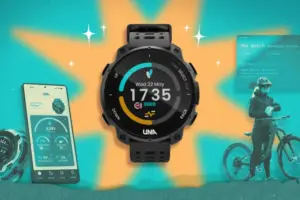
The wearables market has long been dominated by "walled garden" ecosystems—sleek, proprietary devices that lock users into specific software experiences and manufacturer-dictated limitations. Enter the Una Watch, a device designed not merely as a consumer accessory, but as a modular, open-source canvas for tinkerers, developers, and power users.
While the Una Watch arrives at launch in a "barebones" state, lacking the bloatware and pre-installed suites found in competing products, its architecture is fundamentally different. It is a hardware platform that invites modification. Through its interchangeable physical components and an open development environment, the Una Watch promises a future where the device grows alongside its user community. In this report, we explore how the Una Watch is already being repurposed through creative software hacks, transforming a minimalist wearable into a highly personalized tool for daily life.
Detailed Chronology: A New Era of Modular Wearables
The release of the Una Watch marks a shift in the philosophy of personal technology. Historically, smartwatches have been treated as "black boxes"—if a feature didn’t come installed from the factory, the user was simply out of luck.
The Philosophy of Open Development
The development cycle of the Una Watch has been characterized by radical transparency. By providing a publicly accessible Software Development Kit (SDK) for Windows, macOS, and Linux, the creators have signaled that the watch’s final form is not defined by the manufacturer, but by the community.
Over the past few weeks, early adopters have moved past the initial "out-of-the-box" experience to explore the hardware’s capabilities. The device, which features a Memory-in-Pixel (MIP) screen, has proven to be a surprisingly versatile base for developers. Unlike high-resolution OLED displays that prioritize flashy animations, the Una’s screen is optimized for power efficiency and high-contrast readability, making it an ideal medium for utilitarian data displays.
The Power of Peripheral Integration
The most significant design choice—the inclusion of a standard USB-C port—effectively eliminates the "dongle tax" that plagues the industry. In an era where proprietary charging cradles are lost, broken, or forgotten, the Una Watch utilizes the same connectivity standard as modern laptops, tablets, and smartphones. This decision alone has opened up a new workflow for users: the ability to utilize a smartphone as a power source, effectively turning the watch into a truly mobile peripheral.
Supporting Context: Practical Hacks for Daily Optimization
1. The Power of Universal Connectivity
The realization that the Una Watch can charge directly from a smartphone via a standard USB-C cable is more than just a convenience—it is a paradigm shift. Most smartwatches require specific, often bulky, proprietary adapters. By opting for a standard interface, the Una Watch enables a "one-cable-for-everything" lifestyle. For long-distance travelers or minimalist commuters, the ability to draw power from their phone’s battery during transit ensures that the watch remains a functional tool without requiring additional wall-wart chargers or dedicated cables.
2. HabitLab and the Future of Biometric Recovery
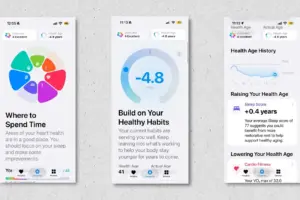
One of the most ambitious community projects is the HabitLab suite. Unlike mainstream trackers that aggressively attempt to quantify sleep stages—often with dubious accuracy—the Una community has leaned into "subjective reporting" combined with physiological data.

The integration of the Slumber app provides a refreshing, low-friction approach to sleep tracking. By focusing on consistency—tracking bedtime and wake-up times rather than trying to guess the neurological state of the wearer—it provides a more actionable view of sleep health. Furthermore, the HabitLab app’s attempt to correlate daily habits (such as alcohol consumption or meal timing) with overnight HRV (Heart Rate Variability) readings represents a move toward personalized wellness. While the project is still in its infancy and occasionally exhibits "buggy" behavior typical of early-stage software, the intent is clear: to empower the user to understand their body’s recovery markers without the opaque algorithms of corporate health platforms.
3. The Digital Wallet: Barcodes and Beyond
The Barcode app serves as a prime example of the watch’s utility. By leveraging the high-contrast nature of the MIP screen, the watch functions as a reliable digital interface for physical identification.
- The Library/Parkrun Utility: The ability to store up to six distinct barcodes—ranging from library membership cards to grocery loyalty programs—effectively replaces the need for a physical wallet in many common scenarios.
- QR Code Versatility: Because the watch supports URL-based QR codes, it acts as a short-range data bridge. Users can input a shortened link, effectively allowing the watch to act as a digital business card or a quick-access portal to specific web content.
4. Solar and Astronomical Tracking
The Sun & Moon Face provides a unique intersection of design and utility. By utilizing the watch’s internal GPS to calculate the solar trajectory, it provides a visual representation of the daylight cycle. For those who work outdoors or are conscious of the shifting seasons, this serves as an intuitive reminder of the environment. While the app requires an initial GPS sync—which can cause minor discrepancies during the first hours of use—it settles into a reliable pattern that is both aesthetically pleasing and functionally grounding.
Official Statements and Developer Accessibility
The accessibility of the Una Watch’s development environment is perhaps its greatest strength. The company has published extensive documentation and tutorials, aiming to lower the barrier to entry for non-programmers.
"We didn’t want to build a watch for consumers; we wanted to build a watch for creators," stated a representative during the recent developer conference. The SDK includes over a dozen foundational examples, covering everything from activity tracking to complex watch face design. For those interested in the "hacker" ethos, the ability to modify the watch’s core functions isn’t just permitted—it is the central value proposition. The community-driven nature of these updates ensures that if a user desires a feature, they are empowered to build it, rather than waiting for a distant software update from the manufacturer.
Future Outlook: The Maturing Ecosystem
The Una Watch is currently in a state of rapid, organic growth. As the developer community continues to refine the existing apps—addressing the minor bugs in HabitLab and optimizing the power consumption of the Sun & Moon Face—the device will likely evolve from a hobbyist tool into a robust daily driver.
The Path Forward
The next twelve months will be critical for the platform. Key areas of focus include:
- Data Aggregation: Improving the stability of trend analysis within apps like HabitLab so that users can view long-term patterns in their health data.
- Community Portals: Centralizing the distribution of "hacks" and apps to make it easier for non-technical users to install new features without needing to compile code.
- Hardware Modularity: As the community matures, we expect to see third-party hardware modules (such as different sensors or alternative casing materials) that interface with the watch’s modular chassis.
Ultimately, the Una Watch serves as a reminder that the best technology is often that which grants its users the most agency. By stripping away the constraints of traditional consumer tech, the Una Watch has provided a platform where the only limit is the user’s imagination. Whether you are a seasoned coder or someone who simply wants to display their library card on their wrist, the Una Watch offers a compelling glimpse into a future where our devices belong to us, not the companies that sold them.