Executive Overview: A Paradigm Shift in Canadian E-commerce
In a landmark development for the Canadian digital retail landscape, Google has officially inaugurated a frictionless, agentic shopping experience. As of November 4, 2026, Canadian consumers interacting with Google’s AI-powered search environments and the Gemini application can now complete purchases directly within the interface.
This transformation is powered by the Universal Commerce Protocol (UCP), an open-standard framework designed to bridge the gap between AI discovery and transactional execution. By eliminating the traditional "click-through" journey—where users are redirected to external retailer websites—Google is effectively turning its search engine into a virtual storefront. While the initial rollout is restricted to a select cohort of merchant partners, the implications for the broader retail ecosystem are profound. By positioning retailers as the "seller of record" while internalizing the checkout flow via Google Pay and Wallet, Google is attempting to solve the "last mile" problem of AI-assisted shopping, promising a future where discovery and conversion are indistinguishable.
Detailed Chronology: From Concept to Canadian Reality
The journey toward this milestone began earlier this year with the introduction of the Universal Commerce Protocol. Developed as an industry-wide open standard, UCP was created to solve the fragmentation of modern digital commerce, where AI agents, merchant platforms, and payment providers often struggle to communicate without expensive, custom-built integrations.
The November 4 Rollout
Sabrina Geremia, Vice President and Country Managing Director at Google Canada, formally announced the expansion of UCP-powered direct checkout to the Canadian market. The move is not merely an incremental update; it represents a fundamental change in how search engines monetize intent. By integrating checkout flows into "AI Mode" and the Gemini app, Google is positioning itself as an active participant in the consumer’s purchasing decision, rather than a passive guide.
The Mechanism of Seamless Checkout
The current user experience is designed for minimal friction. When a user engages in a conversational shopping search:
- AI Discovery: The AI agent identifies relevant products based on natural language queries.
- In-Conversation Purchase: Instead of providing a list of URLs, the AI presents a checkout interface within the chat window.
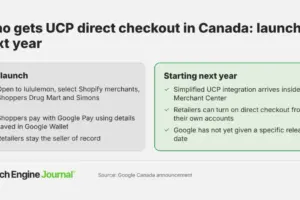
- Transaction: The payment is facilitated through Google Pay, utilizing secure credentials already stored in the user’s Google Wallet.
- Merchant Ownership: Crucially, the merchant remains the seller of record, maintaining control over order fulfillment, inventory management, and customer service.
Supporting Context: Why the Universal Commerce Protocol Matters
To understand the significance of this Canadian launch, one must analyze the architecture of UCP. In the traditional e-commerce model, each retailer must maintain custom APIs to connect with different platforms (Google, Amazon, Meta, etc.). This "spaghetti code" approach is costly and slows down innovation.
A Common Language for Commerce
UCP acts as a "shared language." It allows for:
- Unified Discovery: AI agents can pull real-time inventory and pricing data without needing bespoke integrations for every retailer.
- Streamlined Purchasing: Payment protocols are standardized, allowing for secure transactions across any platform that supports the UCP standard.
- Post-Purchase Support: The protocol allows for tracking and customer service updates to be passed back to the user within the original AI chat environment.
The Role of Shopify
Shopify’s involvement, as highlighted by VP of Product Mani Fazeli, underscores the strategic alignment between e-commerce giants and Google. Shopify merchants selling into Canada now have a "zero-effort" path to being represented in AI Mode. This suggests that the barrier to entry for smaller retailers will eventually be lowered significantly, as the heavy lifting of backend connectivity is handled by the platform-to-Google integration.
Official Statements and Industry Impact
The shift toward agentic commerce has garnered significant attention from industry leaders. According to Google, the focus of this rollout is to create a more "intuitive, agentic shopping experience."
Mani Fazeli noted, "Canadians are already asking AI what to buy, and now Shopify merchants selling into Canada can be faithfully represented and bought from directly in AI Mode and the Gemini app, with zero extra work. UCP handles the complexity of agentic commerce underneath, so shoppers can buy what they find without leaving the conversation."
This sentiment is echoed by analysts who suggest that the "conversation-to-conversion" ratio is the new gold standard for digital marketing. By removing the exit point (the browser redirect), Google is theoretically reducing bounce rates and increasing the efficiency of the conversion funnel.
Strategic Implications for Retailers and Paid Media
For ecommerce managers and digital agencies operating in the Canadian market, the landscape is shifting from "Search Engine Optimization" (SEO) to "AI-Agent Optimization."
The Primacy of Feed Quality
Even with the rollout of automated UCP integration in Merchant Center scheduled for next year, the foundation of this system remains the quality of the product data. Google’s generative AI optimization guide makes it clear: if the data is not structured, accurate, and rich in detail, the AI will not "see" the product.
For retail teams, the following steps are now non-negotiable:
- Audit Product Feeds: Ensure that all attributes—SKUs, availability, pricing, and high-quality imagery—are current and consistent across all platforms.
- Prioritize Merchant Center: The upcoming 2027 update will make direct checkout enablement a checkbox feature. Retailers who are already optimized in Merchant Center will be the first to gain access.
- Monitor AI-Driven Performance: Paid media teams must begin distinguishing between traffic originating from standard search and traffic originating from AI-mode conversations. Attribution modeling will need to evolve to account for "zero-click" purchases.
Future Outlook: The Road to 2027 and Beyond
While the Canadian launch is a significant milestone, it is merely the first phase of a broader, more ambitious global strategy.
The Merchant Center Integration
Perhaps the most anticipated development is the 2027 update to Merchant Center. Currently, UCP onboarding is handled through direct partnerships and specific platform integrations. The promise of "simplified UCP integration" suggests a self-service portal where any merchant, regardless of size, can flip a switch to enable direct checkout. This would democratize access to AI-native commerce, potentially threatening traditional marketplaces that have long relied on being the "destination" for checkout.
The Lingering Questions
Despite the excitement, several critical questions remain unanswered:
- Attribution Transparency: How will Google report these conversions in Google Ads? Will they be treated as standard Shopping conversions, or will they be siloed into a new "AI Agent" category?
- Cost Structures: Will the transaction fees associated with UCP-enabled checkouts differ from traditional credit card processing fees?
- The "Zero-Click" Impact: If consumers stop visiting retail websites, how will brands maintain their connection with customers? Retailers often rely on website visits for brand storytelling, cross-selling, and email capture. An AI-only interface risks commoditizing products, potentially eroding brand equity in the long run.
Conclusion: A New Era of Commerce
The integration of UCP into the Canadian market represents a bold step into the era of agentic commerce. Google is effectively betting that the future of retail is not in the browser, but in the conversation. For Canadian retailers, the challenge will be to balance the convenience of this new channel with the need to maintain brand identity and direct customer relationships. As we head into 2027, the retailers who treat their product feeds as their most valuable digital assets will be the ones who successfully navigate this transition.
The industry will be watching the Canadian market closely as a litmus test for global scalability. If successful, the era of the "link-out" may soon be a relic of the past, replaced by a seamless, AI-orchestrated ecosystem of instant commerce.