Executive Overview
In the modern e-commerce landscape, the perennial struggle for small businesses is balancing the desire for high-touch customer engagement with the harsh reality of limited personnel. For Beardbrand, a company known for its niche grooming products, the solution was not to hire more bodies, but to deploy an intelligent, autonomous workforce.
Last week, we explored the technical implementation of a voice-based customer service agent—a tool that replaced human phone support with a surprisingly realistic AI interface. However, the true story is not merely about a single voice bot. It is about a fundamental shift in operational philosophy. By leveraging the Grok Bot and the Grok Voice API from xAI, small businesses are effectively 10x-ing their output. This article details how a lean team can use artificial intelligence to handle everything from executive-level email management to complex SEO auditing, effectively turning a ten-person operation into an enterprise-scale force.
Detailed Chronology: From Voice Agent to Operational Backbone
The journey began with a simple necessity: the need for reliable, 24/7 customer support without the overhead of a call center. Using the Grok Voice API, the development of a voice agent took less than a single business day. The result was an agent capable of natural, empathetic, and accurate interactions with shoppers.
But once the "voice" was established, the question shifted from "what can it say?" to "what can it do?" The evolution of the implementation followed a distinct trajectory:
- Phase One: The Communication Filter. The immediate goal was to reclaim the most valuable resource for an entrepreneur: focus. By configuring Grok Bot as an executive assistant, the system began screening emails twice daily. It acts as a digital gatekeeper, filtering noise and highlighting urgent, actionable items in red.
- Phase Two: Data Aggregation and Reporting. The next step involved automating the "manual drudgery" of business metrics. By integrating Shopify, Grapevine, Amazon, and Meta, the bot began synthesizing disparate data streams into a single, cohesive spreadsheet for weekly staff meetings.
- Phase Three: Workflow Automation. Moving beyond observation into action, the team utilized the bot to construct complex email and SMS "flows" in platforms like Klaviyo—automated triggers based on customer behavior.
- Phase Four: Quality Assurance and Brand Integrity. Finally, the bot was deployed as a site-wide auditor, crawling for content conflicts and ensuring that the brand’s "single source of truth" remained intact across privacy policies, product descriptions, and About pages.
Supporting Context: The Metrics of Efficiency
To understand the impact of these tools, one must look at the "Before and After" of internal operations.
The Cost of Human-Centric Flows
Previously, the task of setting up automated email flows for Beardbrand required hiring an outside agency. The process was a classic bottleneck: it took months of back-and-forth communication and cost thousands of dollars in professional fees. By utilizing Grok Bot, that same task—configuring an account and deploying 48 distinct automated flows—was completed in a matter of hours. This is not just a marginal gain; it is a 99% reduction in time-to-market for marketing automation.
The SEO and Analytics Shift
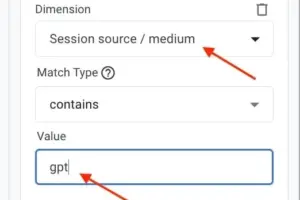
The traditional reliance on bloated, complex tools like Google Analytics has been replaced by an SEO agent powered by Grok. By directly querying Google Search Console, the bot extracts raw data regarding rankings, impressions, and clicks. This eliminates the need for manual reporting and provides the team with a clear, direct view of what content is performing and why.
Internal Training and Redundancy
One of the most profound use cases is the concept of the "Trainable Bot." For specialized tasks, such as video editing, staff members are training agents to replicate their processes. If a key team member goes on vacation, the bot maintains continuity. This creates a resilient business structure where the loss of a single employee—or even a temporary absence—no longer brings a specific operational pillar to a halt.
Official Insights: The Philosophy of Automation
When asked about the potential for over-automation, the consensus is clear: automation should serve strategy, not define it.
There is a distinct line between operational execution and strategic decision-making. The goal of integrating Grok Bot is to offload the "how" so that human staff can focus on the "why." As noted in the implementation, the bot is excellent for personal assistant tasks—booking appointments, shopping for supplies, or performing routine data extraction—but it should never be granted the authority to alter the core strategic direction of the company.
The "Single Source of Truth" Mandate
One of the most overlooked benefits of AI integration is the maintenance of brand consistency. In the case of the new "Worn Denim" cologne launch, the bot identified a critical error: conflicting application instructions between different pages of the website. Human editors, often suffering from "banner blindness," missed the discrepancy. The bot, programmed to verify factual consistency across the domain, caught the error before it could confuse the customer. This level of digital hygiene is essentially impossible to maintain manually as a brand grows.
Future Outlook: The Entrepreneur’s New Reality
The era of the "lone wolf" entrepreneur is evolving into the era of the "AI-augmented founder." Tools like Grok Bot have effectively lowered the barrier to entry for high-level operations.
Start Small, Scale Aggressively
The recommended strategy for any merchant is to begin with a low-stakes, high-pain-point task. Start by building a bot to act as a single source of truth for your product documentation. Once the bot proves its utility, move to more complex integrations, such as return management, high-volume email screening, or voice-based customer support.
The 10x Multiplier Effect
Imagine a 10-person team. In a traditional environment, their output is limited by their collective 400 hours of labor per week. With the integration of AI agents, each person is empowered to offload their rote tasks. If each staff member reclaims 50% of their time through automation, the team’s effective capacity increases to the equivalent of 20 people without adding a single cent to the payroll.
The Path Forward
We are currently living in a golden age for the "idea person." Operational hurdles that once required massive venture capital and large staff rosters can now be bypassed with clever implementation and a proactive approach to AI integration.
The future of e-commerce will not belong to the companies with the most employees, but to the companies with the most efficient agents. By automating the routine, the creative, and the administrative, entrepreneurs are free to focus on what truly matters: building a brand that resonates with customers and delivers value in a way that was previously unimaginable.
As we look toward the next year, the question for business owners is no longer, "Can I afford to automate?" but rather, "Can I afford not to?" The technology is available, the integrations are becoming more seamless by the day, and the competitive advantage is waiting to be claimed. It is time to treat your AI agents not as tools, but as members of the team.