
Executive Overview: The Rise of Agentic Commerce
The e-commerce landscape is undergoing a structural transformation, shifting from passive digital storefronts to active, "agentic" ecosystems. This week’s release cycle highlights a profound trend: software is no longer just presenting data to merchants—it is now reasoning, deciding, and executing on their behalf.
From AI-powered financial management and autonomous marketing campaigns to self-service retail kiosks, the industry is embracing the "agentic" paradigm. This evolution is designed to reduce the cognitive load on business owners, allowing them to scale operations without a linear increase in overhead. Simultaneously, we are seeing a push toward cross-border simplification and integrated financial infrastructure, as stablecoins and automated tax compliance platforms aim to remove the friction that has historically hampered international growth.

Detailed Chronology: Key Releases and Technological Milestones
The AI-Driven Merchant Experience
The most significant shift this week is the emergence of "agentic" tools—systems that move beyond simple data analysis into the realm of decision-making.
- Lightspeed Commerce has unveiled new agentic capabilities for its point-of-sale platform. Rather than merely surfacing insights, Lightspeed AI can now reason across a retailer’s catalog, inventory, and sales data to recommend specific purchasing actions and prepare them for merchant approval.
- Marklo has secured $5 million in seed funding to bring similar functionality to Shopify brands. By analyzing weekly sales and inventory trends, Marklo constructs, schedules, and reports on marketing campaigns, essentially acting as an automated growth engine.
- Oracle NetSuite has introduced "QuickStart," a free, AI-first financial platform aimed at early-stage startups. By embedding AI agents directly into the accounting and subscription management workflow, NetSuite is attempting to democratize enterprise-grade financial operations.
- Loops has raised $3.5 million to build an "AI Operating System" for commerce. The company aims to consolidate the fractured AI ecosystem into a single, cohesive platform that understands shopper intent and guides purchasing decisions, effectively serving as the central nervous system for modern brands.
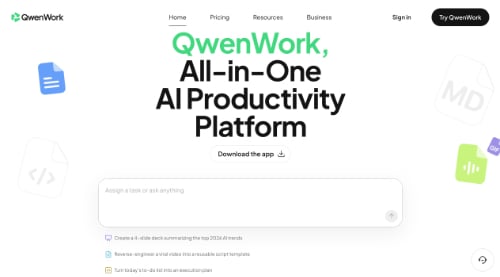
- QwenWork (Alibaba Cloud) is testing an invite-only beta for E-Commerce Operations in China. This tool aims to automate the entire merchant workflow, from cross-platform advertising and content creation to tactical store planning.
Search, Discovery, and Marketplaces
On the consumer-facing side, the battle for discovery is intensifying through sophisticated integrations and new platform launches.

- Algolia has launched a native B2B integration for Shopify. This is a critical development for wholesalers, as it allows for account-specific search. When a buyer logs in, they are presented with a curated catalog and pricing structures specific to their negotiated contract, effectively bringing enterprise-level B2B discovery to the Shopify ecosystem.
- Google’s Universal Cart has officially launched in the U.S. across Search and the Gemini app. By leveraging Google’s massive "Shopping Graph"—which tracks over 60 billion listings—the cart functions as an intelligent assistant that notifies shoppers of price drops and helps them navigate card perks and payment methods.
- EasyShop, a new multi-category marketplace, has expanded across 21 European countries. Distinguishing itself from retail-led giants, EasyShop operates as a facilitator rather than a competitor; it does not hold stock, ensuring that every transaction directly benefits the retailer.
Marketing, Returns, and Distribution
Optimizing the post-purchase experience and audience targeting remains a top priority for performance-focused brands.
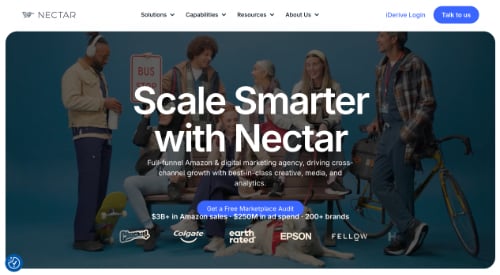
- Nectar has introduced "Customer Atlas" for Amazon Marketing Cloud. This tool pivots search advertising from keyword-focused bidding to shopper-focused targeting by indexing a brand’s purchase history against Amazon’s 6,728 audience segments.
- Appriss Retail has released "Engage Insights," a tool that consolidates fragmented returns and claims data into a single, omnichannel dashboard. This allows merchants to combat shrinkage and fraud by viewing returns through the lens of a single customer’s behavior across all touchpoints.
- TopDawg has upgraded its multichannel distribution hub, offering U.S. suppliers a centralized portal to manage wholesale catalogs and sync inventory across a vast network of online retail channels.
- ShopBack launched "SparkHub," an AI-powered creator tool that bridges the gap between influencer content and tracked sales. It streamlines the lifecycle of creator partnerships, from initial brief to content approval and final revenue attribution.
Supporting Context & Metrics: Why Now?
The surge in these technologies is not coincidental. Several macroeconomic and behavioral factors are driving this rapid adoption:
- Complexity Compression: As digital retail becomes more fragmented—spanning social commerce, marketplaces, and direct-to-consumer websites—the management overhead for merchants has become unsustainable. "Agentic" tools are the industry’s response to this complexity.
- The "Wayfair" Effect: With the ongoing tightening of tax nexus laws globally, merchants are increasingly vulnerable to compliance errors. Platforms like SalesTaxx (launched this week by FinStackk) are responding to this by providing automated, line-by-line tax compliance that integrates directly into the merchant’s financial books.
- Cross-Border Integration: Global trade is still plagued by currency volatility and high transaction fees. The collaboration between Mastercard and BVNK to integrate stablecoins into a global money platform signals a major shift toward near-instant, low-cost international settlements, potentially unlocking new markets for small and mid-sized merchants.
Official Statements and Industry Perspectives
Industry leaders are emphasizing that the goal of this AI-led wave is not to replace the merchant, but to provide "leverage."
In the release surrounding its $5 million seed round, Marklo noted that the primary hurdle for Shopify brands is not a lack of data, but a "lack of bandwidth to act upon it." By delivering actionable campaigns via Slack or email, platforms like Marklo aim to give small teams the operational footprint of an enterprise.

Similarly, Appriss Retail’s launch of Engage Insights underscores a broader industry push toward "transparency." By giving merchants a granular, organization-wide view of returns—down to the specific SKU and customer—they are providing the data required to align operational strategy with actual profitability, rather than just revenue.
Future Outlook: The Autonomous Retailer
As we look toward 2027 and beyond, the trajectory is clear: the manual management of e-commerce storefronts will become a relic of the past.
We anticipate that the next 18 months will see the consolidation of these agentic tools. Currently, a merchant might use one tool for marketing, another for inventory, and a third for accounting. The winning platforms of the future—likely those emerging from the recent influx of funding for "AI operating systems"—will be those that offer a "single pane of glass" through which an AI agent can command the entire stack.
Furthermore, as voice-layer AI (such as the new Square Kiosk) and visual-search capabilities (like Google’s Shopping Graph) mature, the boundary between "online" and "in-person" retail will continue to dissolve. The future of commerce is not just digital; it is conversational, autonomous, and increasingly borderless. Merchants who adopt these agentic workflows now will be better positioned to scale in an environment where speed and precision are the only currencies that matter.