
EXECUTIVE OVERVIEW
In the modern digital economy, the chasm between stagnant obscurity and high-growth profitability is bridged almost exclusively by the written word. For entrepreneurs and digital marketers, customer acquisition rarely happens by accident; it is engineered through deliberate, psychologically tuned copywriting. Having generated over seven figures online through founding and scaling a digital marketing agency—and currently operating as a partner in Copyblogger, an elite multi-figure course and community—the author’s empirical data reveals a definitive truth: nearly 100% of organic revenue stems from structured, text-driven channels, including high-ranking blog posts, targeted social media ecosystems, and high-conversion email newsletters.

Yet, a fundamental misconception plagues aspiring marketers. The prevailing myth dictates that great copywriters are literary artists who weave eloquent, ornate prose. In practice, the exact opposite holds true. Exceptional copywriters are master architects of clarity and concision. They do not write to impress; they write to convert readers into paying customers.
The mandate is straightforward: shift the focus from the aesthetic craft of writing to the measurable generation of revenue. Professionals who can prove that their copy yields a higher return on investment (ROI) than the market average secure long-term career viability and premium compensation. To fast-track this mastery, industry leaders rely on a definitive ten-step framework.
1. Deep Customer Research: The Foundation of Conversion
At its core, copywriting is an exercise in empathy and psychological alignment. The professional’s mandate is to capture a prospect’s fleeting attention, build immediate trust, introduce a viable solution, systematically dismantle objections, and guide the user toward a financial transaction. Achieving this requires an intimate, data-backed understanding of the target audience’s internal landscape.
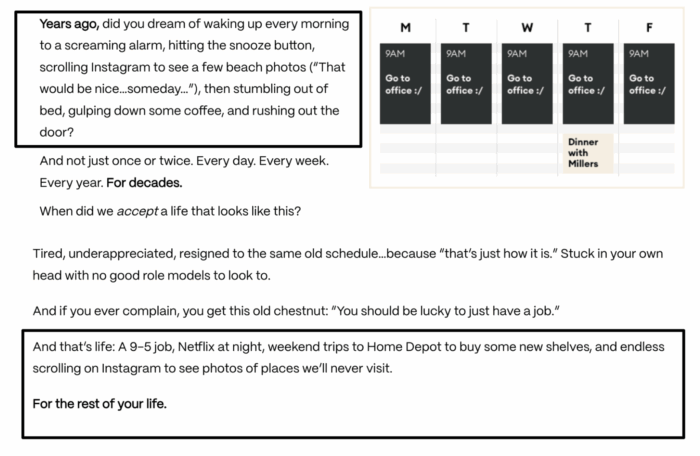
Consider the masterclass in positioning executed by Ramit Sethi on the landing page for his flagship program, Earnable. Rather than relying on tired, generic hooks like "here is how to make more money," Sethi hooks the reader by meticulously mirroring their current, agonizing reality. He paints a visceral picture of the corporate grind: the soul-crushing 9-to-5 job, retreating to Netflix every evening, endless weekend errands to Home Depot, and numbly scrolling through Instagram to escape reality.
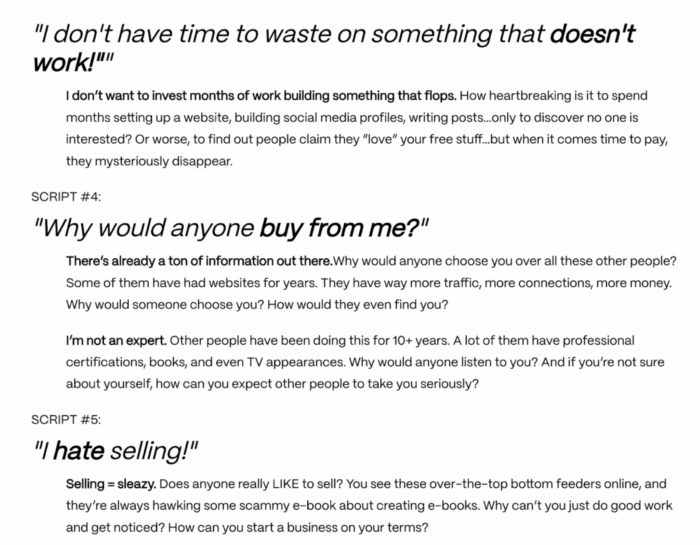
Great copywriters understand that prospects do not buy products; they buy a better version of themselves out of a current state of pain. When you repeat a prospect’s precise reality back to them, you establish instant credibility. You prove that you understand their struggle better than they do, signaling that your solution was uniquely engineered for their exact predicament. Furthermore, elite copywriters anticipate and deconstruct friction points—labeling objections outright to neutralize buyer hesitation before it halts the sale.
Actionable Frameworks for Gathering Customer Intelligence
If time constraints prevent direct interviews with a client’s customer base prior to project deadlines, deploy these high-yield tactical workarounds:

- Sales Team Interviews: Speak directly with the client’s sales representatives. Ask them to outline the three most common customer pain points and recurring purchasing objections.
- AI-Powered Call Audits: If the client records discovery or closing calls, export the transcripts and feed them into a large language model like ChatGPT. Prompt the AI to isolate and categorize the most frequent objections and emotional triggers.
- Community Mining: Dive into niche subreddits and specialized Facebook groups. For instance, if writing copy for a health and fitness brand, immerse yourself in weight-loss communities to absorb the exact vernacular, colloquialisms, and emotional vocabulary of the target demographic. Paste these thread archives into AI to rapidly extract qualitative research data.
2. Reverse-Engineering Success: Learning from Market Competitors
Starting a copy project with a blank document is an inefficient use of time and cognitive capital. Industry-leading competitors have typically already invested tens or hundreds of thousands of dollars into testing, iterating, and optimizing ad copy and landing pages.
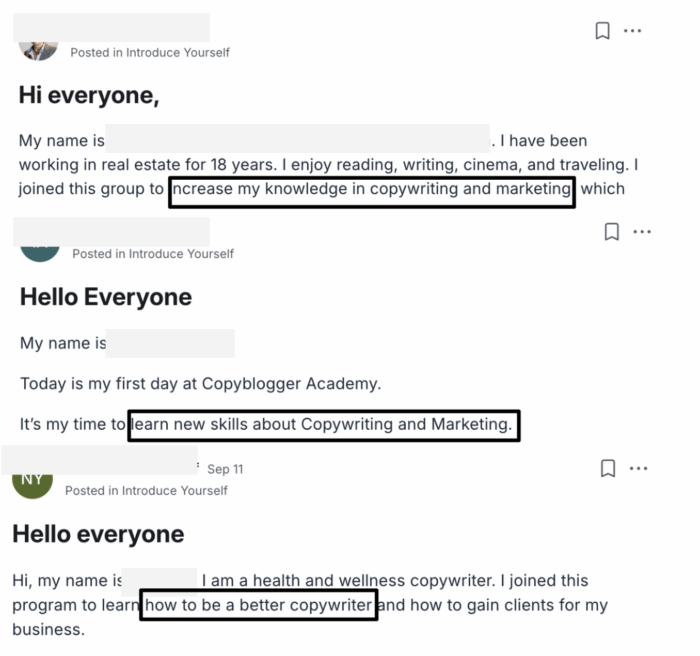
The modern copywriter’s strategic advantage lies in the public ad libraries maintained by platforms like Meta and LinkedIn. Because paid advertising requires continuous financial investment, ads that run for extended periods are almost universally high-performing, profitable assets.

By analyzing the longest-running ads within a specific industry, you can isolate the winning pain points driving that market. For example, scrutinizing B2B software advertisements often reveals nuanced pain points—such as the operational nightmare of messy, disorganized CRM data causing lost enterprise deals—that can be repurposed to sharpen email sequences, sales pages, and long-form content.
3. Building and Utilizing a Curated Swipe File
Mastery is rarely born in a vacuum. Alongside competitor research, elite copywriters maintain an organized "swipe file"—a repository of high-converting headlines, brilliant value propositions, persuasive sales pages, and high-engagement ad creative that command attention in the wild.

In addition to collecting proprietary examples, professionals regularly reference curated industry resources such as SwipeFile.com, maintained by veteran copywriter Neville Medhora. Studying work validated by industry veterans accelerates a beginner’s education, training the subconscious eye to recognize structural cadence, rhythm, and conversion mechanics long before drafting client campaigns.
4. Establishing a Repeatable Writing Process
As copywriters mature, they realize that exceptional copy is not a product of spontaneous creative inspiration; it is the systematic assembly of targeted pain points, structural objections, and high-converting calls-to-action (CTAs).

Establishing a standardized writing process eliminates friction, prevents writer’s block, and ensures that every piece of content hits the psychological benchmarks required for conversion. A proven blog and content writing process typically follows a three-stage architecture:
- Research & Outlining: Aggregating customer data, analyzing competitor angles, and mapping out the structural flow (Hook $rightarrow$ Agitation $rightarrow$ Solution $rightarrow$ Proof $rightarrow$ CTA).
- Drafting: Writing uninhibitedly to maintain flow state, focusing purely on narrative progression and value delivery.
- Refinement & Polishing: Condensing prose, sharpening verbs, removing filler words, and optimizing for clarity and scan-ability.
5. Deliberate Practice: Writing for Real-World Stakes
Theoretical knowledge without practical execution yields zero dividends. To become a world-class copywriter, you must write daily—but with clear strategic intent.
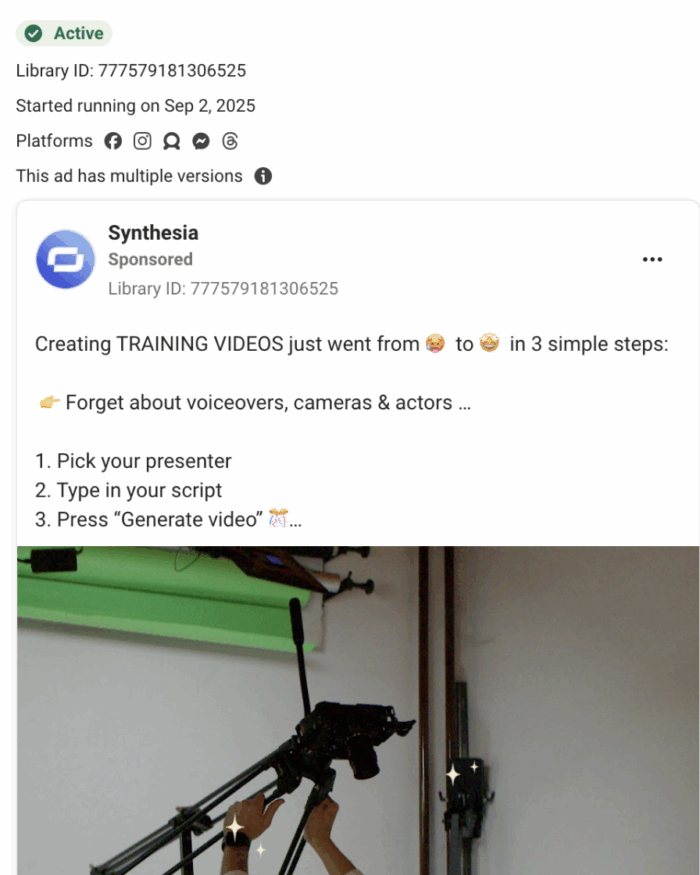
The most accelerated path to high-level copywriting is writing for your own digital assets, products, or services. Aspiring B2B or LinkedIn ghostwriters should build their own personal brands on professional networks. Generating inbound leads for your own venture teaches you what messaging actually drives revenue, allowing you to charge clients premium rates backed by real-world case studies.
Similarly, aspiring SEO content writers can launch affiliate marketing websites to rank for competitive transactional keywords, while aspiring SaaS copywriters can leverage no-code development tools to build micro-utilities, market them, and drive conversions.

A prime example is the journey of a now six-figure copywriter who began her career by launching a dropshipping store selling cuckoo clocks. By writing long-form educational content on how to repair antique clocks, she inadvertently attracted local repair clients rather than e-commerce buyers. This taught her the foundational distinction between writing for passive web traffic versus writing with explicit purchase intent.
6. Strategic AI Integration: Enhancing Copy with Large Language Models
Artificial intelligence should not be utilized to blindly generate hollow, generic copy from scratch. However, when deployed with surgical precision, AI serves as an indispensable co-pilot for research and ideation.

Human copywriters must retain creative control over core ideas and emotional framing, but AI can streamline three distinct operational phases:
- Pain Point Research: Prompting language models to cross-reference common psychological hurdles within specific demographics.
- Sentence Phrasing and Clarity: Pasting dense, convoluted paragraphs into an AI tool and prompting: "Can you rewrite this passage with maximum clarity and punchiness?" to unearth alternative syntactic structures.
- Expert Sourcing and Quotation Discovery: When writing about unfamiliar industries, AI can be directed to source real-world commentary, insights, and public discussions from thought leaders on platforms like LinkedIn, grounding the copy in authentic authority.
7. Platform Specialization: Mastering One Ecosystem
The digital landscape is fragmented across disparate channels, each governed by unique algorithmic rules, user behaviors, and consumption habits. Thought leadership content thrives on LinkedIn, whereas highly structured, searchable, and educational frameworks dominate long-form search engine optimization (SEO) blogs.
Rather than spreading efforts thin across every available channel, master a single platform’s underlying distribution mechanics. By deeply understanding how Google’s algorithm indexes content or how LinkedIn’s feed rewards dwell time and comment velocity, you can engineer a substantially higher ROI for your clients—and command superior compensation as a result.
8. Measuring the Financial ROI of Copywriting
Subjective feedback is the enemy of scalable copywriting. If you present a single sales page to ten different stakeholders, you will receive ten conflicting opinions on how it can be improved. True professionals rely strictly on performance metrics and attribution data.

Tracking the monetary value generated by written assets requires tailored analytics protocols depending on the publishing channel:
- Social Ghostwriting: Disregard vanity metrics like raw impressions or likes. Evaluate engagement quality by analyzing the professional titles of commenting profiles—ensuring your content captures the attention of decision-makers. Implement attribution tracking by prompting clients to add a "How did you hear about us?" multi-select field on conversion forms that includes specific social channels.
- Blog Content: High traffic is irrelevant if it fails to convert. Work with clients to implement rigorous event and conversion tracking via Google Analytics (GA4), tying organic search traffic directly to closed-won revenue or qualified pipeline generation.
- Sales Pages and Email Funnels: These conversion mechanisms offer the most direct attribution data. Consistently review conversion rate optimization (CRO) metrics with clients to isolate winning email sequences and landing page variants.
9. Leveraging Community and Peer Feedback
Building a career as an independent copywriter can be an isolated, challenging endeavor. Trying to learn exclusively through trial and error slows professional development. The fastest path to mastery is learning from the collective mistakes and successes of a peer group under the guidance of experienced mentors.

Joining an authoritative community provides access to structured feedback loops. However, aspiring copywriters must weigh the credibility of their sources; feedback from fellow beginners should be evaluated cautiously, while guidance from multi-figure copywriters and established marketers should be implemented directly.
This exact realization drove the creation of platforms like Copyblogger Academy, designed to eliminate the isolation of digital entrepreneurship. Within these ecosystems, members gain access to comprehensive curricula spanning SEO, email marketing, personal branding, and direct-response copywriting—alongside direct accountability and critiques from proven, seven-figure operators.

10. The Marathon Mindset: Impatient Action, Patient Results
To sustain momentum through the inevitable valleys of building a writing career, professionals live by a maxim popularized by investor Naval Ravikant: "Be impatient with action, and patient with results."
Execution must be relentless. You must push yourself to write, test, optimize, and publish every single day with urgency. Simultaneously, you must detach your mental well-being from immediate validation, maintaining the psychological endurance required to compound your skills over months and years. Consistency is the ultimate competitive advantage.

FUTURE OUTLOOK
As artificial intelligence continues to commoditize low-skill, derivative writing, the intrinsic value of strategic, psychologically anchored copywriting will skyrocket. Brands are drowning in a sea of automated, synthetic prose that fails to convert.

The future belongs to the specialized copywriters who ground their work in deep customer empathy, rigorous data attribution, and platform mastery. Those who embrace disciplined processes, leverage communities for rapid iteration, and maintain a long-term execution horizon will not only survive the shifting digital landscape—they will command the highest-paying portfolios in the modern economy.